|
Archive for July, 2012
Wednesday, July 11th, 2012

Allium ‘Early Emperor’ (ornamental onion bulbs) £4.99
Position: full sun Soil: fertile, well-drained soil Rate of growth: average to fast Flowering period: May Hardiness: fully hardy Rounded clusters of star-shaped flowers, each with a prominent cluster of near-white stamens, which give the flowerhead a pale shimmer, appear on top of the upright stems in early summer. Wonderfully statuesque, it looks a great in a pot – or plant them through a border filled with rich pinks, purples and white. Garden care: Plant bulbs 15cm deep and 15cm apart to enjoy the full effect of the flowers. Avoid excessive mositure from late summer when they become dormant. Over-large clumps can be lifted and divided in autumn or spring.

Allium ‘Gladiator’ (allium bulbs) £9.99
Position: full sun Soil: fertile, well-drained soil Rate of growth: average Flowering period: June Flower colour: lavender-purple Hardiness: fully hardy Quickly forming good-sized clumps of mid green leaves, from which the sturdy, upright stems emerge in early summer bearing large rounded flower heads. The lavender-purple flowers blend well with most shades of pink, as well as stronger purples and plums. Garden care: Plant 15cm deep and 20 – 30cm apart so the flowers don’t get over-crowded. Make sure the soil does not get too wet or waterlogged and split and divide large clumps in spring or autumn.
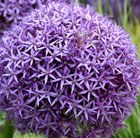
Allium ‘Globemaster’ (ornamental onion bulbs) £4.99
Position: full sun Soil: fertile, well-drained soil Rate of growth: average Flowering period: July Hardiness: fully hardy Bulb size: 18/20 Largish spherical flowerheads made up of numerous star-shaped, deep violet flowers appear in summer. The enormous flowerheads, measuring up to 15cm, look great in pots or borders where they can be seen in their full glory. They are also perfect for a sunny border, dotted in groups among ornamental grasses, or as part of a Mediterranean scheme. Alliums look best planted between medium-sized herbaceous plants, which help to mask the strap-like leaves, which fade by the time the flowers appear. Garden care: Enrich the soil with added compost and plant the bulbs 15cm deep. Space them at 25cm intervals to take full advantage of the big flower heads. Make sure the soil does not get too wet or waterlogged, and divide large clumps in autumn or spring.
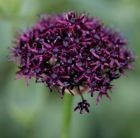
Allium atropurpureum (ornamental onion) £8.99
Position: full sun Soil: fertile, well-drained soil Rate of growth: average to fast Flowering period: May to June Hardiness: fully hardy Bulb size: 7/8 A new addition to our range of Alliums, that immediately shot to the top of our wish-lists. In early to midsummer, each upright stem is crowned with a rounded cluster of small flowers, which seem to hover like large, brilliantly coloured jewels above the foliage. Each flower is made up of deep pink to purple petals surrounding a blueberry-purple centre, which creates a vibrant and exciting contrast of colours. Their drumstick shape is great for adding diversity to the border, while their sturdy stems makes them ideal for cutting. If left in the border after the flowers have faded though, the subsequent seed heads will add months of structural interest. Garden care: Avoid excessive moisture from late summer when they become dormant. Over-large clumps can be lifted and divided in autumn or spring.

Allium cernuum (nodding onion bulbs) £4.99
Position: full sun Soil: fertile, moist but well-drained soil Rate of growth: average Flowering period: June to July Hardiness: fully hardy Bulb size: 1 On slender, upright stems, loose clusters of up to 30, purplish pink flowers appear in summer. Each individual flower has a long stem, so they form graceful, chandelier-like heads above the slender, strap-shaped foliage. Vigorous and easy to grow, they are particularly effective in meadows or other naturalised planting schemes where they can be allowed to form large clumps. Garden care: Plant bulbs 5 – 10cm deep and approximately 5 – 10cm apart. Avoid excessive mositure from late summer when they are dormant, and split and divide large clumps in autumn or spring.

Allium giganteum (ornamental onion bulbs) £3.99
Position: full sun Soil: fertile, well-drained soil Rate of growth: average Flowering period: June to July Hardiness: fully hardy Bulb size: 18/20 Dense globes of small, star-shaped, lilac-pink summer flowers on towering stems appear in summer above pale green leaves. This gorgeous ornamental onion – the tallest currently available – is perfect for providing vertical interest in a sunny border. Try it dotted in small groups among ornamental grasses, or as part of a Mediterranean scheme. Garden care: Plant the bulbs 15cm deep and 20cm apart to avoid the flowers being to crowded. Avoid excessive soil moisture and split and divide large clumps in autumn or spring.

Allium hollandicum ‘Purple Sensation’ (Dutch garlic bulbs) £4.99
Position: full sun Soil: fertile, well-drained soil Rate of growth: average Flowering period: June Hardiness: fully hardy Bulb size:10/12 Strap-shaped grey-green leaves start to die back before the densely packed umbels of deep violet, star-shaped flowers appear in early summer. Its striking architectural silhouette makes it particularly well suited to gravel or prairie-style planting schemes. Garden care: Plant bulbs 15cm deep and 15cm apart to enjoy the full effect of the flowers. Avoid excessive soil moisture, and split and divide large clumps in autumn or spring.

Allium neapolitanum Cowanii Group (ornamental onion bulbs) £5.99
Position: full sun Soil: fertile, well-drained soil Rate of growth: average to fast Flowering period: April to May Hardiness: fully hardy Open clusters of pure white flowers appear in late spring or early summer, creating a soft, lacey effect. The flowers last for ages after being cut and the bees will find them very attractive, so try to plant them in large numbers. In smaller gardens, they look great in pots where they can sit on a sunny patio. Garden care: Plant bulbs 10-15cm deep and 10-15cm apart. Avoid excessive mositure from late summer when they become dormant. Over-large clumps can be lifted and divided in autumn or spring.

Allium nigrum (ornamental onion bulbs) £5.99
Position: full sun Soil: fertile, well-drained soil Rate of growth: fast-growing Flowering period: June Flower colour: white Other features: grey-green leaves Hardiness: fully hardy Bulb size: 9/11 The grey-green leaves of this ornamental onion generally have started to die back when the flowers emerge in early summer. These sit on tall, sturdy stems forming flattish clusters that create a striking silhouette. Each creamy-white to pale lavender flower has a pronounced ovary at its heart, which looks a little like a green pearl, nestled in the centre. Very pretty – and in big demand after its appearance in Cleve Wests garden at Chelsea this year. Garden care: Plant bulbs 15cm deep and 15cm apart to enjoy the full effect of the flowers. Avoid excessive mositure from late summer when they become dormant. Over-large clumps can be lifted and divided in autumn or spring.
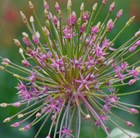
Allium schubertii (ornamental onion bulbs) £7.99
Position: full sun Soil: fertile, well-drained soil Rate of growth: average Flowering period: June Flower colour: pale pinkish-purple Hardiness: frost hardy (may need protection in winter) Bulb size: 12/14 The stalks of the pinkish purple flowers vary in length, so the overall effect of the flower heads, which can grow up to 30cm across, is of a giant star-burst. These appear on compact stems when the foliage is starting to die back in early summer. Garden care: Plant 15cm deep and 35 – 40cm apart so the flowers don’t get over-crowded. Make sure the soil does not get too wet or waterlogged and split and divide large clumps in spring or autumn.
Filed: Crocus
Wednesday, July 11th, 2012
A great shrub for the garden! Popular with pollinating insects!

Abeliophyllum distichum ‘Roseum Group’ (white forsythia ‘Roseum’) £12.99
Position: full sun Soil: fertile, well-drained soil Rate of growth: slow-growing to average Flowering period: February and March Flower colour: light pink Other features: the scented flowers are valuable for indoor flower displays; the matt, dark green leaves often turn purple in autumn Hardiness: fully hardy A relative of the Forsythia, this is a handsome, deciduous shrub is smothered with small, star-shaped, light pink flowers in late winter and early spring. They have a delicious scent and will fill the surrounding area with their scent, so try to plant it near a pathway or entrance. Ideal for adding early interest to the shrub border, it is also perfect for training into a fan-shape against a warm, sunny house wall. This delightful, deciduous, shrub performs best in fertile, well-drained soil. Garden care: Prune after flowering in spring, cutting back some of the old wood to a vigorous side shoot and then apply a generous 5-7cm (2-3in) mulch of well-rotted compost or manure around the base of the plant. Once established, after flowering in spring cut back every second or third flowered shoot to the base.
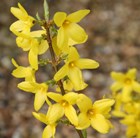
Forsythia x intermedia ‘Lynwood Variety’ (forsythia) £8.99
Position: full sun or light shade Soil: moderately fertile, moist but well-drained soil Rate of growth: fast-growing Flowering period: February to April Hardiness: fully hardy With its branches smothered in vivid yellow flowers, this deciduous shrub is a r eally cheery sight on a shivery day in early spring. The flowers appear before the bright green leaves, covering the plant in a fine cloth of gold. Try it as part of a winter scheme, at the back of a border, where it can be seen from the house, or as an informal hedge. Garden care: Prune out one or two old main stems at the base after flowering. Thin out crowded shoots from the centre and to keep a compact appea rance, cut back flowered shoots to a strong bud.
Filed: Crocus
Wednesday, July 11th, 2012
Damsons are a great tree to have in the garden. The fruit makes great jam and the trees are beautiful with blossom in the spring and look great as the fruit grows and ripens later in the year.
It used to be common in hedgerows in the West Midlands years ago but is less often found now. A tough plant to have in your garden that should be happy on any soil.
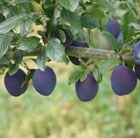
damson ‘Shropshire Damson’ (damson) £34.99
Position: full sun Soil: will tolerate most soils, except very chalky or badly drained Rate of growth: average Ultimate size on St Julian rootstock: 4 x 4m Flowering period: April to May Hardiness: fully hardy Damsons are a great fruit to grow if you are a novice gardener as they are hardier than its closest relative, the plum, and will cope with a wide range of soils. Native to the West Midlands, this small, compact tree was originally found in the local hedgerows. It is a self-fertile variety with medium sized fruits that can be cooked or baked and used in a variety of tasty recipes. Garden care: When planting incorporate lots of well-rotted garden compost in the planting hole and stake firmly. Prune in summer to reduce the risk of silver leaf and bacterial canker.

damson ‘Merryweather’ (damson) £34.99
Position: full sun Soil: will tolerate most soils, except very chalky or badly drained Rate of growth: average Ultimate size on Pixie rootstock: 3 x 3m Ultimate size on St. Julien A rootstock: 4 x 4m Flowering period: April to May Hardiness: fully hardy Damsons are a great fruit to grow if you are a novice gardener as they are hardier than its closest relative, the plum, and will cope with a wide range of soils. Merryweather is an excellent all-rounder. It is a self-fertile variety that produces larger than average fruits, which have a blue-black skin and juicy, acidic, yellow flesh. These will be ready to harvest from late August. Garden care: When planting incorporate lots of well-rotted garden compost in the planting hole and stake firmly. Prune in summer to reduce the risk of silver leaf and bacterial canker.
Filed: Crocus
Wednesday, July 11th, 2012
Easy to grow, plenty of fruit and you’ll love growing your own. Turn the fruit into jam or pies!
Thornless are less troublesome having no thorns to worry about. Everyone should grow some fruit at home.
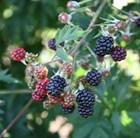
blackberry ‘Oregon Thornless’ (blackberry) £12.99
Position: full sun or partial shade Soil: any soil Rate of growth: fast-growing Other features: medium-sized, juicy fruit (late August to late September) Hardiness: fully hardy A popular variety with ornamental leaves and thornless stems. The saucer-shaped, white flowers flushed with pink are produced in summer, followed by medium-sized fruit with a mild and juicy flavour in late August to late September. It is a good variety to grow where people are likely to brush past the stems or trained over an arch or trellis. Garden care: Prepare the ground well before planting. Remove all weeds and dig in plenty of well-rotted manure. Allow 3m between each plant and 1.8m between rows. Once planted, shorten the canes to about 23cm (9in). Each spring, mulch well with well-rotted manure. Plants flower on one-year-old wood, so the new canes need to be separated from fruiting ones. After cropping, cut the fruiting canes down to the ground and tie in the new ones that have grown that year.

blackberry ‘Apache’ (blackberry) £9.99
Position: full sun or partial shade Soil: any soil Rate of growth: fast-growing Other features: Extremely large sized, juicy fruit (late August to late September) Hardiness: fully hardy Apache is an excellent variety for the home gardener. It produces really big fruit that have a very sweet flavour, on erect, thornless canes. Bred at the University of Arkansas, each fruit will weigh around 7-10g each. They are produced mid-season and will keep well after being picked. Garden care: Prepare the ground well before planting. Remove all weeds and dig in plenty of well-rotted manure. Allow 2m between each plant and 2m between rows. Each spring, mulch well with well-rotted manure. Plants flower on one-year-old wood, so the new canes need to be separated from fruiting ones. After cropping, cut the fruiting canes down to the ground and tie in the new ones that have grown that year.

blackberry ‘Loch Ness’ (blackberry) £9.99
Position: full sun or partial shade Soil: any soil Rate of growth: fast-growing Other features: medium-sized, juicy fruit from mid August Hardiness: fully hardy This high yielding, thornless bush can produce up to 3.6kg of large, firm and glossy blackberries from mid August until the first frosts. It is such a super-producer, that it is now the number one variety used by commercial growers. Grow it in a large pot on a sunny patio, or train it against a sunny wall or fence and enjoy a long-lasting supply of delicious fruit. Garden care: Prepare the ground well before planting. Remove all weeds and dig in plenty of well-rotted manure. Space at 1.8m intervals and once planted, shorten the canes to about 23cm (9in). Each spring, mulch well with well-rotted manure. Plants flower on one-year-old wood, so the new canes need to be separated from fruiting ones. After cropping, cut the fruiting canes down to the ground and tie in the new ones that have grown that year.

blackberry ‘Reuben’ (primocane blackberry) £7.99
Position: full sun or partial shade Soil: any soil Rate of growth: fast-growing Other features: deliciously sweet and juicy fruit (late July to the end of August) Hardiness: fully hardy Bred at the University of Arkansas, Reuben has been heralded as the first primocane blackberry – ie. it produces fruit on the current years growth. Not only that, but the fruits, which are produced in abundance, are the size of a plum (weighing up to 9g each). They have a glossy skin and sweet, slightly fruity-flavoured flesh and can be eaten straight from the bush, or used to make jams, pies or coulis. Garden care: Prepare the ground well before planting. Remove all weeds and dig in plenty of well-rotted manure and then plant at 2m intervals. Each spring, mulch well with well-rotted manure. Cut back all the canes to just above ground level in late winter or early spring each year. As soon as the new growth starts to emerge, you should start feeding them with a good fertiliser and begin spraying for pests and diseases if necessary. When the canes have reached 1m tall, ‘soft-tip’ them by removing the top 2 to 5cm of growth. This will encourage the stems to branch and therefore increase the yield. Ideally this ‘soft-tipping’ should be done before the flower buds are produced as removing the flowers will delay the crop and reduce the yield. To grow as a primocane (ie producing two, smaller crops each year), cut back the new spring stems, which have produced fruit at their tips in autumn, to a point just below where the blackberries were produced, soon after they have finished cropping. These half-canes can then be left to overwinter, will put on new top growth in spring and will then go on to produce the first crop of berries in early summer. After these two year old canes have finished fruiting they should be cut right back to their base. In the meantime, new canes will have emerged from the base of the plant in spring and these should be tied onto their support as they grow. These new canes will then produce the second, later crop and should have their tops lopped off after fruiting. This then creates a repeating cycle.

blackberry ‘Ouachita’ (blackberry) £6.99
Position: full sun or partial shade Soil: any soil Rate of growth: fast-growing Other features: deliciously sweet and juicy fruit (late July to the end of August) Hardiness: fully hardy On upright, near-thornless stems, sweet, generously-sized fruits (each weighing up to 7g), are produced in large numbers during the early part of the picking season. This is a recently introduced cultivar, which has been developed by the University of Arkansas, and trials have shown it is comparable to many of the long-standing favourites for taste, reliability and shelf-life after picking. Garden care: Prepare the ground well before planting. Remove all weeds and dig in plenty of well-rotted manure and then plant at 2m intervals. Each spring, mulch well with well-rotted manure. Plants flower on one-year-old wood, so the new canes need to be separated from fruiting ones. After cropping, cut the fruiting canes down to the ground and tie in the new ones that have grown that year.

blackberry ‘Loch Tay’ (blackberry) £6.99
Position: full sun or partial shade Soil: any soil Rate of growth: fast-growing Other features: deliciously sweet and juicy fruit (late July to the end of August) Hardiness: fully hardy Bred at the Scottish Crop Research Institute, ‘Loch Tay’ produces an earlier, sweeter crop than ‘Loch Ness’. The canes are thornless and semi-erect, so will need minimal support, and they produce a crop of medium-sized berries from late July down south and in warm, sheltered gardens, or mid August in more exposed locations. Garden care: Prepare the ground well before planting. Remove all weeds and dig in plenty of well-rotted manure and then plant at 2m intervals. Each spring, mulch well with well-rotted manure. Plants flower on one-year-old wood, so the new canes need to be separated from fruiting ones. After cropping, cut the fruiting canes down to the ground and tie in the new ones that have grown that year.
Filed: Crocus
Wednesday, July 11th, 2012
Alternatives to slug pellets include building a pond and encouraging frogs that will eat them!
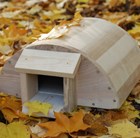
Hedgehog house £49.99
Hedgehogs will eat almost anything they come across in the garden, though they prefer beetles, worms and slugs. So why have a hedgehog house? Well apart from the fact that they will help keep the slug population down, only 75% of hedgehogs survive from one year to the next. This is usually due to insufficient safe habitat, though other reasons include the use of poison, slug pellets, general pesticides, strimmers and bonfires. The hedgehog house is made from durable timbers with a double skinned roof for insulation and weather protection. The timber floor is raised to keep the damp out and the house can withstand crushing and strimming. Also the specially constructed entrance porch will help deter predators. The best place to site your hedgehog house is in a quiet position out of prevailing winds and in an area with some cover. Pile leaves and short grass around the house plus a few handfulls of short dry grass and leaves inside to initiate a nest. Hopefully local hedgehogs will move in soon. Measures 40cm wide x 35cm deep x 20cm high.
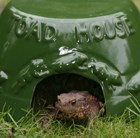
Glazed ceramic toad house £11.99
Toads are handy to have around the garden and they should be encouraged as their favourite foods are slugs and snails. They can also catch insects like spiders, flies and mosquitoes with their sticky tongues. Larger toads also prey on slow worms, small grass snakes and harvest mice, which are swallowed alive! They come in a variety of different colours including dark brown, grey, olive, terracotta or sandy coloured, with a grey-white underside and they can live up to 40 years. The male is smaller than the female. Toads can sometimes be seen in the daytime following rainfall, but they are generally nocturnal and are especially active on rainy nights. They don’t need to live near a pond or stream, apart from during their breeding season, but they do prefer a protected, moist and shady spot. During the day they will shelter under tree roots, stones and vegetation unless they have superior accommodation – like this specially designed toad abode! Dimensions: 20cm width x 9.5cm depth x 10cm height
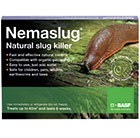
Nemasys nemaslug slug killer £11.99
If ordered on its own Nemasys is posted 1st class therefore we only charge £1 for postage and packaging These nematodes (microscopic creatures) aggressively search out and attack slugs. They enter the slugs body through a hole behind their heads. Once inside they release a bacteria which stops the slug eating. The nematodes then start to reproduce inside and within 7-10 days the slug is dead. The nematodes continue to reproduce as the body breaks down. This new population enters the soil and searches out new slugs to attack. This is a natural, non-toxic product that is safe for both users and wildlife. The nematodes stay active for 6 weeks so a single dose protects plants when they are emerging in the spring and are most vulnerable. Nematodes can only be used in late spring and summer when the soil has warmed up (to above 5°C). However they can be used all year round in glasshouses and conservatories On heavy, waterlogged clay soil, the nematodes can find it difficult to move, so Nemaslug can be less effective in these conditions. Please note this is a ‘living’ product It is best to refrigerate this product when it arrives and use it as soon as possible. There will be a best use before date for optimal performance 12 million Pack Treats 40 Sq Metres 30 million Pack Treats 100 Sq Metres Please note this product may take a day or two more than ther lead time given this is as we do not despatch this over weekends

Slug trap £8.99
The Slug X slug trap is great for helping to get rid of all those slugs and snails in the garden. It has a base with three drowning wells and four funnelled access openings giving the slugs plenty of opportunity to enter the trap. By using beer in the wells and with the tight fitting lid in place, the smell of beer builds up inside luring the pests in to the trap. Once inside they become so dizzy with the smell they can’t find their way out and end up falling in one of the wells. It is not meant to be buried in the garden so can be moved from place to place to clear the garden of slugs and snails. This great trap is chemical free so will not harm wildlife, and is made from 99% recycled material. The Slug X trap has already won a number of ‘Best Buy’ recommendations and was used by independent testers for The Daily Telegraph, who caught 147 slugs in just one night! They said it also collected snails too!
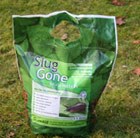
Slug gone wool pellets £7.99
Slug gone pure wool slug pellets are a natural and environmentally friendly way of protecting your flowers, plants, fruit and vegetables from every gardeners nemesis – the common Slug. Using no harmful chemicals or pesticides Slug Gone is suitable for those with children and or animals. Not only does slug gone protect your flowers, fruit and vegetables from Slugs and Snails, it also offers the following advantages Acts as a self felting mulch Absorbs and retains moisture; ideal to mix with soils and composts Helps suppress weeds Biodegrades over 6 to 14 months, releasing organic nutrients Ideal as a water retainer and soil improver A natural mulch and soil conditioner Protects and enriches soil Ideal for flower beds, container pots and hanging baskets

liquid slug killer for climbing plants £5.99
This liquid slug and snail killer is the perfect way to tackle these annoying pests if they have become established in the crown of your climbing plants, as these would not normally come into contact with pellets on the ground. It is also a safer option for using around pests and wildlife, so we highly recomend it. It contains metaldehyde and will cover up to 67 square meters.
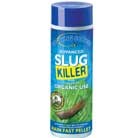
Organic slug killer £4.99
Revolutionary new Slug Killer that outdates all other slug control. This is a bait which can be used around children, pets and wildlife as it only targets Slugs and Snails. Growing Success Advanced Slug Killer is a truly ‘advanced’ Slug Killer completely out dating all Slug killers of the past. It will only kill and snails, and will not harm children, pets, birds, animals or wildlife etc. if used as directed. This product has already enjoyed overwhelming success in Europe and America. IN GENUINE TRIALS THIS ADVANCED SLUG KILLER WAS EFFECTIVE SEVERAL WEEKS IN BOTH DRY AND RAINY WEATHER CONDITIONS. It will only kill slugs and snails. There is no secondary poisoning of birds or hedgehogs etc. and they are completely safe even if they eat the pellets so long as the product has been used as directed. It is based on ferrous phosphate (iron phosphate – which is an organic compound) plus a bait, thus making it attractive to slugs and snails. The slugs and snails are attracted to the bait, ingest the pellets and then crawl away to die, leaving no dead slugs or snails around and no unsightly slime. Any bait not eaten breaks down rapidly to iron and phosphate nutrients as part of garden soil. It can be used safely around ornamentals, fruits and vegetables

Copper snail and slug tape £15.49
This is a great way to keep both slugs and snails off your potted plants without having to resort to using chemicals. It is a self adhesive copper tape that should be stuck to the sides of the pot to form a complete circle. As these annoying pests try to crawl past it, the tape creates a small electrical charge that is further intensified by the serrated edge. It is safe to use around pets and wildlife, and is environmentally friendly – but not so friendly towards the slugs and snails in your garden.

The original copper slug rings – 4" £19.99
Plants are at their most vulnerable when thay are young and succulent, so the earlier they are protected the better. For insurance, we put slug rings around our bean when we sow the seeds, and around the delphiniums in spring before new growth starts. If you need a bigger ring you can open two large rings, bend them to a larger diameter, and join them nose to tail. After a a few weeks exposure to weather, especiallly rain, slug rings take on a brown patina to blend comfortably into your garden. Slug rings are equally effective whether they are shiny and new, with a brown patina, or even ancient green. Slug Rings are the original patented copper rings – designed and manufactured by gardeners for gardeners. Slug Rings are simple to use, and because they have rounded edges and no sharp corners they are comfortable to handle even for elderly gardeners, and safe around children. Instructions: Press the slug ring into the soil around the plant. Make sure that there are no slugs or snails trapped inside. Have a good root around to be certain, because they won’t be able to get out. In the 1st few days check that you didnt miss any. The rings are scrunched into the soil a little way to no gaps underneath for a slug to sneak through. Wet the soil first if it is too hard. There are no leaves overhanging the ring and touching the soil to make a bridge for slugs and snails to cross. Foliage doesnt overhang the ring from outside, allowing snails to abseil in. To take the slug ring off a climber, or a plant which has grown very bushy, rotate the ring to a convenient position, pull the join apart and open the ring enough to clear the plant. Then gently and firmly push the join back together (It can be easier to put one corner of the tongue in first).
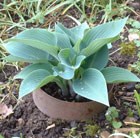
The original copper slug rings – 7" £26.99
Plants are at their most vulnerable when thay are young and succulent, so the earlier they are protected the better. For insurance, we put slug rings around our bean when we sow the seeds, and around the delphiniums in spring before new growth starts. If you need a bigger ring you can open two large rings, bend them to a larger diameter, and join them nose to tail. After a a few weeks exposure to weather, especiallly rain, slug rings take on a brown patina to blend comfortably into your garden. Slug rings are equally effective whether they are shiny and new, with a brown patina, or even ancient green. Slug Rings are the original patented copper rings – designed and manufactured by gardeners for gardeners. Slug Rings are simple to use, and because they have rounded edges and no sharp corners they are comfortable to handle even for elderly gardeners, and safe around children. Instructions: Press the slug ring into the soil around the plant. Make sure that there are no slugs or snails trapped inside. Have a good root around to be certain, because they won’t be able to get out. In the 1st few days check that you didnt miss any. The rings are scrunched into the soil a little way to no gaps underneath for a slug to sneak through. Wet the soil first if it is too hard. There are no leaves overhanging the ring and touching the soil to make a bridge for slugs and snails to cross. Foliage doesnt overhang the ring from outside, allowing snails to abseil in. To take the slug ring off a climber, or a plant which has grown very bushy, rotate the ring to a convenient position, pull the join apart and open the ring enough to clear the plant. Then gently and firmly push the join back together (It can be easier to put one corner of the tongue in first).
Filed: Uncategorized
Wednesday, July 11th, 2012
It’s not just bee friendly plants you can add. Lots of solitary bees will appreciate somewhere to make a nest in a quiet corner. Crocus have these great bee related products.
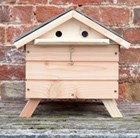
Beepol bumblebee lodge including the hive of Bees £129.99
The Beepol Bumblebee Lodge provides an attractive, long lasting, safe and secure home for the Beepol Bumblebee Garden hive. Based on traditional bee hive designs, the Beepol Lodge has been hand crafted in the UK from durable timber grown on FSC plantations. Bumblebee colonies do not continue through the winter in the same way as honeybees do, so each year a fresh new Beepol garden hive can be purchased and placed within the lodge, ensuring every summer you can enjoy the sight and sounds of British Bumblebees hard at work in your garden. The Beepol Lodge contains one Beepol garden hive, which can be replaced with a new one when the hive comes to the end of its life and the new queen bumblebees have dispersed. The Beepol Lodge has a hinged roof for access and for viewing the Bumblebee colony within. The Beepol Lodge has exit and entrance holes designed for the particular size and shape of Bumblebees and even a landing landing ledge for them to rest on, as they come back to to the hive with heavy loads of pollen. The Beepol Lodge incorporates wooden legs to keep the hive off the ground. The Beepol Lodge also has an option for attaching a mini wildlife camera, so you can see your bees at work from the comfort of your home! The Beepol Lodge is the ultimate wildlife feature for your garden, providing a fascinating permanent place of residence for your very own Bumblebee colony every summer. Information on the Beepol Garden Hive of Bees that is included with this Bumblebee Lodge
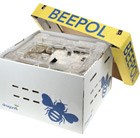
Beepol garden hive of bees £69.99
Enjoy the sight and sound of native bumblebees at work in your garden with the Beepol garden hive. Pollination is as important to gardeners as it is to farmers and growers, without it fruit and pod vegetables do not set and yields are reduced. Bees are probably the most important pollinating insect and their recent decline in numbers has been widely reported. Planting bee friendly plants will help attract many different bee species to your garden but now gardeners can introduce their own bumblebee colonies with Beepol! Beepol is a live colony of bumblebees Housed and supplied in a maintenance free hive Each hive contains a queen bumblebee, 30-40 workers (the workers will breed to give a few hundred workers) and bee food to get them started Beepol bumblebees are a native UK species Reared in disease free, hygienic conditions for release into British gardens and wildlife areas Each colony has a viewing panel under the lid for observation of the bees Bumblebees are released by an easy to use trap door system Beepol hives incorporate a “bee home” system that allows bees back into the hive and holds them for later release if needed Beepol bumblebees will pollinate a wide variety of plants outdoors including fruit and some vegetable plants. They also help maximise yields from greenhouse grown plants like tomatoes, peppers and aubergines. The Beepol hive has been designed to educate as well as pollinate! A clear viewing panel in the lid allows observation of the colony it develops, whilst the exit and entrance system enable you to watch the bees at work, as they bring pollen back to the hive. Bumblebee colonies do not continue like honeybee hives, so Beepol hives have a limited lifespan and will need replacing. However before the queen bee dies; she produces young queens that will leave the hive to hibernate before establishing fresh new colonies in the spring. Introducing BEEPOL bees to your garden will help reward the fruits of your labour through pollination and add a fascinating new area of interest to be enjoyed by all.
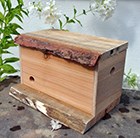
Bumble bee nest £42.99
Einstein said that without bees to pollinate our crops we would soon run out of food. It has also been said that every tomato you have ever eaten has been pollinated by a bumblebee, which is incredible when you think about it. They are very valuable insects that will dramatically increase the yield of the fruit, vegetables and flowers in your garden. Gentle creatures by nature, the queen and the worker bees can sting, but they will only do so if they are grabbed or their nest is threatened. This timber-framed nest will help make them feel right at home. Try to place it in a warm spot, with shade during the hottest part of the day, low down in a flower bed or at the base of a hedge or shed. Measurements: 26cm long x 20cm wide x 18cm high
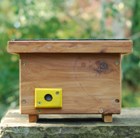
Bumble bee nester £27.99
Made from quality larch, this substantial nesting box attracts the queen bees during early spring. Since bumble bees are excellent pollinators, you’ll get bigger and better crops if you position it in a secluded spot next to the veg patch or in the fruit garden. The nester measures 27cm long x 22cm high x 16cm deep.
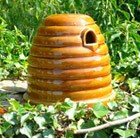
Ceramic bee nester £22.99
The ceramic bee nester (skep is a fully functioning nest for bumble bees. Originally made from straw or wicker, this ceramic construction is a modern interpretation of a centuries old design conceived to provide an attractive and functioning wildlife item suitable for any modern garden. Beautiful in its appearance, it can help provide a safe and dry nesting site for these beneficial garden pollinators. The skep may be used with, or without its base and accordingly is suitable for any paved/patio area or the garden/hedgerow. Use from February onwards. Locate the skep low, or on the ground in a sheltered position in dappled sunlight, under a hedge under a hedge or adjacent to a wall line is ideal. Ceramic construction gives dry, secure nesting. Bumble Bees are essential garden pollinators. Attractive design to enhance any patio, garden or wildlife area. Dimensions: 19 x 21 x 21 cm

Guide to bees of the british isles £5.99
Produced in conjunction with the invertebrate conservation charity Buglife, this much requested new 8-page chart shows 28 species of bee, most of which can commonly be seen flying in domestic gardens. As well as the ‘Big Six’ bumblebees, the chart includes representatives of mining bees, cavity-nesting bees and cuckoo bees. Silhouettes next to each image show the typical life-size for each species. Text on the reverse side includes a table, with full cross-referencing to the images, which gives further information on flight periods, distribution of each species in Britain, and useful pointers to help distinguish between similar-looking species. This chart is part of the FSC’s range of fold-out charts, designed to help users identify of a wide range of plants and animals. Each chart is laminated to make it shower-proof and robust for use outdoors. Clear colour illustrations and text by experts in the subject make these valuable resources for all age groups. Height: 250 mm Width: 154 mm Depth: 3 mm

Crocus ‘Vanguard’ (crocus bulbs) £3.99
Position: full sun Soil: gritty, poor to moderately-fertile, well-drained soil Rate of growth: fast-growing Flowering period: February to March Flower colour: lilac-grey Other features: slender, strap-shaped, dull green leaves Hardiness: fully hardy Bulb size: 7/8 One of the first of the large flowering crocus to come into bloom each year, the violet-grey flowers provide a vital source of nectar for early bumblebees and other beneficial insects. Plant in big swathes and leave them undisturbed and their numbers will increase each year. Garden care: Plant bulbs in naturalistic drifts 10cm (4in) deep in September or October. Where bulbs are planted in grass do not cut the grass until after the leaves have died back completely.
Filed: Crocus
Wednesday, July 11th, 2012
Crocus have tons of amazing plants for your garden. Treat yourself to some great value plants that provide colour and interest.
Don’t forget to protect newly planted plants from the evil slugs!

Campanula carpatica ‘Blaue Clips’ (bellflower) £6.99
Position: full sun or partial shade Soil: moist, well-drained soil Rate of growth: average to fast-growing Flowering period: July to September Hardiness: fully hardy These clump-forming, low-growing Carpathian bellflowers are perfect for softening the edges of a sunny, raised bed or rockery. They produce a profusion of blue, bell-shaped flowers on branched stems over a long period from June to September and rosettes of heart-shaped, mid-green leaves. A useful little perennial for filling in gaps. Garden care: Protect the tender foliage from slug damage using environmentally friendly slug pellets or beer traps. During the growing season water freely and deadhead with scissors to prolong flowering.

Campanula rotundifolia (harebell) £2.49
Position: full sun or partial shade Soil: moist, but well-drained soil Rate of growth: fast-growing Flowering period: July to August Flower colour: violet-blue Hardiness: fully hardy Spreading by underground rhizomes, this pretty perennial will form a neat clump of foliage in spring, which starts to die back as the upright flower stems emerge in midsummer. The violet-blue flowers resemble nodding bells that form in loose trusses at the top of the wiry stems. Elegant and easy to grow, it is a native of dry, grassy slopes throughout Europe and the UK, so it looks right at home in naturalised planting schemes. Garden care: Surface-sow onto good quality compost, which is kept moist but not wet and keep under glass (or in a polythene bag) until they germinate. When they are large enough to handle transplant into small pots and grow on before planting out in a sunny position. Protect the tender foliage from slug-damage using environmentally friendly slug pellets or beer traps. During the growing season water freely and apply a balanced liquid fertiliser each month. Sow: March-May or September-November Flowering: July-August Approximate quantity: 1000 seeds

Eryngium x zabelii ‘Jos Eijking’ (PBR) (sea holly) £8.49
Position: full sun Soil: moist, well-drained soil Rate of growth: average Flowering period: August to October Flower colour: steely blue Other features: superb foliage Hardiness: fully hardy This delightful sea holly has long lasting, bright metallic-blue flowers that arrive in mid to late summer and usually last well into the autumn. They have a strong architectural shape, so are best in uncrowded borders where they can really stand out on their own. Honey bees love their flowers so they are a perfect for adding to a sunny, wildlife-friendly garden. Garden care: Lift and divide large colonies in spring. Avoid the temptation to cut back the flowerheads in autumn as they provide interest in the winter garden.
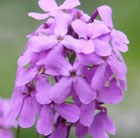
Hesperis matronalis (sweet rocket) £1.79
Position: full sun or partial shade Soil: fertile, moist, well-drained Rate of Growth: average Flowering period: May to June Hardiness: fully hardy Sweet rocket is most at home in an informal herbaceous border, or when left to naturalise in a wildlife-friendly garden. The deliciously scented, pale lilac flowers form in loose clusters and are attractive to bees and other beneficial insects. Their perfume will fill the air late spring and early summer evenings. They are also edible and look great sprinkled over salads. Although relatively short-lived, it self-seeds freely. Garden care: Sow seed where it is to grow in late spring, after the worst of the frosts have passed. Prepare the bed well first and then surface sow, thinning the seedlings out as they grow to allow 30cm between each plant. Keep well watered and pinch out the growing tip to encourage bushier growth. Dead-heading regularly will help prolong the flowering season, but if you want them to self-seed, allow some of the seed heads to develop fully. Sow: March-May Flowering: May-July Approximate quantity: 500 seeds.

Liatris spicata ‘Kobold’ (gay feather) £7.99
Position: full sun Soil: light, moderately-fertile, well-drained soil Rate of growth: average Flowering period: August to September Hardiness: fully hardy Long-lasting spikes of deep magenta flowers appear from August to September above strap-shaped, fresh green leaves. The attractive, bottlebrush flowers open from the top downwards. This exotic-looking perennial will bring a vertic al accent and late summer colour to the middle of a sunny border. It makes an excellent cut flower and bees and butterflies love it, too. Garden care: Protect the young shoots from slug-damage using beer traps or environmentally-friendly slug pellets. Lift and divide congested colonies in spring, applying a mulch of well-rotted organic matter around the base of the plant.

Ligularia ‘Britt Marie Crawford (PBR)’ (golden groundsel) £9.99
Position: full sun with some midday shade Soil: fertile, moist soil Rate of growth: average to fast-growing Flowering period: July to September Hardiness: fully hardy Ligularia dentata are prized as much for their exotic foliage as for their flowers. In spring, large, heart-shaped, glossy, chocolate-maroon leaves with dark purple undersides appear, turning green as they mature. In summer , clusters of orange-yellow daisy-like flowers open above the foliage. This is an exciting new variety that is ideal for a moist, sunny border or bog garden, or beside water. It needs protection from strong midday sun. Garden care: Protect the young shoots from slug damage using beer traps or environmentally -friendly slug pellets. The plant must be kept moist; line the plant hole with plastic, making a couple of holes in the plastic for drainage. Water regularly during periods of drought. Lift and divide large clumps in spring or after flowering. Apply a generous 5-7cm mulch of well-rotted manure or garden compost in spring.

Onopordum acanthium (Scottish thistle) £9.99
Position: full sun Soil: fertile, well-drained, neutral to slightly alkaline soil Rate of growth: average Flowering period: July to August Hardiness: hardy biennial Large pale-purple or occasionally white, thistle-like flowerheads appear in July and August above spiny-toothed, grey-green leaves. This biennial, native Scotch thistle makes an architectural statement in a sunny gravel or wildlife garden. The ripening seedheads act as a magnet for goldfinches and the plant self-seeds freely. Garden care: Use beer traps or environmentally- friendly slug pellets to protect the tender young foliage against damage from slugs or snails.
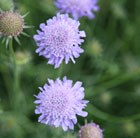
Scabiosa ‘Butterfly Blue’ (pincushion flower) £7.99
Position: full sun Soil: moderately fertile, well-drained, neutral to slightly alkaline soil Rate of growth: average Flowering period: July to September Flower colour: lavender blue Other features: the flowers are highly attractive to butterflies and bees; valuable for fresh and dried flower arrangements Hardiness: fully hardy Lovely, lavender blue, pincushion like flowers from July to September held on delicate stems above clumps of lance shaped, grey green leaves. This long flowering blue scabious is ideal for a sunny, well drained rock garden or container planting. As its name suggests, the charming pincushion like flowers are highly attractive to butterflies. Garden care: Protect young plants from slug damage using environmentally friendly slug pellets or beer traps. Deadhead regularly to prolong flowering and cut back the faded flower stems in autumn.
Filed: Crocus
Wednesday, July 11th, 2012
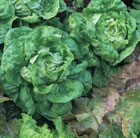
lettuce ‘All Year Round’ (lettuce) £0.99
Position: full sun Soil: humus-rich, moisture retentive soil You may never need another lettuce variety again. As the name suggests, this is one you can sow and grow at any time of the year: as a general rule expect to pick your lettuces around 10 weeks after sowing. The butterhead-type heads are dense and crisp, with creamy-yellow hearts and an excellent flavour. A heritage variety introduced before 1870. Growing Instructions: Early in the season sow into trays or modules in the greenhouse or on a windowsill. Thin seedlings to 5cm apart and harden off before planting out, allowing 30cm between plants. Later in the season sow direct where they are to grow in shallow drills. Protect from slugs and cover early and late sowings with a cloche. A late sowing made in August in a coldframe or in the greenhouse borders will grow on right through winter. Sow: February-August Harvest: April-October Approximate quantity: 1400 seeds.

lettuce ‘Winter Density’ (lettuce (semi-cos)) £0.99
Position: full sun Soil: fertile and moisture retentive The very best variety for growing during the coldest months of the year, as it’s extremely hardy and resilient. It’s a semi-cos type, with the solid, dark green hearts held lower to the ground than most cos types but well wrapped in outer leaves for protection. The flavour is sweet and fresh a real winter treat. Growing Instructions: Earlier sowings can be made direct where they are to grow, in shallow drills: thin seedlings to 20cm apart and protect with a cloche once colder conditions start. Later sowings from autumn onwards do best in a coldframe or in the greenhouse borders: thin to 20cm apart once established. Protect from slugs. When thinning lettuce seedlings, lift the larger thinnings carefully and replant in a new row at their final spacings to double your crop. Sow: August-October Harvest: March-May Approximate quantity: 1400 seeds.
With a cloche or tray in the greenhouse you can continue to grow lettuce all year round. The winter hardy varieties just need a little shelter!
Filed: Crocus
Tuesday, July 10th, 2012
The British BeeKeepers Association has this great list of bee friendly plants
(right click file save as)
Filed: Bees
Tuesday, July 10th, 2012
Derry Watkins of Special Plants has just sent out her seed list for this year, plus a list of extra days on which her garden will be open with her giving talks. She has some lovely things to grow from seed
http://www.specialplants.net/
Filed: Garden Shows
|
|



