|
Archive for February, 2026
Tuesday, February 17th, 2026
🧹 Step-by-Step Allotment Rescue Plan
1. Assess and Prioritise
- Walk the whole plot and take photos.
This is REALLY important. It’ll help you keep track of how well you’re doing.
- Identify key zones: access paths, usable beds, compost area, water source.
Think about where the sun comes up and which bits are shaded.
- Note hazards (glass, metal, brambles) and useful salvage (tools, pallets, compost bins).
Make a note of which need to be cleared first and how you’re going to do that safely.
2. Clear the Perimeter First
- Tidy the edges so you can move freely.
- Cut back brambles and nettles with loppers or a strimmer.
I think brambles are too awful to compost – you could shred them if you can get a shredder working on your allotment.
- Mark out paths with string or wood to avoid trampling future beds.
Start thinking about where you’ll get paving slabs from if you want them. They’ll be hiding in skips and people you know will be getting rid of them.
3. Remove Rubbish and Large Debris
- Sort into: reuse, recycle, landfill.
Protect your car if you’re taking dirty stuff to the tip. Try to dry things before putting them in your car.
- Stack useful items (wood, buckets, mesh) neatly for later use.
Make it look tidy. Don’t stack too high.
- Wear gloves and check for nails, glass, or vermin nests.
Watch out for scratches and cuts.
4. Tackle Weeds and Grass
- For grassy areas: strim first, then cover with cardboard and compost to suppress regrowth.
This can be really satisfying. But doesn’t remove the number of weeds. Just makes them shorter.
- For deep-rooted weeds: dig out manually or use a weed fork. Dig as much root out as possible.
- Avoid rotavating until you’ve cleared perennial weeds like bindweed or couch grass. Don’t rotavate lots of weeds.
5. Create One Working Bed
- Choose the sunniest, least overgrown corner. It’ll be easiest and get good results.
- Clear it fully, add compost, and sow something easy (radishes, lettuce, beans). Radish are really quick!
- This gives you a psychological win and a visual win! And something to eat.
6. Use Covering Techniques
- Lay cardboard, tarps, or weed membrane over untouched areas. This is the start of no-dig. Add compost or muck on top. This can get expensive and be as much hard work as digging.
- Covering buys you time and prevents further weed growth.
- Weight covers with bricks or logs. Else it all blows away.
7. Build a Compost Corner
- Use pallets or old bins to start composting green waste. You’ll find pallets on Freecycle or by asking around. Someone will always know who has some spare.
- Add layers of weeds (not seed heads), cardboard, and kitchen scraps.
Layer it up. Keep adding it.
Store bad roots in an old compost sack turned inside out.
- This keeps the site tidy and builds future fertility.
🛠 Tools That Help
| Tool |
Use |
| Loppers & secateurs |
Brambles, woody stems |
| Strimmer |
Long grass, nettles |
| Fork & spade |
Digging out roots |
| Tarps/cardboard |
Weed suppression |
| Gloves & boots |
Safety |
🌱 What to Plant First
Start with easy, fast crops in your cleared bed:
- Radishes, lettuce, rocket
- Dwarf beans, peas
- Calendula or nasturtiums (for cheer and pollinators)
🧠 Tips to Stay Motivated
- Work in 2-hour blocks, not full days. Little and often.
- Take before-and-after photos. This is your reminder of how much you’ve done.
- Celebrate each cleared section.
- Invite a friend for a “clear and cuppa” session. Enjoy it!
Filed: allotment
Tuesday, February 17th, 2026
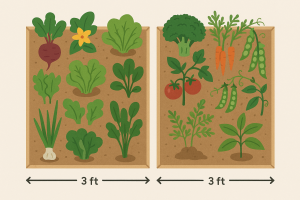 June Planting Guide for Your Two 3×2 ft Beds June Planting Guide for Your Two 3×2 ft Beds
June is when your little beds shift fully into summer mode. Growth is fast, watering matters more, and you can still sow plenty of productive crops. This sheet continues the March–April–May sequence so your two compact beds stay abundant and tidy.
1. Refreshing the Beds in June
Light Soil Care
- Remove spent crops: Any bolted lettuce, tired rocket, or finished peas.
- Top up compost: Add ½ inch of compost to keep nutrients steady.
- Loosen gently: Aerate the top layer without disturbing established roots.
- Water deeply: June warmth means deeper, less frequent watering is best.
2. What to Plant in June
June is ideal for heat-loving crops and final sowings of some spring favourites.
Suitable Vegetables
- Leafy greens: Chard, perpetual spinach, heat-tolerant lettuce
- Roots: Beetroot, carrots (early June), radishes (early June)
- Legumes: French beans, runner beans, dwarf beans
- Brassicas: Kale (early June), kohlrabi
- Herbs: Basil, parsley, coriander (bolt-resistant varieties), dill
- Others: Spring onions, salad turnips
3. Updated Bed Plans for June
These layouts assume you’ve followed the earlier months and now want to keep the beds productive through summer.
Bed 1: Summer Greens & Herbs
- Front row (1 ft): Sow basil or parsley in gaps left by spring onions or radishes
- Middle row (1 ft): Chard or perpetual spinach continues; fill gaps with heat-tolerant lettuce
- Back row (1 ft): Kale or kohlrabi from May continues; sow more kale early June if space allows
Notes:
- Basil thrives in warm, sheltered beds.
- Chard will carry you through summer and autumn.
Bed 2: Beans & Summer Roots
- Front row (1 ft): Final sowing of beetroot for summer harvest
- Middle row (1 ft): Carrots continue; sow last batch early June
- Back row (1 ft): French beans or dwarf runner beans take over as peas finish
Notes:
- Beans love the heat and will crop heavily in small spaces.
- Keep carrots shaded during germination to prevent drying.
4. June Planting Tips
- Water deeply: Aim for fewer, deeper waterings to encourage strong roots.
- Mulch: A thin layer of compost or straw helps retain moisture.
- Harvest often: Picking beans and greens encourages more growth.
- Shade seedlings: Use a board or cloth for the first few days after sowing.
- Watch for bolting: Coriander and lettuce may bolt; choose bolt-resistant varieties.
5. At-a-Glance June Chart
| Crop |
Sow in June |
Spacing |
Notes |
| Chard |
Yes |
8–10 in |
Heat-tolerant |
| Perpetual spinach |
Yes |
8 in |
Reliable summer green |
| Lettuce (heat-tolerant) |
Yes |
6–8 in |
Choose summer varieties |
| Basil |
Yes |
8–10 in |
Loves warmth |
| Beetroot |
Yes |
4–6 in |
Final sowings |
| Carrots |
Early June |
Thin to 2–3 in |
Keep moist |
| French beans |
Yes |
6 in |
Heavy summer crop |
| Runner beans (dwarf) |
Yes |
8 in |
Needs support |
| Kale |
Early June |
12 in |
Summer leaves |
| Spring onions |
Yes |
1 in |
Slow but steady |
6. Summary
June is when your beds hit their stride. With beans climbing, chard thriving, and herbs filling the gaps, your two compact beds stay lush, colourful, and productive right through the warmest months.
Filed: allotment
Tuesday, February 17th, 2026
 May Planting Guide to Continue Your Two-Bed Plan May Planting Guide to Continue Your Two-Bed Plan
This sheet builds on your March and April beds, helping you transition into warm-season planting while keeping both 3 ft × 2 ft beds productive and tidy.
1. Refreshing the Beds in May
Light Soil Care
- Remove finished crops: Early radishes, bolting spinach, or tired rocket.
- Top up compost: Add ½ inch of compost to maintain fertility.
- Loosen gently: Avoid disturbing roots of crops still growing well.
- Water deeply: May can be dry; moisten soil before sowing.
2. What to Plant in May
May opens the door to warm-season vegetables while still allowing some cool-season sowings.
Suitable Vegetables
- Leafy greens: Lettuce, chard, perpetual spinach
- Roots: Beetroot, carrots, radishes
- Legumes: French beans, runner beans, peas (final sowings)
- Brassicas: Kale, kohlrabi, broccoli (late May)
- Herbs: Basil (late May), parsley, coriander, dill
- Others: Courgettes (if you have space elsewhere)
3. Updated Bed Plans for May
These layouts assume you’ve followed the March and April plans and now want to transition into early summer cropping.
Bed 1: Greens & Heat-Tolerant Crops
- Front row (1 ft): Final sowing of radishes + spring onions
- Middle row (1 ft): Replace any bolted lettuce with chard or perpetual spinach
- Back row (1 ft): Sow kale or kohlrabi for summer and early autumn harvests
Notes:
- Chard thrives through summer and autumn.
- Kale sown now gives tender summer leaves.
Bed 2: Roots & Beans for Summer
- Front row (1 ft): Third sowing of beetroot
- Middle row (1 ft): Carrots continue; sow more if gaps appear
- Back row (1 ft): French beans or runner beans (dwarf varieties suit small beds)
Notes:
- Beans love warmth; May is ideal.
- Keep soil moist for carrots as temperatures rise.
4. May Planting Tips
- Water consistently: Young plants dry out quickly in May.
- Shade seedlings: Use a light cloth or cardboard on very hot days.
- Mulch: Helps retain moisture and suppress weeds.
- Watch for pests: Slugs, aphids, and flea beetles become active.
- Support beans: Add canes or a small wigwam for climbing varieties.
5. At-a-Glance May Chart
| Crop |
Sow in May |
Spacing |
Notes |
| Lettuce |
Yes |
6–8 in |
Choose heat-tolerant varieties |
| Chard |
Yes |
8–10 in |
Long-season crop |
| Perpetual spinach |
Yes |
8 in |
Heat-tolerant |
| Radish |
Early May |
2–3 in |
Last sowings before heat |
| Beetroot |
Yes |
4–6 in |
Succession sow |
| Carrots |
Yes |
Thin to 2–3 in |
Keep moist |
| Peas |
Early May |
2 in |
Final sowings |
| French beans |
Yes |
6 in |
Loves warmth |
| Runner beans |
Yes |
8 in |
Needs support |
| Kale |
Yes |
12 in |
Summer leaves |
6. Summary
May is the month your beds shift from spring to summer. With fresh sowings of beans, chard, and heat-tolerant greens, plus continued roots, your two compact beds will stay productive and colourful right through the warm months.
Filed: allotment
Tuesday, February 17th, 2026
April Planting Guide
For your two 3 ft × 2 ft beds you planted in March. It keeps both beds productive, adds new crops as space opens, and prepares you for steady harvests into summer.
1. Refreshing the Beds in April
Light Soil Preparation
- Remove spent crops: Harvest remaining radishes or early lettuce thinnings.
- Top up with compost: Add a thin ½–1 inch layer of compost to replenish nutrients.
- Gently loosen the surface: Avoid disturbing roots of crops still growing.
- Water before sowing: Damp soil helps April seeds germinate quickly.
2. What to Plant in April
April allows you to introduce slightly warmer-season crops while continuing cool-season sowings.
Suitable Vegetables
- Leafy greens: Lettuce, spinach, chard, rocket
- Roots: Carrots, beetroot, radishes (succession sow)
- Legumes: Peas, dwarf French beans (late April)
- Brassicas: Kale, kohlrabi
- Herbs: Parsley, dill, coriander, chives
3. Updated Bed Plans for April
These layouts assume you planted the March plan and now want to extend productivity.
Bed 1: Greens & Fast Crops
- Front row (1 ft): New sowing of radishes + spring onions
- Middle row (1 ft): Continue harvesting cut-and-come-again lettuce; fill gaps with chard or rocket
- Back row (1 ft): Spinach continues; sow kale or kohlrabi in any open patches
Notes:
- Chard provides colour and long-season harvest.
- Kale sown now will be ready for summer picking.
Bed 2: Roots & Beans
- Front row (1 ft): Second sowing of beetroot
- Middle row (1 ft): Carrots continue; sow more if space allows
- Back row (1 ft): Peas continue; in late April, add dwarf French beans once frost risk drops
Notes:
- Beans need warmer soil; sow only after mid–late April.
- Keep peas well-watered as temperatures rise.
4. April Planting Tips
- Succession sowing: Sow small amounts every 2–3 weeks for continuous harvests.
- Thin seedlings: Give carrots and beetroot space to grow.
- Mulch lightly: Helps retain moisture as days warm.
- Watch for pests: Slugs love young seedlings; use barriers or traps.
- Support peas: Add extra twigs or netting as they climb.
5. At-a-Glance April Chart
| Crop |
Sow in April |
Spacing |
Notes |
| Lettuce |
Yes |
6–8 in |
Fill gaps from March crops |
| Chard |
Yes |
8–10 in |
Long-season harvest |
| Rocket |
Yes |
4–6 in |
Fast and reliable |
| Radish |
Yes |
2–3 in |
Ideal for succession |
| Beetroot |
Yes |
4–6 in |
Second sowing now |
| Carrots |
Yes |
Thin to 2–3 in |
Keep soil moist |
| Peas |
Yes |
2 in |
Continue from March |
| French beans |
Late April |
6 in |
Needs warmth |
| Kale |
Yes |
12 in |
Plant in gaps |
6. Summary
With these April updates, your two compact beds stay productive and varied. You’ll enjoy a mix of fast crops, leafy greens, and developing summer vegetables, all from simple, small-space planning.
Filed: allotment
Tuesday, February 17th, 2026
 March Planting Guide for Two Small Vegetable Beds March Planting Guide for Two Small Vegetable Beds
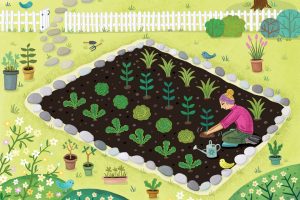
This sheet provides a clear, practical plan for planting two vegetable beds, each measuring 3 ft by 2 ft. It includes what to plant in March, how to prepare the soil, and simple layout suggestions.
1. Preparing the Soil
Steps for Both Beds
- Clear the surface: Remove weeds, old roots, stones, and debris.
- Loosen the soil: Use a hand fork or trowel to gently break up the top 6–8 inches.
- Add organic matter: Mix in 1–2 inches of compost or well-rotted manure to improve structure and fertility.
- Level and firm: Lightly pat the soil so it’s even but not compacted.
- Water lightly: Moisten the soil a day before planting so it’s damp but not soggy.
2. What to Plant in March
March is ideal for hardy, cool-season vegetables. These crops tolerate chilly nights and short days.
Suitable Vegetables
- Leafy greens: Lettuce, spinach, rocket
- Roots: Carrots, beetroot, radishes
- Alliums: Spring onions
- Herbs: Parsley, coriander
- Others: Peas, broad beans (if not already started)
3. Bed Layout Plans
Each bed is 3 ft × 2 ft. The layouts below maximise variety and productivity.
Bed 1: Quick Growers & Cut-and-Come-Again Greens
- Front row (1 ft): Radishes (quick harvest) + Spring onions
- Middle row (1 ft): Mixed lettuces (cut-and-come-again)
- Back row (1 ft): Spinach or rocket
Notes:
- Sow radishes every 2–3 weeks for continuous harvest.
- Lettuce and rocket can be harvested leaf-by-leaf.
Bed 2: Roots & Longer Growers
- Front row (1 ft): Beetroot (spaced 4–6 inches apart)
- Middle row (1 ft): Carrots (thin seedlings as they grow)
- Back row (1 ft): Peas (dwarf variety) with a small support frame
Notes:
- Peas benefit from a simple twiggy support.
- Carrots prefer fine, stone-free soil.
4. Planting Tips
- Spacing: Follow seed packet guidance; overcrowding reduces yield.
- Watering: Keep soil consistently moist, especially for germinating seeds.
- Protection: Use fleece on cold nights to protect young seedlings.
- Succession sowing: Re-sow fast crops like radishes and lettuce for steady harvests.
5. At-a-Glance Planting Chart
| Crop |
Sow in March |
Spacing |
Notes |
| Lettuce |
Yes |
6–8 in |
Harvest outer leaves regularly |
| Spinach |
Yes |
6 in |
Prefers cool weather |
| Rocket |
Yes |
4–6 in |
Fast-growing |
| Radish |
Yes |
2–3 in |
Ready in 4–6 weeks |
| Spring onions |
Yes |
1 in |
Slow but reliable |
| Carrots |
Yes |
Thin to 2–3 in |
Needs fine soil |
| Beetroot |
Yes |
4–6 in |
Harvest young or mature |
| Peas |
Yes |
2 in |
Provide support |
6. Summary
These two compact beds will give you a steady supply of greens, roots, and peas from spring into early summer. With simple soil preparation and regular sowing, you can keep both beds productive and tidy throughout the season.
Filed: allotment
|
|



