|
Archive for the 'General Gardening' Category
Sunday, November 13th, 2011
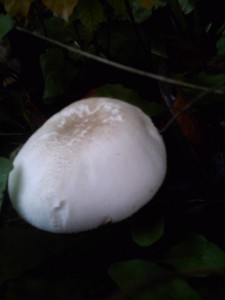 They look like white mushrooms you get at the supermarket but I’m not brave enough to pick and eat it without someone else telling me it’s ok. They look like white mushrooms you get at the supermarket but I’m not brave enough to pick and eat it without someone else telling me it’s ok.
Filed: General Gardening
Sunday, November 13th, 2011
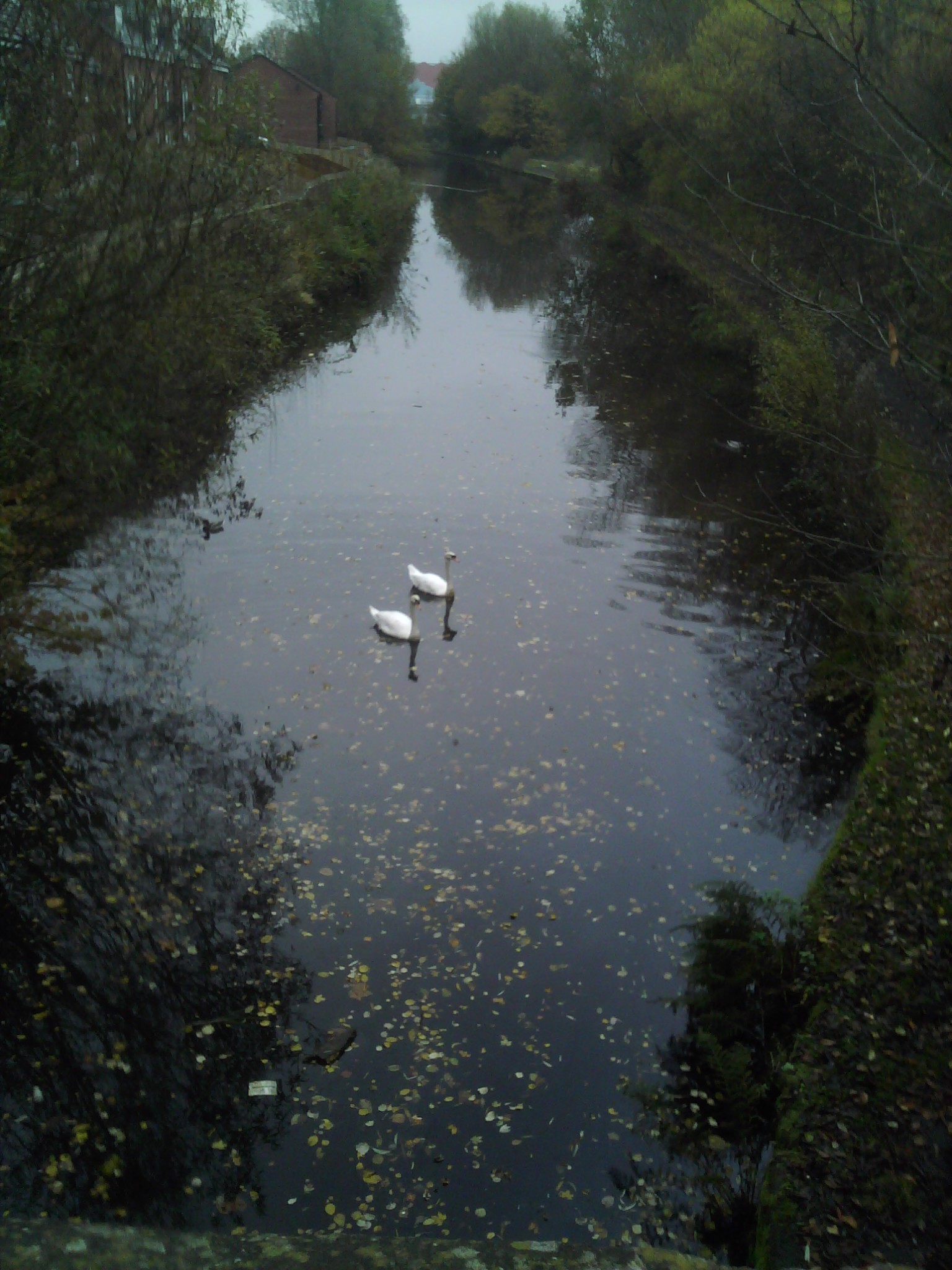 My allotment is near the Rochdale Canal. My allotment is near the Rochdale Canal.
Here is a photo I took a couple of days ago.
There are tons of leaves on the canal and the swans were there. It was a very gloomy day though!
Filed: General Gardening
Monday, September 26th, 2011
I have a project to develop alder (Alnus glutinosa) as a grain crop.
My reasons for this are:- Britain cannot feed itself because half its land is
too high and cold
for grain production. This is not because this land is infertile, the
tree-line is much higher than the crop line. It is because the main
grain crops originated in the Mediterranean and they are at the limit
of their range in Britain. To make use of this land we need to take a
plant which grows well in British upland conditions and breed it into
a suitable grain crop. There are many possible plants, and some sedges
show potential, but it would be a huge task to even evaluate them all. Instead
I have seized on the idea of alder because:-* It is a tree; it can be more productive
than a herb crop.
* Birds and small animals eat alder seeds and I know from many reports
and personal test that they are not harmful to man. Like other seed
crops, wheat, rice, oats, the taste lies in the preparation.
* It fixes nitrogen. Nitrate fertilisers are expensive and a big
source of CO2 production.
* It is a tree, once established it is insensitive to weather
variations.
* It is a tree, it does not need weeding and chemical weedkilling.
* The harvesting waste, chiefly cones, but also twigs, may be a useful
fuel, it comes in handy-sized pieces. The fallen leaves may also be
used as a fuel, they are plentiful.
* It is a tree, ground does not have to prepared for it every year
nor seed sown. This saves on the CO2 output of ploughing with heavy
machinery.
* Over its commercial life (50 years?) a tree will store a lot of
carbon.
* Alnus glutinosa grows in Tunisia and Algeria, the latitude of China
and Northern India. It could be useful there in holding back erosion
on steep slopes.But alder needs to be improved to become a grain crop. In particular
it needs bigger seeds. I spent the whole of last autumn going round
alders on Tyneside (You can’t do it in the rain, it is pleasant
work.), pulling cones off trees, breaking them open by rolling and
crushing them between two plates and sieving them. I found six trees
with SIGNIFICANTLY bigger seeds. They obviously weren’t the top end of
a bell-curve, they were a STEP bigger. I germinated these bigger
seeds, germination was poor, partly because of my inexperience with
this species, but partly also because many bigger seeds are
deformities or are stuffed with "cork". Nevertheless, some germinated
and produced cotyledons which were noticeably bigger than standard,
showing that they contained more food.I grafted these seedlings onto "adult"
trees on places on the branches
which should produce catkins and cones this year for fruiting next
year, but my grafting technique was poor and none of them took. I have
taken advice and I now know how to do better next year. (To hold such small stems
together I found it best to use
Hellermann sleeves, put over the stock end with a Hellermann
tool. These are normally used in electronic wiring. I came
to the belief that the usual grafting sealers contain
fungicides and alcohol which actually kill such small green
pieces. Vaseline seems to be the right stuff, we put it on
baby’s bottoms!)Grafting the products of hybridisation will shorten the breeding
cycle
from 7 years to 2 years.I went to the trees which had produced the bigger seeds,
covered their
cones with plastic bags to stop their neighbours from fertilising
them, and fertilised them from the other big-seed producers. I will
collect the results in the next few weeks.Bigger seeds are one thing I want, but
also I look at the cones and
think "They are too big. The tree wastes too much on them. I want
flimsier cones, although rolling and crushing the cones is fairly
efficient, I would like harvesting to be even easier." And so I would
like flimsier cones, something which can be seen just walking past.I would also
like trees with different growth habits. This could make
a big difference to harvesting methods. In this I have been lucky, I
have already found :-* Varieties with all-cone branches, producing very many more
cones.
* Varieties with almost all cones and no or very few catkins.
* A dwarf variety. What might be the harvesting use of this?
* A variety which has grown to 2.7 metres in 3 years.It would be asking too much
to ask people to break open cones and
sieve the seeds to find the biggest, though I would be grateful and
provide equipment and help to anybody who does want to do this.What I feel I can
ask is for people who walk past trees to look at
them with my needs in mind;-CONES – Do they look different to usual?GROWTH HABIT
– Does this tree have a different shape and branch
layout?You could tell me by phone – 0191 266 6435
You could tell me by e-mail – michael@beaverbell.co.uk
You could write to me –
20 Cambridge Avenue
Forest Hall
Newcastle upon Tyne
NE12 8ARWe could meet at an agreed place and you could take me to the tree you
have found and go to a pub after.You could send the Ordnance Grid reference.Thank
you for reading all this!Michael Bell–
Filed: General Gardening
Tuesday, July 19th, 2011
It’s an ancient art form – hedge laying!
It’s also good hedge management. These photos show it just done!
Filed: General Gardening
Wednesday, June 29th, 2011
Seen this listed elsewhere and though I’d include it:
We’re a community group in Reading and we need your help today Wednesday 29 June.
We want to create a thriving community allotment where local families
can grow fresh healthy food together. Today we’re in the final of a
contest to win the lottery grant we need to clear a derelict plot. But
to make it happen we need your help!
Please vote for Reading GrowAllot by phoning 0871 626 8868 (calls cost
11p from BT landlines, others may be more. Big Lottery donates any
profit from the call charges to charity)
And please spread the word to all your contacts. More info at ‘Food 4
Familes’ (http://www.food4families.org.uk) You can find Reading GrowAllot on twitter and facebook too.
Filed: General Gardening
Tuesday, June 21st, 2011
If you would like to share your photos with us then visit us at “How does your garden Grow” – join and then post your photos there!
We hope you’ll share with us your gardening stories and photos!
Filed: General Gardening
Saturday, May 28th, 2011
Native North American Foods – a blog in tthe US with articles about wild plants that are edible. Interesting site and one worth a read!
Filed: General Gardening
Wednesday, May 25th, 2011
Something to do with some of the fruit you grow! This recipe is from Dave Hill
Take a litr bottle, fill it with Black currants (Raspberries, Loganberries Blackberries etc) add a couple of tablespoons of sugar then fill with Vodka, shake well, add more vodka if there is room,
then leave for a few months Shaking it every week or so.
After a few months you will have quite a drink.
WARNING
When you drain the drink off the fruit remember that the fruit still
contains almost pure vodka.
I did this once with Loganberies, and made a flan from the fruit, Wow!
what a kick.
Over 18s only though!
Filed: General Gardening
Saturday, May 14th, 2011
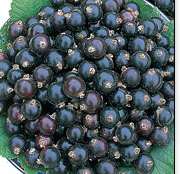 My dad’s hint for picking them is to use cutters and take the fruit off using secateurs. You just cut off the branches that have fruit on them, right back to the base of the plant. This gets the pruning done too! Don’t worry about the leaves and stem – you then sit down somewhere with the radio on and take the berries off the stalks! My dad’s hint for picking them is to use cutters and take the fruit off using secateurs. You just cut off the branches that have fruit on them, right back to the base of the plant. This gets the pruning done too! Don’t worry about the leaves and stem – you then sit down somewhere with the radio on and take the berries off the stalks!
The same applies to red, white and black -currants too!
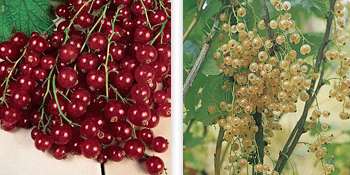
Why not plant some currant bushes in your fruit garden?
Ben Sarek Bush grows to about 3ft high.
Redcurrant Rovada – heavy crop with high quality large fruit of a good flavour.
Whitecurrant Blanka – Heavy cropping variety, with almost transparent ivory-coloured berries in August. The sweet currants can be used to make a good medium dry white wine.
Plant from Novemeber until about March.
You can plant well spaced apart in a fruit cage if you have one. As they stay in the same place for many years ensure the ground is well weeded, deeply dug and enriched with well rotted manure or compost. They need a slightly acidic soil – around pH 6 to 6.5
They don’t like a waterlogged soil so it’s important to dig well down to ensure there’s no clay pan that will hold water underneath them. When you plant you should prune back hard to encourage new growth.
The bush fruits on last years growth so it’s important how you prune. You prune when the plant is dormant in winter. You should prune to get rid of bent and damaged branches, plus any non-productive woody branches that are more than 3 years old. You can prune very hard – professional growers cut it right back to the ground but that does mean they only harvest every other year. Don’t be afraid of pruning hard – you should get bigger and better berries – but beware if you take too much growth off you’ll have nothing to produce fruit the next year.
Filed: General Gardening
Tuesday, April 12th, 2011
‘Adopt a Veg’ is a charitable gift product that helps support the invaluable work of Garden Organic, sharing skills and knowledge within schools and local communities, researching and promoting best organic practice to thousands of individuals, and helping to grow and preserve our seed heritage. So whether it’s Christmas, a birthday, another special occasion or just to put a smile on the face of a loved one, Adopt A Veg is a great alternative and ethical gift.

Filed: General Gardening
|
|



