|
Archive for February, 2014
Tuesday, February 18th, 2014
Van Meuwen just added these new items
Bay Tree Standard – 2 standard trees in 4 litre pots £59.98
Customer Review RatingTop chefs’ favourite herbLong-lasting, aromatic, edible evergreen foliageCreate a beautiful stately lookAdd a touch of class to your garden with this beautiful, evergreen Bay Tree. It will thrive in any sheltered position, its neat ball of evergreen foliage sitting atop elegant stems. Ideal for creating a smart entrance either side of a doorway, or the perfect pick-me-up for your garden archway. Easy to grow – perfectly content in containers – and with a little pruning each summer and a good supply of water, your Bay will bring you pleasure for years to come. The glossy aromatic leaves – which will keep for months indoors – are widely used in country kitchens, either fresh, dried or ground. Standard Bay 1.2m high. Supplied in 4 litre pot.
Read the rest of this entry »
Filed: Jersey Plants, New Products
Tuesday, February 18th, 2014
John Lewis has these new products today
Read the rest of this entry »
Filed: John Lewis, New Products
Tuesday, February 18th, 2014
GreenFingers has cut the price of these lines
 Greenfingers Dragonfly String Solar Lights – Set of 10 was £8.99 now £6.99
Add a touch of magic to your garden at night with these beautiful Greenfingers Dragonfly Solar Lights! They are ideal for brightening up darkened areas of your garden and automatically light up at dusk so why not hang them around your bushes topiaries or hedges to produce an eye-catching effect. You also have the added option of changing the lighting effect from constant to flashing. A separate monocrystalline solar panel allows you to install these delightful dragonflies in a dark area whilst keeping the panel in direct sunlight. 10 bright white LEDs1 x AA Ni-MH rechargeable battery includedOn/off switchMeets EN Standards: 55015:2006 A1:2007 A2:2009 61547:2009Dimensions: Overall Cable length: 3.8mDistance between lights: 20cmSolar Panel to First Light: 2mIndividual size: approx. 10cm x 6.5cmWe recommend the solar panel is exposed to direct sunlight for as long as possible; it takes approximately 10-16 hours to fully charge and provides 8 hours of light.Please let the batteries fully charge with the lights switched off before using. If you need more solar lighting ideas for your garden then please click here for the Solar Lighting department.
Read the rest of this entry »
Filed: GreenFingers, Price Reductions
Tuesday, February 18th, 2014
New items today at GreenFingers
Singapore Contemporary Parasol 2.7m Black £79.99
Add a contemporary modern touch to your patio or garden set with this black Singapore Parasol. The fabulous design has been based upon traditional Chinese oil paper parasols; it is stylish and sturdy and features a curved canopy supported by 18 fibreglass ribs. This unique design twist enables the parasol to better withstand the elements. Set on a lightweight aluminium pole the parasol also has a crank handle and tilt system which makes opening up and adjusting your parasol easy. It is a quality product that not only looks attractive but also has an attractive price. A great parasol to provide you with shade from the sun that also comes with a handy storage bag for when it is not in use.Shower and UV resistantMatching storage bagDimensions: 2.7m
Read the rest of this entry »
Filed: GreenFingers, New Products
Tuesday, February 18th, 2014
Crocus reduced the price on these lines today
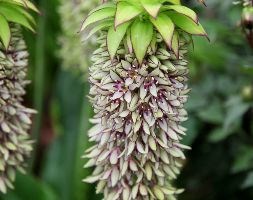 Eucomis bicolor (pineapple lily bulbs) was £3.99 now £1.99
Position: full sun Soil: fertile, well-drained soil (or loam-based potting compost with sharp sand or grit for container-grown specimens) Rate of growth: average Flowering period: July and August Hardiness: borderline hardy (may need winter protection) A spectacular plant, with spikes of purple-edged, pale green star-shaped flowers on purple-spotted stems in July and August, topped with a pineapple-like tuft a bove a rosette of wide, fleshy leaves. This distinctive, summer-flowering bulb looks stunning planted in clumps in a large, well-drained container or in a sun ny, exotic-style garden. Since it’s not fully hardy in frost-prone areas, it’s best over-wintered indoors in a cool greenhouse. Garden care: Plant bulbs 12cm deep as soon as possible, allowing 20cm between each. In colder areas, provide some protection until the worst of the frosts have passed. Water freely during the growing season and sparingly during winter. Protect the crown of the plant with a dry winter mulch or over-winter indoors under glass. Top-dress or re-pot container- grown specimens each spring.
Read the rest of this entry »
Filed: Crocus, Price Reductions
Monday, February 17th, 2014
New product at John Lewis
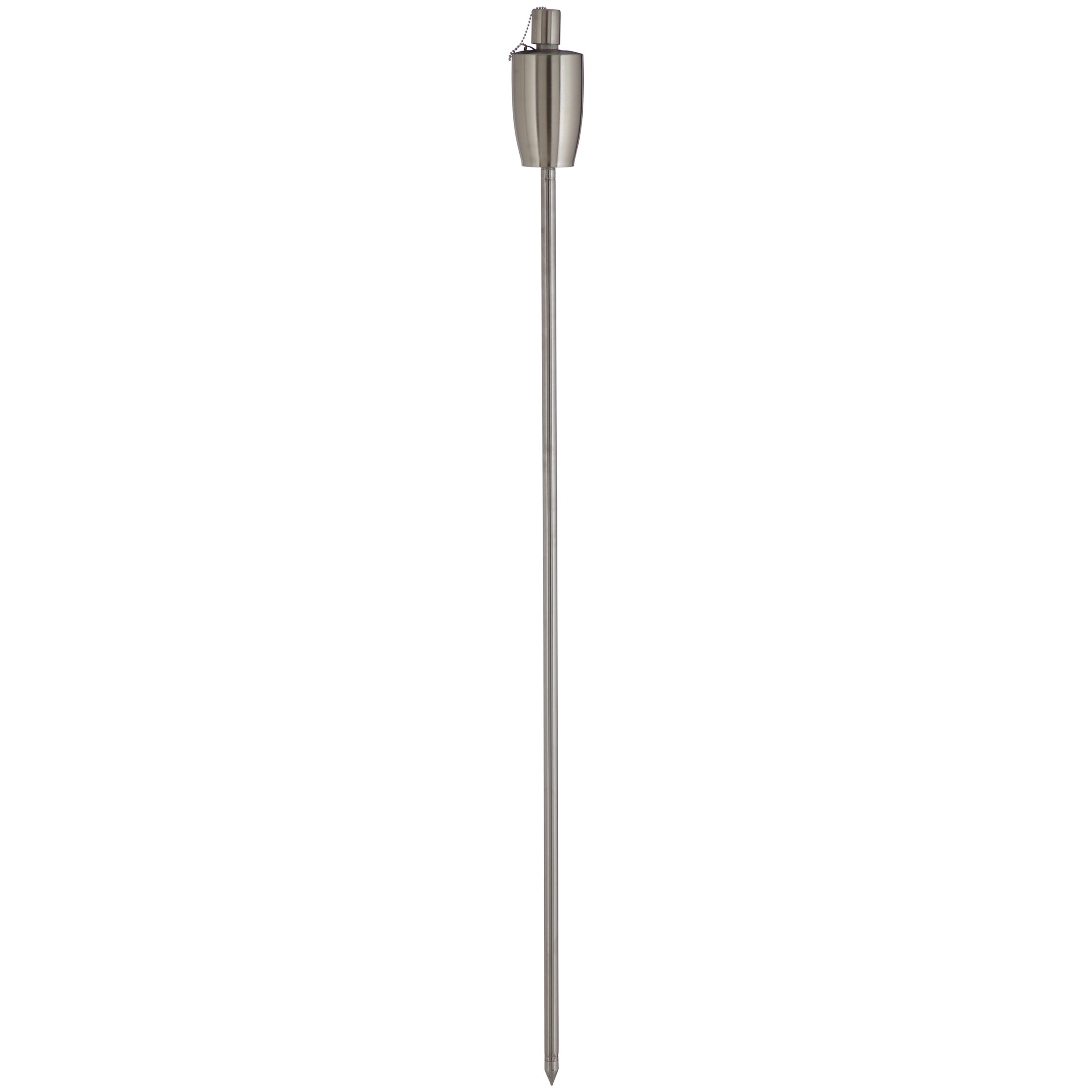
La Hacienda Outdoor Oil Torch, Steel £15.00
Light pathways, lawns and borders in style with this stainless steel garden torch. It uses clean-burning Citronella oil (85040205) available separately.
Filed: John Lewis, New Products
Monday, February 17th, 2014
So easy to grow! They don’t need fussing over until they start fruiting and then you might have to think about lifting the fruits up on straw or netting them. But if you don’t they you will probably still get a crop. Delicious and a great treat to pick.
If you let them spread without restraint then will cover an area which will make it hard to get in between plants to pick. You can pot up runners and move them where you want them.

strawberry ‘Sweetheart’ (strawberry Sweetheart – mid season fruiting ( Fragaria vesca )) £7.49
Position: full sun Soil: any soil Rate of growth: fast-growing Other features: ready to pick from June Hardiness: fully hardy Sweet, conical berries appear mid-season on vigorous plants that have a good resistance to mildew. A recently introduced cultivar, it has consistently scored well in tests for fruit production and taste. Garden care: These strawberry runners are sent out as bare root (ie not potted up or in soil) plants. They are completely dormant, so any remaining foliage or stems will look shrivelled and dry. They should be planted out within a couple of days of arrival. Once they are planted out, they will emerge from their dormancy and start to put on new growth in spring (or within a 4 – 6 weeks if planted in spring). Choose a spot in full sun and prepare the bed well by removing all the weeds and digging in a generous amount of compost. You can also work in some general purpose fertiliser if planting in spring. When you are ready to plant, fill a bucket with tepid water and leave the plants to soak for 20 minutes. This will rehydrate the roots. While they are soaking, prepare the planting holes – these should be approximately twice as wide as the strawberries root system. Plant the strawberries so the crown (the point where the roots meet the stem) is at soil level, and spread the roots out before re-filling with soil. Space them at 45cm intervals, allowing 75cm between each row. After planting, immediately give them a thorough water and apply a generous layer of mulch around the base of the plants, being careful to avoid the crown. Keep the plants well watered, especially during warmer weather and when the fruits are developing. When the strawberries are starting to form, a thick layer of straw or a strawberry mulch mat can be placed under the plants to stop the fruit touching the soil. Sheets of black plastic mulch can also be used, and this will also help retain soil moisture, reduce weeds and encourage early cropping. Strawberries can also be planted in tubs, containers and hanging baskets.

strawberry ‘Scarlet Beauty’ (alpine strawberry) £7.49
Position: full sun or lightly dappled shade Soil: any soil Rate of growth: fast-growing Other features: ready to pick from June Hardiness: fully hardy The fruit of this alpine strawberry may be smaller than those grown commercially, but what it lacks in size it makes up for in flavour. We have love it because not only does it make pretty groundcover at the front of the border, but it will also produce a bumper crop of deliciously sweet berries from early summer onwards. Where space is limited it will happily grow in pots or hanging baskets. Garden care: These strawberry runners are sent out as bare root (ie not potted up or in soil) plants. They are completely dormant, so any remaining foliage or stems will look shrivelled and dry. They should be planted out within a couple of days of arrival. Once they are planted out, they will emerge from their dormancy and start to put on new growth in spring (or within a 4 – 6 weeks if planted in spring). Choose a spot in full sun and prepare the bed well by removing all the weeds and digging in a generous amount of compost. You can also work in some general purpose fertiliser if planting in spring. When you are ready to plant, fill a bucket with tepid water and leave the plants to soak for 20 minutes. This will rehydrate the roots. While they are soaking, prepare the planting holes – these should be approximately twice as wide as the strawberries root system. Plant the strawberries so the crown (the point where the roots meet the stem) is at soil level, and spread the roots out before re-filling with soil. Space them at 45cm intervals, allowing 75cm between each row. After planting, immediately give them a thorough water and apply a generous layer of mulch around the base of the plants, being careful to avoid the crown. Keep the plants well watered, especially during warmer weather and when the fruits are developing. When the strawberries are starting to form, a thick layer of straw or a strawberry mulch mat can be placed under the plants to stop the fruit touching the soil. Sheets of black plastic mulch can also be used, and this will also help retain soil moisture, reduce weeds and encourage early cropping. Strawberries can also be planted in tubs, containers and hanging baskets.

strawberry ‘Lucy’ (PBR) (strawberry Lucy – late season fruiting) £7.49
Position: full sun Soil: any soil Rate of growth: fast-growing Other features: ready to pick from mid June Hardiness: fully hardy Producing a high yield of top-class large fruits, which have firm, juicy flesh and a bright red skin, this vigorous strawberry also shows a good resistance to diseases. It copes well with heavy rain, making it particularly well suited to growing here in the UK. Garden care: These strawberry runners are sent out as bare root (ie not potted up or in soil) plants. They are completely dormant, so any remaining foliage or stems will look shrivelled and dry. They should be planted out within a couple of days of arrival. Once they are planted out, they will emerge from their dormancy and start to put on new growth in spring (or within a 4 – 6 weeks if planted in spring). Choose a spot in full sun and prepare the bed well by removing all the weeds and digging in a generous amount of compost. You can also work in some general purpose fertiliser if planting in spring. When you are ready to plant, fill a bucket with tepid water and leave the plants to soak for 20 minutes. This will rehydrate the roots. While they are soaking, prepare the planting holes – these should be approximately twice as wide as the strawberries root system. Plant the strawberries so the crown (the point where the roots meet the stem) is at soil level, and spread the roots out before re-filling with soil. Space them at 45cm intervals, allowing 75cm between each row. After planting, immediately give them a thorough water and apply a generous layer of mulch around the base of the plants, being careful to avoid the crown. Keep the plants well watered, especially during warmer weather and when the fruits are developing. When the strawberries are starting to form, a thick layer of straw or a strawberry mulch mat can be placed under the plants to stop the fruit touching the soil. Sheets of black plastic mulch can also be used, and this will also help retain soil moisture, reduce weeds and encourage early cropping. Strawberries can also be planted in tubs, containers and hanging baskets.

strawberry ‘Leo Alba’ (alpine strawberry) £7.49
Position: full sun to light shade Soil: any soil Rate of growth: fast-growing Other features: ready to pick June / July Hardiness: fully hardy The unusual fruits of this alpine strawberry never ripen to red, but you will know they are ripe and ready to pick when they feel soft to the touch. Their flavour is unexpectedly refreshing too, sweet and delicate, with undertones of vanilla and pineapple. Smaller than the commercially grown strawberries, these have the advantage though of being able to crop over a much longer period in ideal conditions. Garden care: These strawberry runners are sent out as bare root (ie not potted up or in soil) plants. They are completely dormant, so any remaining foliage or stems will look shrivelled and dry. They should be planted out within a couple of days of arrival. Once they are planted out, they will emerge from their dormancy and start to put on new growth in spring (or within a 4 – 6 weeks if planted in spring). Choose a spot in full sun and prepare the bed well by removing all the weeds and digging in a generous amount of compost. You can also work in some general purpose fertiliser if planting in spring. When you are ready to plant, fill a bucket with tepid water and leave the plants to soak for 20 minutes. This will rehydrate the roots. While they are soaking, prepare the planting holes – these should be approximately twice as wide as the strawberries root system. Plant the strawberries so the crown (the point where the roots meet the stem) is at soil level, and spread the roots out before re-filling with soil. Space them at 45cm intervals, allowing 75cm between each row. After planting, immediately give them a thorough water and apply a generous layer of mulch around the base of the plants, being careful to avoid the crown. Keep the plants well watered, especially during warmer weather and when the fruits are developing. When the strawberries are starting to form, a thick layer of straw or a strawberry mulch mat can be placed under the plants to stop the fruit touching the soil. Sheets of black plastic mulch can also be used, and this will also help retain soil moisture, reduce weeds and encourage early cropping. Strawberries can also be planted in tubs, containers and hanging baskets.

strawberry ‘Honeoye’ (strawberry – early season fruiting) £7.49
Position: full sun Soil: any soil Rate of growth: fast-growing Other features: tasty, orange-red fruit (mid-June to mid-July) Cropping times may be brought forward or extended if you are growing them in a greenhouse or cloche tunnel. Hardiness: fully hardy The proven standard early strawberry variety, fruiting 4 – 6 days earlier than Elsanta. Bright, shiny, good quality fruits. Produces heavy yields with high percentage large fruit. This variety is often grown at Pick Your Own’s so you can tell its a good cropper! Garden care: These strawberry runners are sent out as bare root (ie not potted up or in soil) plants. They are completely dormant, so any remaining foliage or stems will look shrivelled and dry. They should be planted out within a couple of days of arrival. Once they are planted out, they will emerge from their dormancy and start to put on new growth in spring (or within 4 – 6 weeks if planted in spring). Choose a spot in full sun and prepare the bed well by removing all the weeds and digging in a generous amount of compost. You can also work in some general purpose fertiliser if planting in spring. When you are ready to plant, fill a bucket with tepid water and leave the plants to soak for 20 minutes. This will rehydrate the roots. While they are soaking, prepare the planting holes – these should be approximately twice as wide as the strawberries root system. Plant the strawberries so the crown (the point where the roots meet the stem) is at soil level, and spread the roots out before re-filling with soil. Space them at 45cm intervals, allowing 75cm between each row. After planting, immediately give them a thorough water and apply a generous layer of mulch around the base of the plants, being careful to avoid the crown. Keep the plants well watered, especially during warmer weather and when the fruits are developing. When the strawberries are starting to form, a thick layer of straw or a strawberry mulch mat can be placed under the plants to stop the fruit touching the soil. Sheets of black plastic mulch can also be used, and this will also help retain soil moisture, reduce weeds and encourage early cropping. Strawberries can also be planted in tubs, containers and hanging baskets.

strawberry ‘Fenella’ (PBR) (strawberry – mid to late season fruiting) £7.49
Position: full sun Soil: any soil Rate of growth: fast-growing Other features: tasty, red fruit (mid-July) Cropping times may be brought forward or extended if you are growing them in a greenhouse or cloche tunnel. Hardiness: fully hardy Standing up well to adverse weather conditions, this vigorous plant bears a heavy crop of fruit late in the season. The large, aromatic berries are very sweet and juicy, have a glossy, orange-red skin, and store well after being picked from mid-July. Garden care: These strawberry runners are sent out as bare root (ie not potted up or in soil) plants. They are completely dormant, so any remaining foliage or stems will look shrivelled and dry. They should be planted out within a couple of days of arrival. Once they are planted out, they will emerge from their dormancy and start to put on new growth in spring (or within a 4 – 6 weeks if planted in spring). Choose a spot in full sun and prepare the bed well by removing all the weeds and digging in a generous amount of compost. You can also work in some general purpose fertiliser if planting in spring. When you are ready to plant, fill a bucket with tepid water and leave the plants to soak for 20 minutes. This will rehydrate the roots. While they are soaking, prepare the planting holes – these should be approximately twice as wide as the strawberries root system. Plant the strawberries so the crown (the point where the roots meet the stem) is at soil level, and spread the roots out before re-filling with soil. Space them at 45cm intervals, allowing 75cm between each row. After planting, immediately give them a thorough water and apply a generous layer of mulch around the base of the plants, being careful to avoid the crown. Keep the plants well watered, especially during warmer weather and when the fruits are developing. When the strawberries are starting to form, a thick layer of straw or a strawberry mulch mat can be placed under the plants to stop the fruit touching the soil. Sheets of black plastic mulch can also be used, and this will also help retain soil moisture, reduce weeds and encourage early cropping. Strawberries can also be planted in tubs, containers and hanging baskets.

strawberry ‘Cupid’ (strawberry Cupid – late season fruiting) £7.49
Position: full sun Soil: any soil Rate of growth: fast-growing Other features: ready to pick from July Hardiness: fully hardy Glossy-skinned fruits appear amongst the vigorous growth of this extremely disease-resistant variety. A late cropper, it performs well on a wide range of soils and growing conditions, and it has a mouth-watering flavour. Garden care: These strawberry runners are sent out as bare root (ie not potted up or in soil) plants. They are completely dormant, so any remaining foliage or stems will look shrivelled and dry. They should be planted out within a couple of days of arrival. Once they are planted out, they will emerge from their dormancy and start to put on new growth in spring (or within a 4 – 6 weeks if planted in spring). Choose a spot in full sun and prepare the bed well by removing all the weeds and digging in a generous amount of compost. You can also work in some general purpose fertiliser if planting in spring. When you are ready to plant, fill a bucket with tepid water and leave the plants to soak for 20 minutes. This will rehydrate the roots. While they are soaking, prepare the planting holes – these should be approximately twice as wide as the strawberries root system. Plant the strawberries so the crown (the point where the roots meet the stem) is at soil level, and spread the roots out before re-filling with soil. Space them at 45cm intervals, allowing 75cm between each row. After planting, immediately give them a thorough water and apply a generous layer of mulch around the base of the plants, being careful to avoid the crown. Keep the plants well watered, especially during warmer weather and when the fruits are developing. When the strawberries are starting to form, a thick layer of straw or a strawberry mulch mat can be placed under the plants to stop the fruit touching the soil. Sheets of black plastic mulch can also be used, and this will also help retain soil moisture, reduce weeds and encourage early cropping. Strawberries can also be planted in tubs, containers and hanging baskets.

strawberry ‘Buddy’ (strawberry) £7.49
Position: full sun Soil: any soil Rate of growth: fast-growing Hardiness: fully hardy Just released onto the market, ‘Buddy’ is an everbearing strawberry that is being hailed as a breakthrough in breading. This is because all the everbearing strawberries to date have produced a big crop of long-lasting fruits, but often at the expense of the flavour. ‘Buddy’ has all the benefits associated with the everbearers, but it also has a delicious flavour. It has also shown a good resistance to most common soil borne diseases and although trials are still ongoing, its resistance to powdery mildew is also very promising. Garden care: These strawberry runners are sent out as bare root (ie not potted up or in soil) plants. They are completely dormant, so any remaining foliage or stems will look shrivelled and dry. They should be planted out within a couple of days of arrival. Once they are planted out, they will emerge from their dormancy and start to put on new growth in spring (or within a 4 – 6 weeks if planted in spring). Choose a spot in full sun and prepare the bed well by removing all the weeds and digging in a generous amount of compost. You can also work in some general purpose fertiliser if planting in spring. When you are ready to plant, fill a bucket with tepid water and leave the plants to soak for 20 minutes. This will rehydrate the roots. While they are soaking, prepare the planting holes – these should be approximately twice as wide as the strawberries root system. Plant the strawberries so the crown (the point where the roots meet the stem) is at soil level, and spread the roots out before re-filling with soil. Space them at 45cm intervals, allowing 75cm between each row. After planting, immediately give them a thorough water and apply a generous layer of mulch around the base of the plants, being careful to avoid the crown. Keep the plants well watered, especially during warmer weather and when the fruits are developing. When the strawberries are starting to form, a thick layer of straw or a strawberry mulch mat can be placed under the plants to stop the fruit touching the soil. Sheets of black plastic mulch can also be used, and this will also help retain soil moisture, reduce weeds and encourage early cropping. Strawberries can also be planted in tubs, containers and hanging baskets.

strawberry ‘Albion’ (PBR) (everbearer strawberry – autumn season fruiting) £7.49
Position: full sun Soil: any soil Rate of growth: fast-growing Other features: tasty, red fruit (July to November) Cropping times may be brought forward or extended if you are growing them in a greenhouse or cloche tunnel. Hardiness: fully hardy An ever-bearing strawberry that can start cropping as early as late May, and continue producing its fruits intermittently until September. Each sweet, succulent berry has a long, conical shape, bright red skin and uniformly red flesh. It has an excellent resistance to disease too. Garden care: These strawberry runners are sent out as bare root (ie not potted up or in soil) plants. They are completely dormant, so any remaining foliage or stems will look shrivelled and dry. They should be planted out within a couple of days of arrival. Once they are planted out, they will emerge from their dormancy and start to put on new growth in spring (or within a 4 – 6 weeks if planted in spring). Choose a spot in full sun and prepare the bed well by removing all the weeds and digging in a generous amount of compost. You can also work in some general purpose fertiliser if planting in spring. When you are ready to plant, fill a bucket with tepid water and leave the plants to soak for 20 minutes. This will rehydrate the roots. While they are soaking, prepare the planting holes – these should be approximately twice as wide as the strawberries root system. Plant the strawberries so the crown (the point where the roots meet the stem) is at soil level, and spread the roots out before re-filling with soil. Space them at 45cm intervals, allowing 75cm between each row. After planting, immediately give them a thorough water and apply a generous layer of mulch around the base of the plants, being careful to avoid the crown. Keep the plants well watered, especially during warmer weather and when the fruits are developing. When the strawberries are starting to form, a thick layer of straw or a strawberry mulch mat can be placed under the plants to stop the fruit touching the soil. Sheets of black plastic mulch can also be used, and this will also help retain soil moisture, reduce weeds and encourage early cropping. Strawberries can also be planted in tubs, containers and hanging baskets.

strawberry ‘Cambridge Favourite’ (strawberry – mid season fruiting) £5.99
Position: full sun Soil: any soil Rate of growth: fast-growing Other features: tasty, orange-red fruit (mid-June to mid-July) Cropping times may be brought forward or extended if you are growing them in a greenhouse or cloche tunnel. Hardiness: fully hardy This is one of the most well-known and loved strawberry varieties available. It is a reliable cropper, has good all-round disease resistance and performs well on a wide range of soils and growing conditions. It produces medium-sized, orange-red fruit from mid-June, which hold their shape and flavour very well. Garden care: These strawberry runners are sent out as bare root (ie not potted up or in soil) plants. They are completely dormant, so any remaining foliage or stems will look shrivelled and dry. They should be planted out within a couple of days of arrival. Once they are planted out, they will emerge from their dormancy and start to put on new growth in spring (or within 4 – 6 weeks if planted in spring). Choose a spot in full sun and prepare the bed well by removing all the weeds and digging in a generous amount of compost. You can also work in some general purpose fertiliser if planting in spring. When you are ready to plant, fill a bucket with tepid water and leave the plants to soak for 20 minutes. This will rehydrate the roots. While they are soaking, prepare the planting holes – these should be approximately twice as wide as the strawberries root system. Plant the strawberries so the crown (the point where the roots meet the stem) is at soil level, and spread the roots out before re-filling with soil. Space them at 45cm intervals, allowing 75cm between each row. After planting, immediately give them a thorough water and apply a generous layer of mulch around the base of the plants, being careful to avoid the crown. Keep the plants well watered, especially during warmer weather and when the fruits are developing. When the strawberries are starting to form, a thick layer of straw or a strawberry mulch mat can be placed under the plants to stop the fruit touching the soil. Sheets of black plastic mulch can also be used, and this will also help retain soil moisture, reduce weeds and encourage early cropping. Strawberries can also be planted in tubs, containers and hanging baskets.
Filed: Crocus
Monday, February 17th, 2014
To commemorate the first world war I will be growing poppies every year for the next four years. My hope is they will self-seed and that I can share the seed I collect with other people to enable my street to be a sea of poppies by the time of the anniversary of the end of the war.
I’ll be growing a few types but will be making sure I grow proper flanders field poppies – red as blood poppies which will remind people.

Papaver rhoeas (field poppy) £2.49
Position: full sun Soil: well-drained, preferably poor soil Rate of growth: average Hardiness: fully hardy Once a common sight in cornfields, this brilliant red field poppy is perfect for a sunny wildflower garden or meadow, where it will self-seed freely. Profits from these seeds are used to protect existing wildflower areas and develop new sites where wildflowers can grow. In folklore field poppies were believed to cause thunderstorms. Garden care: When sowing seeds do not use a fertiliser since wildflowers prefer poor soils. In autumn after flowering cut the faded flower-heads down to the ground and compost the dead stems. Sow: March-May or September-October Flowering: August-September or May-July Approximate quantity: 5000 seeds.

Papaver commutatum (Caucasian scarlet poppy) £0.99
Position: full sun Soil: well-drained, preferably poor soil Rate of growth: average Flowering period: June to August Hardiness: hardy annual The upright stems carrying the flower buds snake up from amongst softly hairy grey-green foliage in summer and split open to reveal deep red petals, each with a black spot at its base. These vibrant flowers form big bowls of colour, and as the petals drop, the ground beneath becomes a vivid carpet. Garden care: They tend to resent root disturbance, so sow shallowly, directly into a well prepared bed in spring and water well. As the seedlings develop, thin them out to 30cm intervals keeping just the healthiest and most robust plants. When watering, give the plants a really thorough soak when the soil gets dry, rather than a little water every day. Dead-heading will prolong the flowering period, but at the end of the season you should let some seed heads to develop for next years crop. Sow: March-May Flowering: June-August Approximate quantity: 1000 seeds.

Papaver orientale ‘(Goliath Group) Beauty of Livermere’ (poppy) £4.99
Position: full sun Soil: moist, well-drained Rate of growth: fast-growing Flowering period: May to July Hardiness: fully hardy A really exuberant oriental poppy, with sumptuous, large pillar-box red flowers in early summer and downy, mid green leaves. The silky tissue- paper petals of this tall, strong-stemmed poppy are splashed with black and each flower has a dark, velvety centre. Although the flowers of all oriental poppies are ephemeral, they are easy to grow, bring a zing to any planting scheme and each plant will produce several flowers. It cut back after flowering, they may even produce a second flush. Plant in a sunny border, alongside grasses or late summer-flowering perennials, such as dahlias, which will provide interest when the plant has died back. Garden care: Cut back to ground level after flowering. Lift and divide large clumps in autumn.

Papaver orientale ‘Harlem’ (New York Series) (oriental poppy) £9.99
Position: full sun Soil: moist, well-drained Rate of growth: fast growing Flowering period: May to June Flower colour: burgundy-pink Other features: dried seed heads are useful for flower arrangements Hardiness: fully hardy A big hit at this years (2011) Chesea Flower Show, where it was featured in Luciano Giubbilei’s garden for Laurent Perrier, this oriental poppy has big, blowsy burgundy-pink flowers. It is an easy to grow plant, producing early summer colour, and later decorative seedheads. Garden care: Cut back to ground level after flowering. Lift and divide large clumps in autumn

Papaver orientale ‘Patty’s Plum’ (oriental poppy) £5.99
Position: full sun/part-shade Soil: moist, well-drained Rate of growth: fast-growing Flowering period: May to July Hardiness: fully hardy A really luscious oriental poppy with deep reddish-purple flowers in early summer and bristly, grey-green leaves. The silky, pleated petals of this popular variety have been compared to the faded silk of antique ball gowns. Although the flowers of all oriental poppies are ephemeral, they are easy to grow and each plant will produce several flowers. If cut back after flowering, they may even produce a second flush. Plant it in a sunny border, as part of a cottage-garden scheme, alongside grasses or late summer-flowering perennials, such as dahlias, which will provide interest when the plant has died back. ‘Patty’s Plum’ contrasts particularly well with silver foliage plants. It will need staking, as it has a tendance to sprawl. Garden care: Cut back to ground level after flowering. Lift and divide large clumps in autumn.

Papaver orientale ‘Patty’s Plum’ (oriental poppy) £7.99
Position: full sun/part-shade Soil: moist, well-drained Rate of growth: fast-growing Flowering period: May to July Hardiness: fully hardy A really luscious oriental poppy with deep reddish-purple flowers in early summer and bristly, grey-green leaves. The silky, pleated petals of this popular variety have been compared to the faded silk of antique ball gowns. Although the flowers of all oriental poppies are ephemeral, they are easy to grow and each plant will produce several flowers. If cut back after flowering, they may even produce a second flush. Plant it in a sunny border, as part of a cottage-garden scheme, alongside grasses or late summer-flowering perennials, such as dahlias, which will provide interest when the plant has died back. ‘Patty’s Plum’ contrasts particularly well with silver foliage plants. It will need staking, as it has a tendance to sprawl. Garden care: Cut back to ground level after flowering. Lift and divide large clumps in autumn.

Papaver orientale ‘Pink Ruffles’ (PBR) (oreintal poppy) £7.99
Position: full sun Soil: moist, well-drained Rate of growth: fast growing Flowering period: May to June Flower colour: apricot-pink Other features: dried seed heads are useful for flower arrangements Hardiness: fully hardy Each orange-flushed, pink petal has a dark plum blotch at its base. These surround a near-black centre with a cluster of stamens, forming very attractive, semi-double flowers, which appear in abundance providing a wonderful contrast to deep shades of plum and purple. Garden care: Cut back to ground level after flowering. Lift and divide large clumps in autumn

Papaver orientale ‘Royal Wedding’ (oriental poppy) £7.99
Position: full sun Soil: moist, well-drained Rate of growth: fast-growing Flowering period: May to July Flower colour: white with a black blotch Other features: dried seed-heads are useful for flower arrangements Hardiness: fully hardy Exquisite, white flowers each with a black centre, top downy, upright stems in early summer. This striking oriental poppy will flourish in any sunny, well drained border, however it looks particularly good in a contemporary setting where the colour range has been restricted to whites and silvers. Garden care: Cut back to ground level after flowering. Lift and divide large clumps in autumn.

Papaver orientale ‘Royal Wedding’ (poppy Royal Wedding) £4.99
Position: full sun Soil: moist, well-drained Rate of growth: fast-growing Flowering period: May to July Flower colour: white with a black blotch Other features: dried seed-heads are useful for flower arrangements Hardiness: fully hardy Exquisite, white flowers each with a black centre, top downy, upright stems in early summer. This striking oriental poppy will flourish in any sunny, well drained border, however it looks particularly good in a contemporary setting where the colour range has been restricted to whites and silvers. Garden care: Cut back to ground level after flowering. Lift and divide large clumps in autumn.

Papaver orientale ‘Ruffled Patty’ (PBR) (oreintal poppy) £7.99
Position: full sun Soil: moist, well-drained Rate of growth: fast growing Flowering period: May to June Flower colour: lilac-pink Other features: dried seed heads are useful for flower arrangements Hardiness: fully hardy Stout, bristly stems are topped with rounded green buds, which open to large, lilac-pink flowers that are often streaked with a rich shade of crimson towards the base of the petals. Standing up well to inclement weather, this magnificent cultivar rarely needs staking. Garden care: Cut back to ground level after flowering. Lift and divide large clumps in autumn
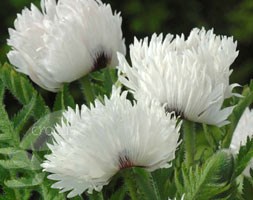
Papaver orientale ‘White Ruffles’ (PBR) (oriental poppy) £7.99
Position: full sun Soil: moist, well-drained Rate of growth: fast growing Flowering period: May to June Flower colour: white Other features: dried seed heads are useful for flower arrangements Hardiness: fully hardy Frilly-looking white flowers with a darkly contrasting base, appear on leafy, upright stems above the clumps of basal foliage creating textural interest in the border. After the petals have fallen, promptly cutting back the entire stem may encourage more flowers to form. Garden care: Cut back to ground level after flowering. Lift and divide large clumps in autumn

Papaver orientale (Goliath Group) ‘Beauty of Livermere’ (oriental poppy) £7.99
Position: full sun Soil: moist, well-drained Rate of growth: fast-growing Flowering period: May to July Hardiness: fully hardy A really exuberant oriental poppy, with sumptuous, large pillar-box red flowers in early summer and downy, mid green leaves. The silky tissue- paper petals of this tall, strong-stemmed poppy are splashed with black and each flower has a dark, velvety centre. Although the flowers of all oriental poppies are ephemeral, they are easy to grow, bring a zing to any planting scheme and each plant will produce several flowers. It cut back after flowering, they may even produce a second flush. Plant in a sunny border, alongside grasses or late summer-flowering perennials, such as dahlias, which will provide interest when the plant has died back. Garden care: Cut back to ground level after flowering. Lift and divide large clumps in autumn.
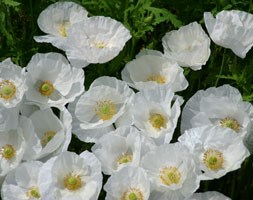
Papaver rhoeas ‘Bridal Silk’ (field poppy) £2.49
Position: full sun Soil: well-drained, preferably poor soil Rate of growth: average Flowering period: June to August Hardiness: hardy annual The crumpled petals of this sublime poppy are mainly white, but sometimes have a faint pink blush. They top the slender wiry stems that rise above the rosettes of foliage from early summer forming bowl-shaped blooms, which flutter like butterflies in the breeze. At their best when planted in big drifts, they also make wonderful, if somewhat short-lived cut flowers. Garden care: They tend to resent root disturbance, so sow shallowly, directly into a well prepared bed in spring and water well. As the seedlings develop, thin them out to 30cm intervals keeping just the healthiest and most robust plants. When watering, give the plants a really thorough soak when the soil gets dry, rather than a little water every day. Dead-heading will prolong the flowering period, but at the end of the season you should let some seed heads to develop for next years crop. Sow: March-May Flowering: June-August Approximate quantity: 500 seeds.
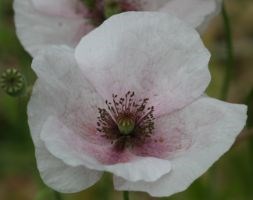
Papaver rhoeas ‘Fairy Wings’ (mixed) (field poppy) £1.49
Position: full sun Soil: well-drained, preferably poor soil Rate of growth: average Flowering period: June to August Hardiness: hardy annual An array of pink, white and lilac shades, which all have metallic-blue undertones, the flowers of this field poppy appear like luminous butterflies on top of the slender, hairy stems. Long after the last petal has fluttered away on the breeze, the seed-heads will continue to add a decorative touch to the border. Garden care: They tend to resent root disturbance, so sow shallowly, directly into a well prepared bed in spring and water well. As the seedlings develop, thin them out to 30cm intervals keeping just the healthiest and most robust plants. When watering, give the plants a really thorough soak when the soil gets dry, rather than a little water every day. Dead-heading will prolong the flowering period, but at the end of the season you should let some seed heads to develop for next years crop. Sow: March-May Flowering: June-August Approximate quantity: 1000 seeds.

Papaver rupifragum ‘Tangerine Parfait’ (poppy) £2.99
Position: full sun Soil: well-drained, preferably poor soil Rate of growth: average Flowering period: June to August Hardiness: fully hardy (but short-lived) A prolific bloomer, producing soft tangerine flowers throughout the summer. A short-lived perennial, it will self-seed freely in the right conditions. It is brilliant for scattering through a sunny border, and it also works well in pots and windowboxes. After the double flowers have faded the seedpods will remain interesting for several months and can be dried and added to everlasting arrangements. Garden care: They tend to resent root disturbance, so sow shallowly, directly into a well prepared bed in spring and water well. As the seedlings develop, thin them out to 30cm intervals keeping just the healthiest and most robust plants. Protect the emerging seedlings from slugs and snails. The seedheads can be dried and added to winter arrangements. Sow: March-May Flowering: June-August Approximate quantity: 150 seeds.
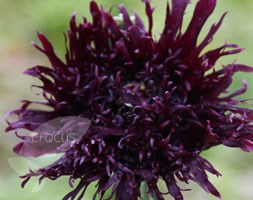
Papaver somniferum ‘Blackcurrant Fizz’ (opium poppy) £2.49
Position: full sun Soil: well-drained, preferably poor soil Rate of growth: average Flowering period: June to August Hardiness: hardy annual An easy to grow annual that produces a wonderful display when its distinctive, deep burgundy flowers appear throughout summer. The flowers shredded appearance will add textural interest to the border, while their brooding colour adds depth and warmth. Plant them in generous swathes and mix them with rich purple, orange and gold. Garden care: They tend to resent root disturbance, so sow shallowly, directly into a well prepared bed in spring and water well. As the seedlings develop, thin them out to 30cm intervals keeping just the healthiest and most robust plants. Protect the emerging seedlings from slugs and snails. The seedheads can be dried and added to winter arrangements. Sow: March-May Flowering: June-August Approximate quantity: 200 seeds
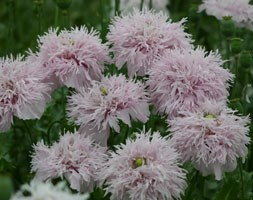
Papaver somniferum ‘Lilac Pompom’ (opium poppy) £2.49
Position: full sun Soil: well-drained, preferably poor soil Rate of growth: average Flowering period: June to August Hardiness: hardy annual Super-sized, fully double flowers with a frilly, somewhat shredded appearance top the stout bristly stems throughout summer. A beautiful addition to cottage gardens, it blends beautifully with most shades of pink, purple and plum. After the petals fall, attractive seedheads develop, which will remain interesting well into autumn. Garden care: They tend to resent root disturbance, so sow shallowly, directly into a well prepared bed in spring and water well. As the seedlings develop, thin them out to 30cm intervals keeping just the healthiest and most robust plants. Protect the emerging seedlings from slugs and snails. The seedheads can be dried and added to winter arrangements. Sow: March-May Flowering: June-August Approximate quantity: 200 seeds.
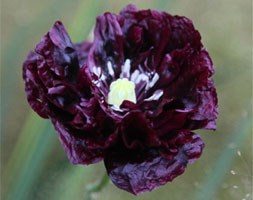
Papaver somniferum (Paeoniiflorum Group) ‘Black Paeony’ (poppy) £1.99
Position: full sun Soil: well-drained, preferably poor soil Rate of growth: average Flowering period: June to August Hardiness: hardy annual Fantastically large flowerheads are packed with dark plum (almost black), crumpled petals, which give the flower a frilly effect. These magnificent blooms sit on top of stout stems in summer and as the petals fall, attractive seed heads remain, which will add interest to the border for several months. Garden care: They tend to resent root disturbance, so sow shallowly, directly into a well prepared bed in spring and water well. As the seedlings develop, thin them out to 30cm intervals keeping just the healthiest and most robust plants. Protect the emerging seedlings from slugs and snails. The seedheads can be dried and added to winter arrangements. Sow: March-May Flowering: June-August Approximate quantity: 150 seeds.
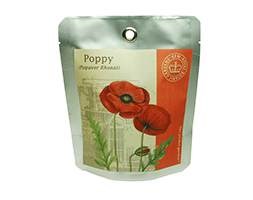
Poppy – pocket garden £5.99
Poppies are exceptionally beautiful flowers that have translucent petals, which seem to glow when backlit by the sun. The seeds come in a decorative foil growing pouch that can sill on a sunny windowsill, with easy to follow sowing instructions and a sturdy cardboard tag, which can be used as a label.

Poppy field collection of annuals (poppy field collection) £3.99
Position: full sun Soil:well drained, reasonably poor soil Rate of growth: average Hardiness: fully hardy Fields of wildflowers were common until 40 years ago and due to their fantastic impact and ease of growth, they are making a welcome return. In this collection, the scarlet waves of poppies mingle with the pinks of corncockle and the blue cornflower. The butterflies love these plants so will flock to your garden creating a wildlife haven. These plants are annuals so will only last one year, but if you dont remove the flowers after they have faded they will usually scatter their seeds for further crops in subsequent years. Each packet will cover around 5sqm. Collection Contains Corncockle – Agrostemma githago – Mauve Cornflower – Centaurea cyanus – Blue Field Poppy – Papaver rhoeas Sow: March – May or September – October Flowering: August – September or May – July Approximate quantity: 2200 seeds.
Filed: Crocus
Monday, February 17th, 2014
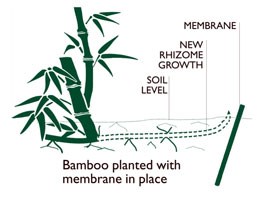
Bamboo control system £44.99
The bamboo control system is used to create beautiful areas of bamboo that add sound and movement to your garden. Rhizomes are underground stems that run parallel to the surface and can travel a considerable distance from the original plant. The Bamboo control system acts as a root barrier and prevents the rhizomes spreading. Instead they are directed to the surface and transformed into foliated growth therefore a fuller bush will be achieved. When rhizomes reach the barrier they will then be directed upwards naturally. Using this system a bamboo bush can be grown in an exact area and can be as large or as small as desired. Measurements: Thickness: 1mm Height: 69cm Please note we sell a variety of lengths so please select the required length from the list above.

Semiarundinaria yashadake f. kimmei (narihira bamboo) £39.99
Position: full sun or partial shade Soil: humus-rich, moist, well-drained soil Rate of growth: average to fast Leaves: dark green Canes: glossy, golden with green stripe Hardiness: fully hardy Golden, glossy canes with a green stripe above the branch bud contrasting with dark green leaves. In cold winters young canes will turn a stunning red if exposed to bright sunshine. This tall bamboo’s upright habit makes it perfect for screening areas of the garden and growing as a bamboo hedge. Its fabulous multi-coloured canes also make it a striking and unusual feature plant. Garden care: Plant in a large container or surround the roots with a non-perishable barrier that restricts the plant’s spread.

Fargesia rufa (bamboo) £39.99
Position: full sun or partial shade Soil: humus-rich, moist, well-drained soil Rate of growth: average to fast growing Leaves: green Canes: green Hardiness: fully hardy This very hardy bamboo is quite modestly sized (with an eventual height of around 3m), so is ideal for smaller gardens or large pots. It has slender, upright to arching canes, which are clothed in attractive green leaves throughout the year. Eventually forming dense clumps, the new canes emerge a bright green, which contrast well with the culm sheaths, creating a distinctive two-tone effect until the sheaths drop away. Garden care: Do not allow to dry out while the plant is getting established. Protect from cold, drying winds.
Filed: Crocus
Monday, February 17th, 2014
Use a bamboo root restrictor unless you want a forest of bamboo in your garden!

Phyllostachys vivax f. aureocaulis (yellow-groove bamboo) £12.99
Position: full sun or partial shade Soil: humus-rich, moist, well-drained soil Rate of growth: average Leaves: mid-green Canes: rich yellow Hardiness: fully hardy A tall, coloured-stemmed bamboo with rich yellow canes with a few green stripes at the base. This green leaved bamboo looks spectacular grown as a specimen. One of our ‘highly recommended plants’, it should be planted next to a building or path where the near-luminous, yellow to burnt orange coloured canes can be enjoyed all year. Garden care: Plant in a large container or surround the roots with a non-perishable barrier that restricts the plant’s spread.
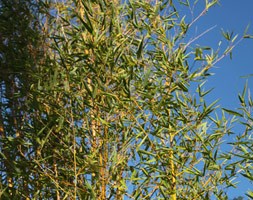
Phyllostachys aurea (fishpole bamboo) £12.99
Position: full sun or partial shade Soil: humus-rich, moist, well-drained soil Rate of growth: average Leaves: golden-green Canes: grooved, brown-yellow Hardiness: fully hardy The grooved canes of this tall, upright bamboo are initially bright green, but they mature over a year or two to brownish yellow. These stems are clothed throughout the year with golden-green foliage, which not only looks good, but will rustle pleasantly in the breeze. A great specimen plant, it will form a dense clump at first, but eventually becomes spreading and will cover a large area. Garden care: Plant it in a large container or surround the roots with a non-perishable barrier that restricts the plant’s spread if space is limited.

Phyllostachys bissetii (bamboo) £12.99
Position: full sun or partial shade Soil: humus-rich, moist, well-drained soil Rate of growth: fast growing Leaves: mid-green Canes: dark green, sometimes stained with purple Hardiness: fully hardy Vigorous and hardy, this decorative bamboo is one of the first to produce new canes each year. These canes appear in late spring or early summer and have a mainly upright habit, but do arch slightly. Their colour is green, but will sometimes have a purple flush, but over a period of several years, will fade to a yellow-green. They have a glossy finish and are clothed in rich green leaves, which cope well with adverse weather conditions. Initially forming really dense clumps, this bamboo is ideal for screening, but will spread with age. Garden care: Plant in a large container or surround the roots with a non-perishable barrier that restricts the plant’s spread.

Phyllostachys aureosulcata f. spectabilis (showy yellow-groove bamboo) £12.99
Position: full sun or partial shade Soil: humus-rich, moist, well-drained soil Rate of growth: average Leaves: narrow, mid-green Canes: green-grooved, golden-yellow turning bright red in sunlight Hardiness: fully hardy Tall bamboo with green-grooved, golden-yellow canes, which can flash with shades of red in the sun, fading to darker yellow with age. This colourful variety looks great alongside the ebony-black canes of the black bamboo, Phyllostachys nigra. This aptly named coloured-stemmed bamboo is one of our ‘highly recommended plants’. Garden care: Plant in a large container or surround the roots with a non-perishable barrier that restricts the plant’s spread.

Phyllostachys aureosulcata f. aureocaulis (yellow-groove bamboo) £22.49
Position: full sun or partial shade Soil: humus-rich, moist, well-drained soil Rate of growth: average Leaves: mid-green Canes: rich yellow Hardiness: fully hardy A tall, coloured-stemmed bamboo with rich yellow canes with a few green stripes at the base. This green leaved bamboo looks spectacular grown as a specimen. One of our ‘highly recommended plants’, it should be planted next to a building or path where the near-luminous, yellow to burnt orange coloured canes can be enjoyed all year. Garden care: Plant in a large container or surround the roots with a non-perishable barrier that restricts the plant’s spread.

Pseudosasa japonica (arrow bamboo ‘japonica’) £24.99
Position: full sun or partial shade Soil: humus-rich, moist, well-drained soil Rate of growth: fast growing Leaves: dark green, oblong Canes: olive green, maturing to pale beige and dark green Hardiness: fully hardy Tall, vigorous bamboo with olive canes maturing to pale beige and dark green oblong leaves. Arrow bamboo is one of the most wind and shade tolerant varieties. Broadly upright in habit, as long as the roots are surrounded with a non-perishable barrier it makes an attractive screen or windbreak for moist, well-drained areas of the garden. Garden care: Plant in a large container or surround the roots with a non-perishable barrier that restricts the plant’s spread
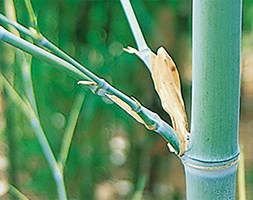
Phyllostachys glauca (bamboo) £29.99
Position: full sun or partial shade Soil: humus-rich, moist, well-drained soil Rate of growth: average Leaves: dark green Canes: blue-green Hardiness: fully hardy A rare clump-forming, then spreading bamboo. The new canes are an attractive shade of greenish-blue and look like they have been dusted with white powder. Later they lose the blue flush and become greener as they canes mature. The leaves are glossy and dark green though glaucous underneath. A superb specimen plant, it looks great in a contemporary, minimalist garden or a town garden. To prevent the plant from colonising adjacent plantings restrict the roots using a rigid, non-perishable barrier. Garden care: Plant in a large container or surround the roots with a non-perishable barrier that restricts the plant’s spread. If potted up, it is important that this plant is watered regularly.

Phyllostachys bissetii (bamboo) £29.99
Position: full sun or partial shade Soil: humus-rich, moist, well-drained soil Rate of growth: fast growing Leaves: mid-green Canes: dark green, sometimes stained with purple Hardiness: fully hardy Vigorous and hardy, this decorative bamboo is one of the first to produce new canes each year. These canes appear in late spring or early summer and have a mainly upright habit, but do arch slightly. Their colour is green, but will sometimes have a purple flush, but over a period of several years, will fade to a yellow-green. They have a glossy finish and are clothed in rich green leaves, which cope well with adverse weather conditions. Initially forming really dense clumps, this bamboo is ideal for screening, but will spread with age. Garden care: Plant in a large container or surround the roots with a non-perishable barrier that restricts the plant’s spread.

Phyllostachys nigra (black bamboo) £29.99
Position: full sun or partial shade Soil: humus-rich, moist, well-drained soil Rate of growth: fast growing Hardiness: fully hardy One of the most elegant bamboos, with polished, damson-black mature canes and dark green leaves. The slender, arching canes, which are dark green for the first two or three years, look perfect in a contemporary, minimalist garden particularly if the low-growing foliage is stripped. Although this is not one of the more vigorous and invasive bamboos, it is advisable to restrict the roots using a rigid, non-perishable barrier to prevent the plant from colonising adjacent plantings. Garden care: Plant in a large container or surround the roots with a non-perishable barrier that restricts the plant’s spread. Water regularly until established. Bamboos do not like competition, so are best planted en masse in a designated area of the garden.

Phyllostachys aureosulcata f. spectabilis (showy yellow-groove bamboo) £29.99
Position: full sun or partial shade Soil: humus-rich, moist, well-drained soil Rate of growth: average Leaves: narrow, mid-green Canes: green-grooved, golden-yellow turning bright red in sunlight Hardiness: fully hardy Tall bamboo with green-grooved, golden-yellow canes, which can flash with shades of red in the sun, fading to darker yellow with age. This colourful variety looks great alongside the ebony-black canes of the black bamboo, Phyllostachys nigra. This aptly named coloured-stemmed bamboo is one of our ‘highly recommended plants’. Garden care: Plant in a large container or surround the roots with a non-perishable barrier that restricts the plant’s spread.
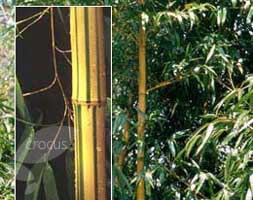
Phyllostachys vivax f. aureocaulis (phyllostachys bamboo) £34.99
Position: full sun or partial shade Soil: humus-rich, moist, well-drained soil Rate of growth: fast growing Leaves: mid-green Canes: rich yellow Hardiness: fully hardy A spectacular large bamboo with rich yellow canes and mid-green leaves. The canes have unusual green markings giving the appearance that they have been randomly painted by a mischievous child. To guarantee success grow in a site protected from high winds, where the colourful canes can be seen throughout the year. Garden care: Plant in a large container or surround the roots with a non-perishable barrier that restricts the plant’s spread.
Phyllostachys vivax f. aureocaulis (phyllostachys bamboo) £39.99
Position: full sun or partial shade Soil: humus-rich, moist, well-drained soil Rate of growth: fast growing Leaves: mid-green Canes: rich yellow Hardiness: fully hardy A spectacular large bamboo with rich yellow canes and mid-green leaves. The canes have unusual green markings giving the appearance that they have been randomly painted by a mischievous child. To guarantee success grow in a site protected from high winds, where the colourful canes can be seen throughout the year. Garden care: Plant in a large container or surround the roots with a non-perishable barrier that restricts the plant’s spread.
Phyllostachys glauca (bamboo) £49.99
Position: full sun or partial shade Soil: humus-rich, moist, well-drained soil Rate of growth: average Leaves: dark green Canes: blue-green Hardiness: fully hardy A rare clump-forming, then spreading bamboo. The new canes are an attractive shade of greenish-blue and look like they have been dusted with white powder. Later they lose the blue flush and become greener as they canes mature. The leaves are glossy and dark green though glaucous underneath. A superb specimen plant, it looks great in a contemporary, minimalist garden or a town garden. To prevent the plant from colonising adjacent plantings restrict the roots using a rigid, non-perishable barrier. Garden care: Plant in a large container or surround the roots with a non-perishable barrier that restricts the plant’s spread. If potted up, it is important that this plant is watered regularly.
Filed: Crocus
|
|