
Garden And Gardener

Everything for the Gardener and their Garden

Archive for the 'allotment' Category

Getting on the allotment waiting list

Friday, September 20th, 2013

Getting on the allotment waiting list.

You should visit the allotment site you’re interested in. Ideally you’ll find it busy with hoards of plot holders working away tending their crops and harvesting. In reality you’re likelt to have to visit a few times before you can get let in, and then actually meet the person who deals with the waiting list.

You could just ring up. But it’s very likely you’ll be asked to visit the site before you are added to the list. Why? Because if it’s too much effort to pop round to the site to get on the list, then the chances are it’ll be too much effort to pop over and tend your allotment.

You’ll also get to see the site, be shown round, shown any vacant plots, find out about the facilities, or lack of them. It gives you a chance to get to know people too – you might already know people on the site. If you do then pop along next time they go and get stuck in weeding, digging or hoeing!

If you don’t fancy visiting a site and just want to be added to the list, then ask yourself why. Is there a good reason? You might not be living in the area at the moment and want to get on the waiting list. It might be that the site allows you to go on the waiting list before you’re in their catchment area, but it might not. You might be working away and looking to change your job, or you might only be available at strange hours and unable to come to the site to meet with the person who keeps the waiting list.

It’s essential to get on the list – so you’ve got to make the effort sooner or later to get down there and be added.

If you make an appointment to meet the site secretary then keep it. Mobile phone numbers are useful to give and take! Always let them know if you’re going to be late or not able to make it. You won’t make a good impression by keeping them waiting on site for you.

Questions to ask include:
What are the facilities like?
How big are the plots?
Are there any about to become available?
How many people are on the list?
Is there water on site?
What rules are there?
Can I have a greenhouse and a shed?

Questions to ask yourself include:
Do I have time for an allotment?
How much help am I expecting from my family?
How much help will I get from my family?
Am I already growing things?

Allotments on youtube

Thursday, August 22nd, 2013

Here’s Sean’s
http://www.youtube.com/watch?feature=player_embedded&v=_eqc-RgHHlo
From 02:08 Geoff returns from holiday;
Worth a look just to see how many weeds grow in a couple of weeks over the summer.

Brings up the thorny discussion topic of how often you should go to your allotment. If you go on holiday during the summer months then the warm weather and rain (There’s always rain) will encourage the weeds to grow like mad. They can outgrow your plants very quickly competing for light and water and food.

Chadderton allotment

Wednesday, August 14th, 2013

Cartmel Crescent Allotments, chadderton, oldhamDo you live in Chadderton and want an allotment? You can come and look round our site at Cartmel Crescent (OL9 8DA) and get added to the waiting list for a plot.
The site has about 17 plot holders at the moment. We have a short waiting list.

About the allotment site based in South Chadderton, Oldham: It’s about an acre in size, has a communal orchard area, we’re currently building a composting toilet on the site, and we have rain water collected in 3 IBC containers. There is an apiary on site.
The site is a real mix of people with many different styles of gardening going on.

If you’re interested in visiting the site then please ring 0788 248 3085.

Green manures

Tuesday, August 13th, 2013

Great info sheet on green manures.

You can get them cheaply – mustard seed from the indian or chinese supermarket in huge bags can be used!
Sow a few phacelia seeds and you’ll be able to harvest tons of them and the bees will enjoy the flowers too!

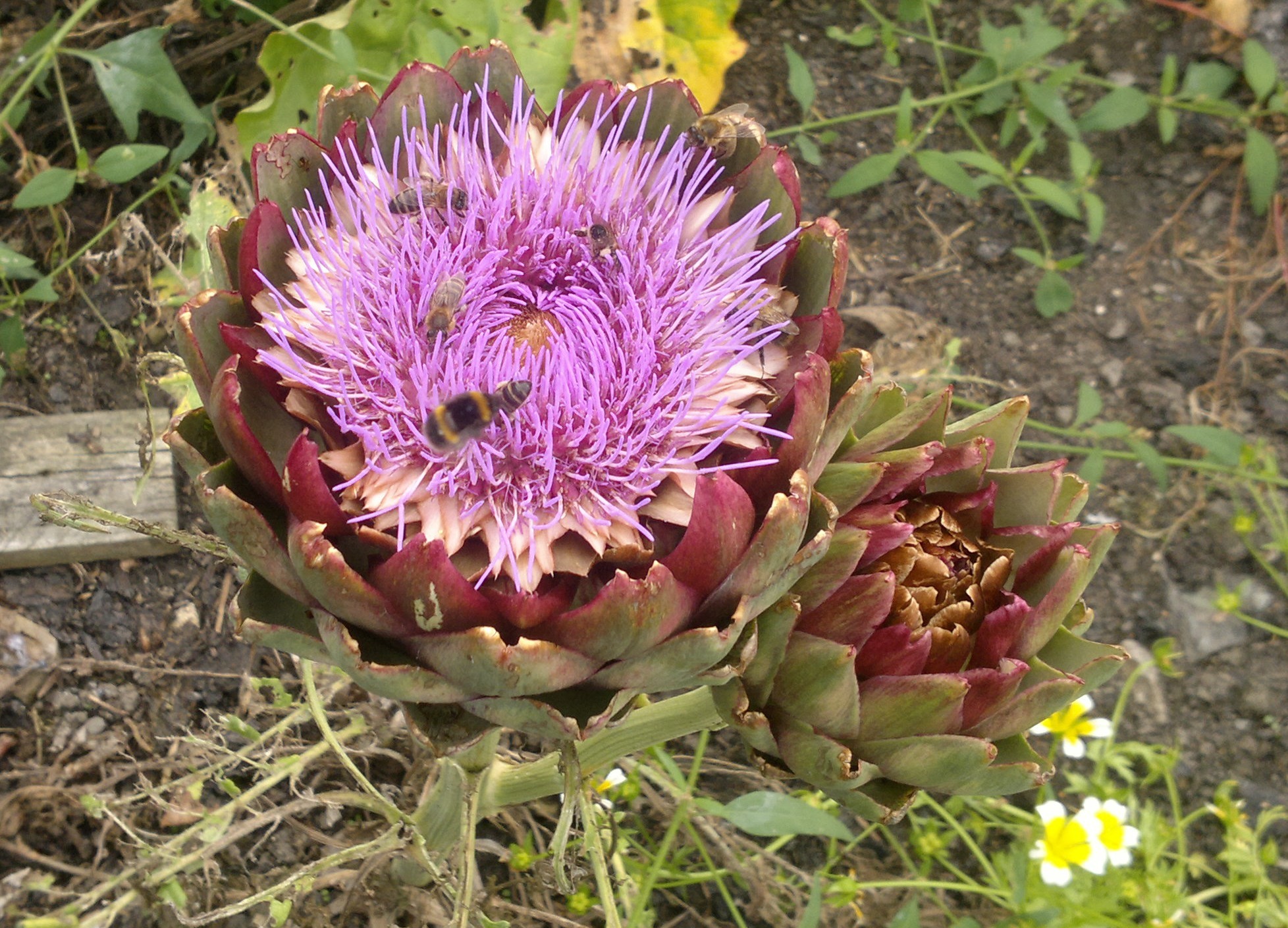
Bees on globe artichoke

Friday, August 9th, 2013

If you have globe artichokes then you’re probably cutting them off and eating them before they flower. They are beautiful though if you let them flower and it appears that the bees adore them!
Bees on globe artichoke

The bees are covered in pollen which is almost luminous on them! OK so I won’t be eating these but I will be eating honey made by the bees!

Nasturtians doing well this year

Tuesday, July 23rd, 2013

Finally had some success with nasturtians – must have been that old packet of seed that just didn’t germinate last year.
bee123

Runner bean roots

Tuesday, July 16th, 2013


He mentions quite close to the end about storing runner bean roots over winter and planting them up for spring. Might be worth a try for runner beans a month early!

My big hint is to have lots of organic matter in the trench under where you’ll be sowing them.

Reducing the need to water

Tuesday, July 16th, 2013

Some of the techniques you can use to reduce the amount you have to water are long term rather than quick fixes.

You need to ensure your soil has plenty of organic matter in as this is what can help hold water.

Some plants are specifically planted over a trench of rich organic matter: runner beans do well if you dig and fill a trench with either kitchen waste of manure. This needs to be done a few months before you plant out the beans. The organic material acts as a reservoir of water for the plants to put their roots into. This helps the beans keep the moist roots they like to have to allow them to set beans.
The amount of organic material in the soil also soaks up water when you are able to water. Watering when the beans are setting is helpful for improving yield.

By double digging you are able to include plenty of organic material in to the soil. You can use garden compost or well rotted manure.
The no dig method uses mulching on the surface and allows the worms to take in the material to the soil. As the mulch rots it increases the soil depth and will provide a layer to prevent water evaporation. Mulching around plants can help conserve water.

Planting so the plant sits in a slight dip makes watering more effective. The water is guided to the stem and roots. Some plants do not like the stems getting wet so these need to be on a mound. Use a plastic bottle submerged upside down as a way of getting water to the roots.
I plant my courgettes and pumpkins on mounds that are full of layers of organic material. This means they will be able to absorb plenty of water from the rich soil.

If you don’t water plants and the soil is lacking in organic material then plants will tend towards going to seed more quickly. Bolting happens when plants are stressed. If you have no water on your allotment site then it becomes clear why you should enrich the soil as much as possible so that the plants have access to more moisture.

What am I growing?

Monday, June 24th, 2013

broad beans (2)
dwarf french beans (2)
Runner beans (4)
Mr Ferns beans
Peas (3)
Mangetout
Spring onions
Lettuce (lollo rossa, australian yellow, cos )
Jerusalem Artichokes
Globe Artichokes
Rhbuarb (3 I think but def 2)
Blackcurrent
Strawberry
Goji
Blackberry
whitecurrant (or is it redcurrant? Can’t remember and not got book to hand)
Gooseberry
Buckwheat
Phacelia
Comfrey (2)
Chives
Leeks
Spring onion
Shallot
Garlic
Red onion
White onion
Raspberry
Potatoes (5)
Cucumber
Tomatoes (5 on the plot, another however many in the greenhouse but they don’t
count)
Mizuna
Watercress
Turnips
sage
Radish
rocket
chard (bright lights, white and rhubarb)
Kiwi
Grape (Although not looking very alive)
Claytonia
Perpetual Spinach
Sunflowers
Herb Robert (technically a weed but I love it as its very pretty)
cauliflowers
Portuguese Cabbage
Curly Kale
Brocoli mixed
Lovage
Aspargus lettuce
Spicey leaf mix (various but includes mustard greens)
Sprouts
Marrow
Squash (2)
Courgette (5)
Parsnip
Carrots (3)
beetroot

Watering advice

Tuesday, June 18th, 2013

Limit what you water in the garden and on the allotment. Many people spend hours each evening after work watering their plot each night.
Whilst watering can appear to help your plants it’ll often make them more dependent on being watered regularly because their roots stay near the surface because of the watering, rather than going down looking for water.

Before you water why not dig a small hole in the soil and see whether the soil is moist underneath. The soil will be darker and you’ll tell that it is moist enough underneath to not water.

If you use multipurpose compost then this can dry out very badly on the surface and appear to form a crust, check under this to see if it is damp underneath.

When you do water you need to water the right amount and then reduce losses.
Water early or late. Don’t water plants during the middle of the day as the heat of the sun will evaporate more water.
Water the plants that need it – not every plant.
Many people only water newly planted plants and seedlings and pots. You shouldn’t have to water plants in open ground at all once they are established. In hot weather you might have to water plants a couple of times to ensure they are off to a good start, but after that leave them alone!

Mulch, mulch, mulch! With whatever organic materials are to hand: grass clippings, bark chippings, newspaper, straw etc. Water and then mulch. The mulch helps retain the moisture under the soil.

Water the plant not a wide area. For water hungry plants like courgettes you can even insert a funnel into the ground to direct the water to the roots. Prepare the soil with plenty of organic matter – not only does it provide food for greedy plants but it’ll also hold water for the roots to find.

Use rainwater as much as possible. Keep a container inside the greenhouse to water plants from. This ensures the water is closer to the same temperature as the plants.

Plant at recommended spacings as these allow for the right amount of air around the plant – and allow enough root space for plants to find food and water.