|
Archive for the 'allotment' Category
Friday, November 2nd, 2012
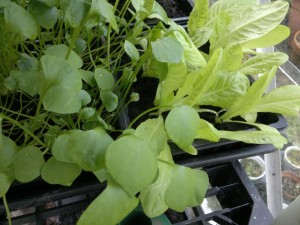 Part of my winter veggies strategy was to try and grow some salad stuff. Part of my winter veggies strategy was to try and grow some salad stuff.
I’ve got all year round lettuce, mizuna and claytonia and american cress growing in the greenhouse. I’ve put some lettuce and mizuna out but am keeping plenty under cover! Mainly cos the greenhouse is closer than the allotment!
Filed: allotment
Tuesday, October 9th, 2012
I’ve just started harvesting mine. I planted a giant one and one called jolant.
I have about 70 plants and wishes I’d planted more. They’re delicious!
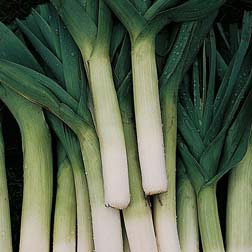
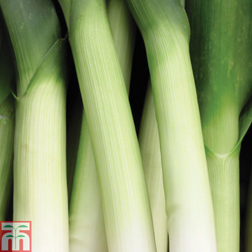
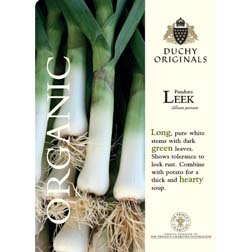
Leek ‘Autumn Giant 2 – Porvite’ – 1 packet (200 seeds) £2.49
An excellent Leek giving mid green, erect foliage, and heavy, uniform stems. Leek Autumn Giant 2 Porvite also features resistance to bulbiness and bolting, as well as high rust tolerance. Seeds in the RHS Vegetable Collection, this leek also has good standing ability in the garden.
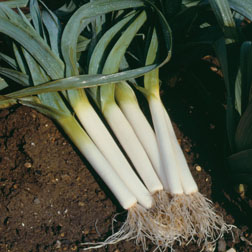
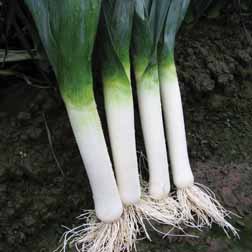
Leek ‘Bandit’ – 30 plugs + 3 planters £14.99
NEW in 2012An outstanding cultivar for harvesting from winter through to spring. The dark leaves of Leek ‘Bandit’ contrast beautifully with delicious, thick, pure white stems. This variety has excellent garden performance and winter hardiness, showing good tolerance against rust and bolting. Height: 45cm (18”). Spread: 20cm (8”).T&M’s easy starter plants are expertly grown, taking away all of the worry of raising your own. Delivered ready for planting so that you can enjoy bigger, earlier and tastier vegetables. Our quality vegetable plants will be despatched at the correct time for planting.Please note: Delivery is subject to plant size, adverse growing conditions during production may delay despatch schedules.
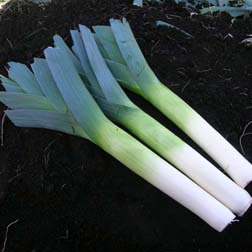
Leek ‘Below-Zero’ F1 Hybrid – 1 packet (50 seeds) £2.99
British breeding has combined the vigour of an F1 Hybrid with extreme cold tolerance to produce quality leeks which will withstand the harshest of weathers. Dark leaves, pure white stems with no bulbing, long standing ability and bolting and rust tolerant. Lift fresh superb quality stems from Christmas to May.
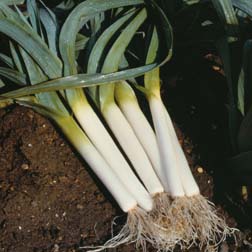
Leek ‘Blauwgroene Winter – Bandit’ – 1 packet (250 seeds) £2.49
An outstanding cultivar for harvesting from winter through to spring. The dark leaves of Leek ‘Blauwgroene Winter – Bandit’ contrast beautifully with delicious, thick, pure white stems. This variety has excellent garden performance and winter hardiness, showing good tolerance against rust and bolting. Height: 45cm (18”). Spread: 20cm (8”).T&M’s easy starter plants are expertly grown, taking away all of the worry of raising your own. Delivered ready for planting so that you can enjoy bigger, earlier and tastier vegetables. Our quality vegetable plants will be despatched at the correct time for planting.Please note: Delivery is subject to plant size, adverse growing conditions during production may delay despatch schedules.
Leek ‘Blauwgroene Winter – Bandit’ – 30 plants £8.99
An outstanding cultivar for harvesting from winter through to spring. The dark leaves of Leek ‘Blauwgroene Winter – Bandit’ contrast beautifully with delicious, thick, pure white stems. This variety has excellent garden performance and winter hardiness, showing good tolerance against rust and bolting. Height: 45cm (18”). Spread: 20cm (8”).T&M’s easy starter plants are expertly grown, taking away all of the worry of raising your own. Delivered ready for planting so that you can enjoy bigger, earlier and tastier vegetables. Our quality vegetable plants will be despatched at the correct time for planting.Please note: Delivery is subject to plant size, adverse growing conditions during production may delay despatch schedules.
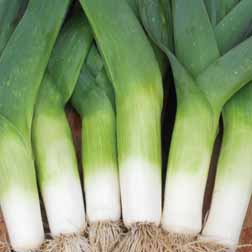
Leek ‘Cairngorm’ F1 Hybrid – 1 packet (40 seeds) £2.99
Grow this prizewinning show leek individually in pots! The first F1 leek from seed, produced by British breeding from specially selected top prize-winning show leeks, has superb vigour and uniformity as a pot leek. Early autumn maturity makes Cairngorm ideal for the show bench as well as outside in the vegetable plot, where stems will stand until after Christmas.
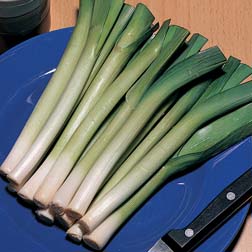
Leek ‘Kong Richard’ – 1 packet (125 seeds) £2.49
A very early variety. Leek ‘Kong Richard’ produces extra long, slim stems which don’t need earthing up and are ideal for slicing. From earliest sowings it is ready in June-July, and later sowings, August-September, stay ready for use until Christmas. You can also direct sow Leek King Richard without the need to transplant, or grow closer together for delicious, succulent mini leeks.
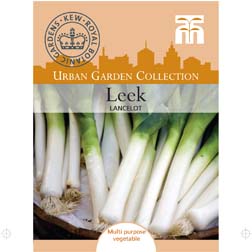
Leek ‘Lancelot’ – 1 packet (75 seeds) £1.89
This tasty variety makes a mild-flavoured alternative to spring onions for salads and stir fries. Sown thickly, in open ground or containers, they can be harvested just 3 months later as mini leeks. Leek ‘Lancelot’ can also be grown as mature full sized leeks for autumn and winter cropping. This uniform leek is winter hardy with good virus tolerance. Height: 45cm (18″). Spread: 30cm (12″).
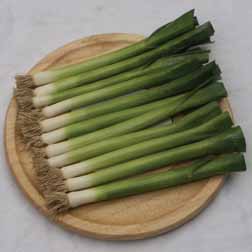
Leek ‘Nipper’ – 1 packet (250 seeds) £1.99
Fast-growing ‘baby’ leeks specially bred to be ready to pick in just 10 weeks from sowing. Pull them at ‘spring onion size’ for fresh and tasty leeks out of season; with a flavour that’s milder than spring onions, they are delicious in stir fries and salads.
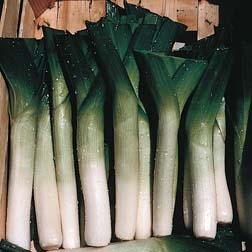
Leek ‘Oarsman’ F1 Hybrid – 1 packet (40 seeds) £2.99
A superb garden variety. Leek Oarsman has good early vigour, bulking up quickly, with dark, erect foliage and uniform pure white, long stems with no sign of bulbing. Midseason maturity with very good rust and bolting tolerance, keeping in good condition over a long period until required for the kitchen.
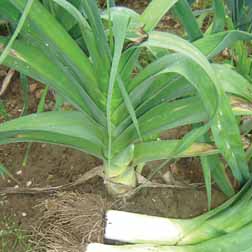
Leek ‘Pennine’ F1 Hybrid – 1 packet (40 seeds) £2.99
From British breeding comes the first – and only – hybrid pot leek. The result of painstaking work in crossing sterile male lines with top prize-winning show leeks, ‘Pennine’ is a much thicker, but shorter blanch with a true pot leek appearance. Ideally grown in individual 25cm (10in) pots or in well-prepared soil in the garden, this is an autumn variety which will withstand adverse conditions until New Year.
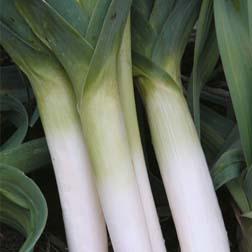
Leek ‘Porbella’ – 1 packet (200 seeds) £2.19
An outstanding garden leek variety for harvesting between October and February. Leek Porbella produced sturdy plants with pure white, thick stems and dark green leaves show good rust resistance and have excellent winter hardiness.
Filed: allotment, Thompson and Morgan
Thursday, October 4th, 2012
 Picking some autumn raspberries and saw a curled leaf by the stem. On closer inspection it turned out to be a caterpillar. Picking some autumn raspberries and saw a curled leaf by the stem. On closer inspection it turned out to be a caterpillar.
Filed: allotment
Thursday, October 4th, 2012
Weed fabric or not?
We had many different approaches to starting off brand new plots on our site
last year.
One was weedkiller. Repeated. Reasonably successful and they have straw mulch
on some weeds now but managed to get lots of beds planted up and grow crops.
Another was weedfabric and raised boxes. Very successful in terms of no weeds
coming up. Although when ground has been uncovered since (creating more boxes)
the weeds have shot up again.
Whatever you use has to suit:
your budget
your gardening style
your time committment.
There’s no point in using a gardening technique you don’t have time for or
can’t actually afford. If you have limited time then any techniques that
reduce the hours spent weeding or strimming areas on your plot has to be worth
looking at.
Filed: allotment
Wednesday, October 3rd, 2012
Do you have to dig them all in? Some you plant in the autumn and will grow until the frosts get then, some will overwinter and need digging in. But what if you don’t want to have to do any digging?
You could probably cover them with something (think this plastic sheet, weed fabric or carpet) to kill them off and provide the worm happy environment to drag them into the soil.
Why not try a small patch that you can guarantee covering in the spring for a few weeks ad then if it’s successful try more next year.
I have just read something about how deep annual rye grass roots go – this is what you probably want to help break down the soil instead of digging.
Filed: allotment
Tuesday, October 2nd, 2012
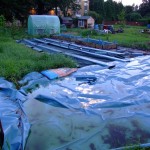 To dig or not to dig To dig or not to dig
Many people think you have to dig an entire allotment over straight away. Whilst
this would be wonderful if you can do it, you’ll find it’s incredibly
hard work and you just can’t keep on top of it.
The answer isn’t to leave vast areas waiting to be dug. If you repeatedly
strim or mow then your ground will eventually resemble a lawn and whilst this
might look nice it’ll have a dense mat of roots that you’ll need
to remove.

A much better option is to divide up the allotment into sections. Decide what
you’re going to plant where and then start work on the most urgent bed.
Don’t leave the rest unattended though. You will need to get vast amounts
of cardboard, mulch, grass clippings, compost, rotted leaves and other mulching
materials.
You could just cover the ground with cardboard or a weed fabric. A very thick
layer of cardboard is best as when it gets wet it will start to break down and
foxes are likely to dig through it. Weed fabric costs lots of money but the
good stuff will block the light making it easier to use the land when you get
round to it.
If you use cardboard then try to get a layer or two of organic material to
mulch on top with. This also helps suppress the weeds but also starts to create
a lasagne bed which rots down creating nice soil raising the levels on the plot.
If you can afford a small amount of weed fabric then use it and make sure it’s
weighed down. Come and check it after any blustery storms so that it’s
not blown away or damaged other people’s plots.
Carboard can be obtained free from the supermarkets. Speak to the night manager
about collecting cardboard from the overnight shelf stacking. You may have to
collect it very early in the morning but it’s free and a great resource
to have. You could also use layers of newspaper – ask neighbours if you
don’t have many.
Collect lawn clippings – ask your neighbours too for these but be prepared
to do the hard work of collecting them. Some gardeners take this a step further
and mow people’s lawns (With their permission) and take away the ‘waste’.
If you have elderly neighbours then this is probably a brilliant bit of community
spirit you can get going and you’re likely to be offered tea and cake
too!
Raking leaves in autumn is another option to consider. It’s best to pick
your moment when there are plenty of leaves on the floor. A dry day makes the
job more pleasant but the leaves blow about a lot more when dry.
If you can scrounge other organic materials then add these to your covering
too. Finely shredded hedge trimmings or even bark can keep the weeds down. Well
rotted muck can be used but can also really encourage weeds to grow more strongly
if it’s not in a thick enough layer.
Don’t abandon your plot over winter. Make sure you go up once a week
at least – just to check tings haven’t blown away. Take a flask
and sit and enjoy the view too – make sure other people see you’re
on your plot as well.
Don’t use the weather as an excuse – get your coat and gloves up
and get out there. Wrap up warm in layers and you can get lots of work done!
Don’t let weeds be a hazard from your plot. Remove seed heads from docks
and use the black bag rotting technique to ensure they don’t get mixed
with proper compost until they are beyond germinating.
Reduce the need for strimming weeds and you remove the chore of keeping your
plot tidy whilst you’re working on it. It makes sense to not have to mow
or trim your plot so get the weeds covered up somehow!
Filed: allotment
Wednesday, September 26th, 2012
 I’ve grown a huge pumpkin this year. OK it might not win prizes but it’s huge! I’ve grown a huge pumpkin this year. OK it might not win prizes but it’s huge!
It’s atlantic giant. I didn’t stop it producing other pumpkins – have had one football size one off it too.
Want to grow one yourself next year?

Easy Grow Baby Pumpkin Seed £3.55
Want to grow your own Halloween pumpkin? Do you have a small garden? Then this is for you. Baby Bear is a small, sweet orange pumpkin shaped like a flattened globe. Great to carve and makes a tasty roast or soup.. Packet Contents 8 seeds

Giant Pumpkin Competition £3.25
Who can grow the fattest pumpkin? This three blister pack has two pockets with pumpkin seeds and one with a tape measure. Record their growth on the measuring chart printed inside the pack. DID YOU KNOW that 7,000 year old pumpkin seeds have been found in Mexico?. 1 Blister Pack

Patty Pumpkin £1.25
Pumpkins are very versatile. You can grow them for eating, Halloween carving, or to grow the largest pumpkin. The largest pumpkin ever grown weighed 666kg (1469lb)!Sow my seeds: April-June. Sow your Patty Pumpkin seeds one each, on edge in 9cm (31/2) pots, 2.5cm (1) deep. Keep on a sunny windowsill to grow. Plant out when the risk of frost is past. You can also sow direct outside from May onwards. Sow in groups of 3 seeds 90cm (3′) apart. Thin to leave the strongest plant. Care of your Patty Pumpkins: Your young pumpkin plants should appear in 5-8 days. As the plants grow, pinch out the tips of the main shoots when about 90cm (3′) long. Yellow flowers will be produced followed by baby pumpkins. Remove any weeds and keep the plants well watered. Pick my pumpkins: Sept-October. You can harvest your pumpkins when they turn orange from mid September onwards. You can store them by harvesting before the first frost and storing in a cool room. Just right for Halloween!.

Pumpkin Amazonka Seeds £1.55
The perfect choice if you have limited space, producing bright orange, flattened spherical fruits which are ideal for roasting or soup-making and store well too.. Packet Content 20 Seeds

Pumpkin Atlantic Giant Seeds £2.55
We have been asked by many people, who have seen it whilst holidaying in the USA, to re-introduce this American whopper! If you’re looking for ‘the big one’ for the village show or Halloween then this is the one to grow!. Packet Content 6 Seeds

Pumpkin F1 Becky Seeds £2.49
An outstanding pumpkin, producing excellent yields of delicious, medium-sized orange fruit. Great for cooking or carving out for Halloween!. Packet Content 20 Seeds

Pumpkin F1 Summer Ball Seeds £2.15
A bush pumpkin that’s ideal for growing in containers, and can be cut early as a courgette (in July), or allowed to mature for havesting as a pumpkin (in October). The delicious, high quality yellow fruit weigh up to 1kg (2 lb 3 oz).. Packet Content 10 Seeds

Pumpkin Growing Kit for Kids £0.99
Everything you need to get the kids growing pumpkins in just one small pot! Pot contains a peat pot, ‘magic’ compost block, seed and fun facts sheet. Ideal for starting on the windowsill. Did you know that the Irish bought the tradition of Pumpkin carving to the U.S, they originally used Turnips for this activity. Pumpkins can weigh up to over 1,000Ibs (454kg).. 1 ‘How To’ Pot

Pumpkin Hundredweight Seeds £1.75
A superb pumpkin that produces enormous yellow/orange-skinned fruits – great for competitions, but also delicious to eat! The yellow flesh gives colour in salads or pickles and the leaves can be cooked like spinach.. Packet Content 20 Seeds
Filed: allotment, Suttons Seeds
Wednesday, September 26th, 2012
 Don’t walk on the ground when it’s this saturated. There’s very little you can do until it’s dried out. Walking on soggy soil will compact it and make it horrible to work with when it’s dried out. Don’t walk on the ground when it’s this saturated. There’s very little you can do until it’s dried out. Walking on soggy soil will compact it and make it horrible to work with when it’s dried out.
It’s times like this you’re greatful to have paths on your plot with bark on. The bark is a safe surface to walk on and you can collect veggies from the beds without walking on them.
The current weather has been extraordinary. It’s finally stopped raining here but the allotments are going to be unworkable for a week or more – every plot is saturated!
Filed: allotment
Tuesday, September 11th, 2012
It’s often said that planting potatoes will clear new ground.
This isn’t the case. It’s the person who digs the ground and then weeds it, earths up the potatoes and removes more weeds who clears the ground.
By applying well rotted muck to newly cultivated soil and then weeding it and having a healthy canopy of leaves across the soil to discourage weeds can help – but it’s not the no effort method you’d expect.
I have seen potatoes planted in a much easier way: weedkill the area you want to use. Allow the weedkiller time to work. Repeat if it is persistant weeds there – and then put potatoes on the top of the soil. Apply copious amounts of well rotted muck on top. Apply straw as the potatoes grow. Harvest the spuds when the foliage dies back.
Result is a potato crop, without digging and clear soil that’s got plenty of organic matter on top and the worm population should be in good spirits!
If you’d like to learn more about no dig gardening then this book is probably the best one to read: Organic Gardening: The Natural No-dig Way
– Charles Dowding grows organicly using a no dig method.
Respect and encourage life as much as your can, chiefly by spreading good compost or manure.
There is no need to dig in compost and manure – just spread it on top and let worms take it in. Digging can harm soil structure, and is not helpful to plants.
You can reduce weeding to a little hand-weeding or hoeing every ten days.
Filed: allotment
Wednesday, September 5th, 2012
When to plant shallots? The general advice is autumn! I’ve read it’s anytime from September to mid-March – depending I expect on where you are and what soil you have. If your soil is likely to be sodden over Christmas then leave it until later to plant.
You want to plant them in a nice fine soil bed, so dig, rake and leave to settle and then cull any sneaky weeds that pop up again! If the soil is very soggy then think about using a raised bed. Don’t plant in fresh muck but if you have some very well rotted stuff then dig some of that in a few weeks before hand.
Round here it’s useful to cover with chicken wire to stop the birds pulling them out. As you plant them so the tip is showing then you’ll find the birds think this is something edible for them and they’ll pull it out.
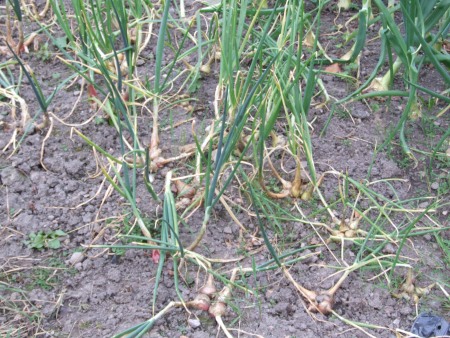
Harvest them when the leaves are all folding down – usually Harvesting: June – July, or August. The bulb you plant turns into several bulbs. Many people save some of their own grown shallots for replanting. My dad told me they were very easy to grow and he was right! They’re good for cooking with or using as pickling onions.
When to plant shallots? Read the packet you bought them in – or go with your gut instinct. They do need some cold to get started growing so don’t be in too much of a rush!
Whilst you’re growing these you can add some specialised onion fertiliser, or just use normal fertiliser – a general purpose one. Some people like to buy specific ones for specific crops but a general purpose one is cheaper as you can use it on everything. Don’t forget to weed though – they need light and air around them. A dense coverage of weeds will limit their growth.
If you hoe shallots you have to be very careful not to accidentally displace the bulbs. Hand weeding is more tedious but can be safer if you’re a bit clumsy with the hoe. If you know you’d rather hoe then make sure the bulbs are well spaced so it’s easier to get in between the rows. working from one side and then at 90 degrees means you can go between rows and do straight lines of hoeing which should make life easier.
Planting shallots is hard work. You just press the bulbs in carefully. Many people suggest you work from a board when planting so that you don’t treat on the soil and create footprint shaped condensed patches of soil.
Don’t force shallots in to very hard soil. Rake to get a fine tilth first so that they go in easily. The delicate root plate under the shallot needs to go in without being scraped. Its from here that the roots grow after you’ve planted the shallot bulbs. Plant them so the tops just peep out of the soil.
Plant them about 6″ apart in rows about twice that apart. Make sure you can get in between to hoe easily so you can help keep the weeds down.
They are very easy to grow – need little fuss once you’ve put them in. If they start to produce flowers just cut them off but they dn’t do this as much as onions do!
want to fertilise shallots?
Chempak® Onion Fertiliser – 12 x 1.2kg packs £60.00
Brimstone Rapide – 1 x 600g pack £9.99
Chempak® Onion Fertiliser – 1 x 1.2kg pack £7.99
Onion Fertiliser – 6kg bag – for 300 planting sets £6.99
Onion Fertiliser – 3kg bag – for 150 planting sets £4.99
Want to order some shallots now?
Decided you want to grow shallots?
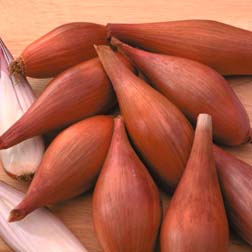
Shallot ‘Banana’ – 1 packet (200 seeds) £2.69
Long, banana-shaped shallots from seed, as used by many celebrity chefs. Banana Shallot produces attractive, shiny, copper brown-skinned bulbs with crisp white flesh and a very distinct flavour. Sowing densities will determine the size of bulbs you harvest. Stores well for winter use in the kitchen.
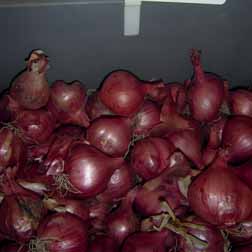
Shallot ‘Camelot’ F1 Hybrid – 1 packet (60 seeds) £2.89
You’ll love this visually stunning shallot – the darkest red-skinned variety available from seed. Shallots have become increasingly popular for their culinary uses as they have such a distinctive flavour, offering an interesting alternative to onions. Each seed produces an individual small, whitefleshed bulb which stores extremely well for use throughout late autumn and winter.
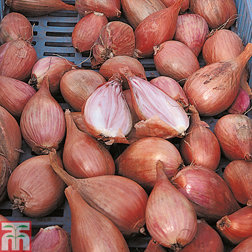
Shallot ‘French Longor’ – 1kg pack £8.99
This French version of ‘Jersey Long’ has been awarded an RHS Award of garden merit for its extremely long bulbs and robust flavour. Shallots have a much sweeter flavour than onions and can be used in stews and casseroles for a more delicate taste. This variety is a particular favourite with exhibition growers, and can be stored over a long period.
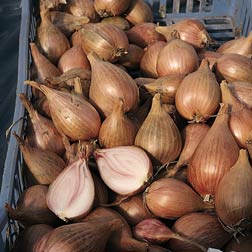
Shallot ‘Jermor’ (Autumn Planting) – 1 pack £6.99
Autumn Planting. Often referred to as ‘banana’ shallots by chefs and foodies, Jermor is from French production of Jersey ‘half long’ type shallots with long, rather than round bulbs. Highly rated for their flavour and increasingly sought after for gourmet recipes due to their superb sweet taste. The shiny copper-skinned bulbs with crisp, pink-tinged flesh make Jermor a favourite with exhibitors. Good storage potential.
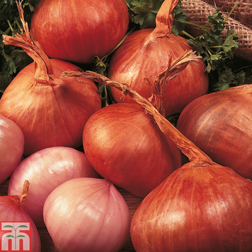
Shallot ‘Red Sun’ – 1 pack £4.99
Spring planting.Gaining in popularity due to its attractive red tinged skin, Shallot ‘Red Sun’ is arguably the best of the red shallots. Producing good yields of crisp, white fleshed bulbs of excellent flavour for cooking, salads or for pickling. Bulbs have long storage potential. Pack size: Approx 500g, approx 15-20 sets. Height: 35cm (14”). Spread: 15cm (6”).
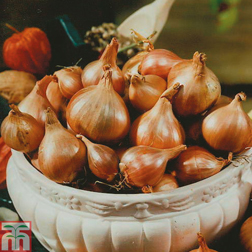
Shallot ‘Springfield’ – 1 pack £4.99
Spring planting.These high yielding, shiny bronzed-skinned shallots have good bolting resistance. The reddish tinted flesh of Shallot ‘Springfield’ has a strong flavour so is ideal for pickling/stews and casseroles. Bulbs store very well. Pack size: Approx 500g, approx 15-20 sets. Height: 35cm (14”). Spread: 15cm (6”).
Filed: allotment, Thompson and Morgan
|
|