Garden And Gardener

Everything for the Gardener and their Garden

Archive for the 'General Gardening' Category

Free pest control book

Thursday, April 26th, 2012

Want to find out more about pest control? You cna get a free pest control book from Harrod Horticultural – you can download one so you can read it straight away.

It covers all the pests you might encounter and they sell products to deal with the pests, both as preventative barriers and treatments.

Ants
Aphids
Carrot Root Fly
Caterpillars
Chafer Grubs
Fungus Fly
Leaf Beetles
Leatherjackets
Mealy Bugs
Raspberry Beetle
Scale Insects
Slugs and Snails
Spider Mite
Vine Weevil
Whitefly

Don’t just throw it away!

Thursday, April 26th, 2012

There are lots of things that gardeners need that some people throw away!
Jam jars are really useful in the jamming season and when it’s time to pickle your veggies or make chutney. You can never have too many jars!
Even if you don’t grow fruit yourself why not ask the gardeners you know who do if they’d like you to save the jars.

If you store them up and find none of the gardeners you know want them, then why not try offering them on freecycle! There’s loads of jam makers who faced with a glut of fruit would love the jars.

Just wash them and leave them to dry properly before putting the lids on.

You should also compost all your vegetable peelings and lawn clippings. If you don’t want to have a compost heap why not ask a neighbour if they have one, and if they want your vegetable waste! It’s a shame to throw it away – even if it is recycled at the tip!

The hotbin – composting cooked food waste at home

Tuesday, April 24th, 2012

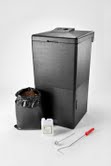
The hotbinThe hotbin is a hot composter that can deal with cooked food waste. This means you’ll be able to compost even more at home. The hotbin is quite a neat size too – it’s not massive like the normal garden composters. This is great if you don’t have a big garden space. What’s the hotbin then? It’s a 200 Litre hot aerobic composting bin that can compost all food waste including meat and fish.
It’s been designed to ensure that you don’t have to worry about smells, flies or rats!
Regularly adding waste allows the bin to keep building up to 60’C which is what is needed for safely composting food waste.

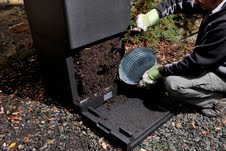
Emptying compost You can also add garden waste to this bin too. You need to add a bulking material when you add food waste to the bin. This is to ensure the process takes place correctly allowing air to flow around the food waste. If the waste just sits in a big mass then this is when it goes slimey and horrid. You can use bark chippings and you can shred paper or cardboard to add to the bin too.

It sounds quite scientific but it’s very simple. Add food waste and other materials to ensure the right mix. The compost takes 90 days to be made. The system doesn’t require any turning – just a light touch with the rake to mix in new material when you add it. This is easier than traditional compost bins where you either have to leave the pile for months and months, or turn it out and replace it into the bin. The hotbin looks like the easy option for making compost at home.

Whilst my own council recycles food waste, not all councils do. I’d still prefer to recycle my food waste at home. My local authority sends it off to be composted and then the material it makes is sold back to council tax payers! The hotbin would allow me to keep all my food waste and recycle it properly and safely.
If your council doesn’t collect food waste separately then the hotbin would mean your general waste bin would start to smell better as you stop putting food in the refuse bin and put it in the hotbin instead!

Of course we should all aim to reduce the amount of food we throw away by learning to use and store leftovers properly. Even if you do this really well you’ll always have leftovers you can’t actually eat, or plate scrapings that you can’t do anything else with. All these bits could be composted at home in your hotbin!

The hotbin sounds like another useful tool for anyone interested in reducing what they throw away.

To mulch or not to mulch

Tuesday, April 24th, 2012

Nature mulches all the time, so why wouldn’t you?
Leaves falling off trees are probably the easiest way of explaining nature’s own mulching. The leaves fall off, and gather normally around the bottom of the tree. They are then broken down by a combination of weather and microorganisms that rot the leaves and the nutrients are released and can be reabsorbed by the tree.
If you’ve ever swept up leaves to make your garden tidy you’ll know just how bulky they are. They rot down really well though it does take a few years. The mulch of rotting leaves is beneficial to the tree, so why shouldn’t similar mulch be useful to other plants? You have to look at setting to decide what sort of mulch to use. What mulch would you find around that plant naturally? Anything that grows in a field is likely to have a grass or straw like mulch build up around it. Anything near trees is likely to have wood based mulch near it.

You can use this basic decision making process to look at what mulches to use near plants.

Paper and cardboard can be used where you might find a wood based mulch, as can bark and cocoa bark mulch. You can also use paper as mulch in areas that would expect a grass based mulch mainly because of the thinness of the paper, so the rule isn’t quite strict. Straw or grass clippings can be used as mulch around plants in a bed or border.

The rules are generally to put mulch down when the ground it wet. This is what nature would do. Leaves fall in the autumn when the rain tends to increase. Although with the British weather at the moment this isn’t always the case – but it’s what’s best for plants.
Mulch a sensible layer – too little and it won’t do the job, too much and you’ll bury the plant. A few inches is good for basic mulching but if you want to make sure you keep weeds down then a bit more is best.
Don’t put fresh mulches near plant stems. If you want to mulch right up to plants then use a more mature mulch material – something that has started to break down already. Home made compost or even well rotted horse muck can make great mulch once it’s cool again. Hot mulch could damage plant stems and even kill plants.

Mulching for better soil – one aspect of mulching is that it protects and helps the soil. It encourages worms to be more active by acting as a blanket against cold weather, and an insulator against scorching hot weather. The mulch itself will start to break down and this increases the soil fertility.

Reasons not to mulch? The only reason not to mulch is if you can’t get any mulch materials. This is where you need to start thinking ahead of the game. Keep lawn clippings in bags ready to sprinkle on to the beds, collect leaves in autumn, ask anyone you see shredding garden waste for the chippings. Once you start to see places to get free mulch then you will realise there are lots of opportunities out there. Even newspaper and cardboard can be used as mulch. Some people use shredded newspaper.

Mulching in practice
If you wanted to mulch a large area for growing vegetables then you might find an organic material you can layer on the surface. Don’t rush out and throw it on. Remove any nasty weeds – especially dandelions and docks. These are best dug out as their tap roots enable them to stay alive even if deprived of light for some time.
Mow the grass surface or strim it as short as possible.

Cover the surface with cardboard or newspaper. You could ask your newsagent if they have any papers that you could have, or old boxes. You could always collect newspapers off a couple of neighbours until you have enough. Wet this layer of newspaper as you put it on as this will stop it blowing away quite as much. Then cover the wet newspaper with the layer of organic material.
This method should stop light getting to the weeds and the worms will love the mulch layer above them and get more active. This activity helps create more air ways through the soil which in turn improves the structures. The worms action also helps put organic material into the soil further improving it.

Garden Ads

Monday, April 23rd, 2012
Quality Timber Raised Beds from Harrod Horticultural Click here to visit Unwins  Award-winning, natural gardening at Wiggly Wigglers
The award-winning natural gardening supplies company - Wiggly Wigglers

Plastic greenhouse made from bottles

Friday, April 20th, 2012

Amazing plastic greenhouse made from bottles

PDF file – right click file save as
Instructions on how to build a plastic bottle greenhouse using 2ltr plastic lemonade bottles. This was produced as part of the Greenspaces project with primary schools in Moray.

Agghh the slugs – this’ll stop them!

Wednesday, April 18th, 2012

This really really works! It’s amazing!
Don’t let the slugs ruin your crops this summer!

Unwins Seeds & Plants has these two size packs of nemaslug available.

It is really easy to use.
Mix into a watering can and water it on!
Fantastic stuff that really stops the slugs.
It’s amazing to think you can just plant out seedlings and not have them eaten!

A must have for anyone growing their own! And it really is so simple and safe! It only kills the slugs and it’s not harmful to any other wildlife!

Nemaslug Slug Killer (100m Pack)*

Nemaslug Slug Killer (100m Pack)* £18.95
We have been conducting our own tests over the last couple of growing seasons and have found Nemaslug to be both easy to apply and effective. Nemaslug contains millions of naturally occurring microscopic nematodes that kill slugs both above and below ground. Completely harmless to birds hedgehogs and other wildlife as wel as pets and children.Please note: The ground temperature needs to be above 5 degrees for the predatory nematodes to be active. View our Nemaslug Slug Killer Fact Sheet When you receive your pack of Nemaslug place it in the refrigerator immediately and use within the use by date (which can be up to four weeks).

Read the rest of this entry »

Anglia Water – water saving freebies

Wednesday, April 18th, 2012

Get water saving free stuff from Anglia Water

They’re for inside the house but they also have a garden kit too which includes::
Water storing crystals
Water storing mats
RHS Water in the garden leaflet
RHS Pocket guide to drought tolerant plants

Wise water use in the garden

Wednesday, April 18th, 2012

Be water wise in the garden

If you’re buying new plants then look for ones that don’t need watering and
are drought tolerant.

Get water butts! As many as possible linked up to save water. Get lids on them
though to stop accidents.

Use water retaining crystals in hanging baskets if you must have them!

Water in the early morning or evening when the sun isn’t as strong.

Don’t water lawns. They’ll survive better than you think.

Mulch. And top up where you mulched last year.

Dig in plenty of organic matter to make the soil better at retaining water.

Keep an eye on the weather forecast to see if it’s going to rain.


Year round colour …

Tuesday, April 17th, 2012

For year round colour you could visit the garden centre every month and buy something for your garden that is flowering in that month. That way you’d get (after 12 months) something in flower each month!