Price reduction on this item at Gardens and Homes Direct
Open Frame Premium Solid Timber Composter was £45.99 now £39.99
A sturdy and durable heavy-duty traditional open-frame composter: Make free, organic, nitrogen rich garden compost out of kitchen and garden waste with our Open Frame Solid Timber Composter. Constructed from FSC Certified solid timber the classic open-frame, slatted design allows fast decomposition as the compost absorbs oxygen, breaking it down more quickly whilst dispelling unwanted odours. There is probably no better conditioner or mulch for any soil-type than naturally rotted garden compost, reducing your carbon footprint whilst saving you money.Features:• Pressure-treated, durable wooden frame.• FSC Certified sourced solid timber.• Quick and simple slot-together assembly.Dimensions:Height 60cm/24inWidth 100cm/39in SquareCapacity 439 litres
Gardens and Homes Direct just added loads of new lines
Gloucester 4 Seat White Cast Iron Round Garden Set £285.99
With elegant scrolled arms and gothic-style latticed iron work our Gloucester Gloucester 4 Seat White Cast Iron Round Garden Set is ideal for either traditional or contemporary garden, patio or conservatory settings. The chairs fold away flat for easy storage and have rounded button feet for surface protection. The set has a soft antique blue accented white, delicately distressed pattern to blend with any decor. Features: • Solid iron framework with gothic style lattice and scroll work.• Soft, blue accented antique white finish.• Smoothed round button feet to protect surfaces.• Perfect in traditional or contemporary garden and conservatory settings.• Part of a complementary range. Dimensions: Table: Diameter 90cm/35in Height 74cm/29inChairs…
Daffodi Bulbs – King Alfred £24.99
This outstanding yellow daffodil is a free-flowering garden classic. Its blooms are exceptionally strong and long-lasting. Flowers March-April. Height 40cm (16). Bulb size 12/14cm.(Bulb sizes quoted in centimetres refer to the circumference of bulbs. All bulbs are sourced from cultivated stocks.)
Acer japonicum ‘Aconitifolium’ (full-moon maple) £19.99
Position: full sun or partial shade Soil: fertile, moist, well-drained neutral to acid soil Rate of growth: slow-growing Flowering period: April to May Flower colour: purple-red Other features: stunning autumn colour Hardiness: fully hardy An elegant maple that is one of the best for autumn colour. It can be grown as a small, spreading tree or multi-stemmed shrub and is brilliant for adding achitectural interest. Before the leaves emerge in spring, it produces small clusters of purple-red flowers, which are quite pretty up close, but don’t make much of an impact from a distance. The mid green, deeply cut foliage has a fern-like appearance and will turn spectacular shades of red and orange in autumn – especially when grown in partial shade. A super plant that has been awarded the coveted Award of Garden Merit by the RHS. Garden care: Add a top-dressing of organic matter around the base of the plant in autumn. No routine pruning is required, just remove any dead, damaged or crossing branches in late autumn or winter when they are fully dormant. As the leaves may scorch in full sun on a summers day, try to plant it so it gets some protection during the hottest part of the day and shelter from cold winds.
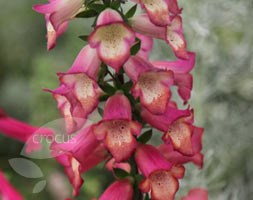
Digitalis Illumination Pink (‘Tmdgfp001’) (Illumination Series) (foxglove) £9.99
Position: full sun or partial shade Soil: moist, humus-rich soil Rate of growth: average to fast-growing Flowering period: June to July Hardiness: fully hardy Winner of a string of awards including the prestigeous Plant of the Year in 2012 at the RHS Chelsea Flower Show, this magnificent new foxglove is a real head-turner. It has exotic-looking flowers, which are a rich blend of sunset tones, and they appear for over a long period on sturdy, branching stems. These plants are mainly biennial so will flower in their second year and then die off. Garden care: Ensure that the soil is kept moist in summer. After flowering cut back the flowered spikes to encourage more sideshoots. Apply a generous 5-7cm (2-3in) mulch of well-rotted organic matter around the plant in early spring.
Sedum spectabile (Brilliant Group) ‘Brilliant’ (ice plant) £7.99
Position: full sun or partial shade Soil: moderately fertile, well-drained, neutral to slightly alkaline soil Rate of growth: average to fast-growing Flowering period: August to November Flower colour: bright pinkish-mauve Other features: attractive to butterflies and bees; the dried flower-heads provide colour and structure in the winter garden Hardiness: fully hardy Succulent, grey-green leaves, topped with large, flat heads of bright pinkish-mauve flowers in summer. This award-winning ice plant looks great planted in bold drifts towards the front of a sunny, well-drained border. A valuable late source of nectar for butterflies and bees, the flat flowerheads make attractive dried-flowers. Garden care: The flowerheads look great left during the winter to add shape and texture to your border. In February and March cut back the old flowerheads and apply a generous 5-7cm (2-3in) mulch of well-rotted garden compost or manure around the base of the plant. Once established, sedums can have a tendency to flop leaving an open and unsightly centre, especially in fertile soil. One technique to help prevent this is the ‘Chelsea chop’. During the last week of May (RHS Chelsea Flower Show week), cut one in every three stems back to the ground. This will produce plants that are less lush and flower slightly later.
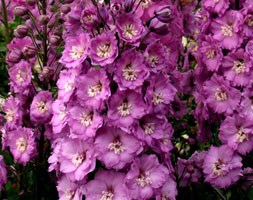
Delphinium elatum ‘Sweethearts’ (New Millennium Series) (delphinium) £7.99
Position: full sun Soil: fertile, well-drained soil Rate of growth: average Flowering period: June and July Hardiness: fully hardy Heralded as the best pink delphinium, ‘Sweethearts’ produces magnificent spires of large, rich rose pink flowers. It is a sturdy grower that has been given the Award of Garden Merit by the RHS because of its vigour and reliability. Delphiniums are excellent in the mixed or herbaceous border if you want to create vertical interest, and for best effect they should be planted in odd-numbered clumps or drifts. To encourage a second flush of flowers in late summer you should cut the flowered stems back as soon as they have finished. Garden care: For best results, choose an open spot away from taller plants. Stake with bamboo canes as they start to shoot upwards in mid-spring and protect young foliage against slug and snail damage. During the growing season, apply a balanced liquid fertiliser every 2-3 weeks and wearing gloves cut back the faded flower-stems to a flowering side-shoot to encourage repeat flowering. At the end of autumn cut back and compost the faded flower stems.
Lathyrus odoratus ‘Charlie’s Angel’ (spencer sweet pea Charlies Angel) £6.99
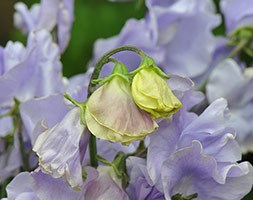
‘Charlie’s Angel’ was chosen by BBC Gardeners World magazine (July 2011) as the ‘best ever’ sweet pea. They say that ‘this exceptional variety blooms for a long period and has superb perfume making it good for garden display, cut blooms or showing. ‘Charlie’s Angel’ was also the first ever spencer type sweet pea to receive the RHS Award of Garden Merit. These sweet peas are autumn sown and grown in root trainers to promote longer deep roots. They have been grown under a cold polythene tunnel and we will despatch them as soon as they are ready to be planted outside. (See the dates above for the estimated despatch date) Position: full sun Soil: fertile, humus-rich, well-drained soil Rate of growth: average to fast-growing Flowering period: June to September Flower colour: lavender-blue Other features: highly scented flowers Hardiness: hardy annual Highly scented lavender-blue flowers add an alluring touch to cottage gardens or informal planting schemes, when they can be allowed to scramble over supporting obelisks, arches or trellis. Their soft colouring mixes well with stronger purples, blues and pinks. Garden care: Incorporate lots of well-rotted organic matter in the planting hole. To make sure you keep the plants in top condition spray regularly with a fungicide as all sweet peas are prone to mildew, and feed with a high potash fertiliser, such as Tomorite for plenty of flowers. Don’t forget to keep cutting the flowers so that you get plenty more!
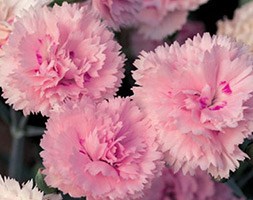
Dianthus Candy Floss (‘Devon Flavia’) (Scent First Series) (PBR) (pot pink) £4.99
Position: full sun Soil: rich but well-drained, alkaline to neutral soil Rate of growth: average Flowering period: May to August Flower colour: soft pink often with a darker eye Hardiness: fully hardy A recently introduced perennial, which has already won itself the RHS Award of Garden Merit. Its soft pink petals, which look as though they have been neatly trimmed with pinking shears, are flecked with crimson towards their base. They form exquisite flowers, that have a strong clove-like scent, on stout stems above the clumps of grey-green foliage. Unlike many other pinks, they will flower whenever it is warm enough, which usually ensures a bumper crop of flowers over a longer period from late spring to summer. Garden care: Dianthus should be trimmed back lightly after flowering to promote new basal growth. Prune more closely in spring, as new shoots emerge to maintain a tidy shape. To maintain healthy growth, it is important to make sure the plants are protected from excessive winter wet.
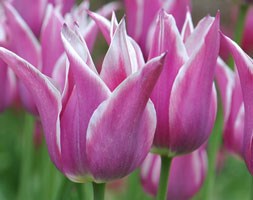
Tulipa ‘Ballade’ (lily flowered tulip bulbs) £3.99
Position: full sun Soil: fertile, well-drained soil Rate of growth: average Flowering period: May Flower colour: violet, edged with white Other features: excellent cut-flowers Hardiness: fully hardy Bulb size: 12/+ A gorgeous lily-flowered tulip with soft violet-mauve flowers that have well-defined white margins and elegantly pointed petals. It is a good, weather-resistant, border tulip which usually comes back reliably year after year without lifting. The flowers are showy and long- lasting and look very similar to the ‘Star Gazer’ lily when fully open. Such a great performer the RHS have not only awarded it the coveted Award of Garden Merit, but also selected it in their list of top 10 tulips. Not bad at all! Garden care: In September to December plant bulbs 15-20cm deep and 10-15cm apart in fertile, well-drained soil. Alternatively, allow 7-9 bulbs per 30cm sq. After flowering dead-head and apply a balanced liquid fertiliser each week for the first month. Once the foliage has died down naturally lift the bulbs and store in a cool greenhouse.
Narcissus ‘Carlton’ (large cupped daffodil bulbs) £3.99
Position: full sun or partial shade Soil: well-drained soil Rate of growth: average Flowering period: April Flower colour: yellow Other features: excellent as cut-flowers; contact with the sap may cause skin irritation Hardiness: fully hardy If you love the big, blousy, traditional daffodils, then you are going to want to include some of these in your garden. This variety is grown extensively for the cut flower trade as their blooms are so robust and long lived. It has been around for nearly one hundred years, is one of the first daffs into flower, and as it is so vigorous it is perfect for naturalising. It is such a fabulous plant it has deservedly been given the prestigious Award of Garden Merit by the RHS. Garden care: Plant 10-15cm (4-6in) deep from late summer to early autumn. After flowering feed with a balanced fertiliser, dead-head and allow the leaves to die back naturally.
Narcissus ‘Dutch Master’ (trumpet daffodil bulbs) £2.99
Position: full sun or partial shade Soil: well-drained soil Rate of growth: average Flowering period: April Flower colour: yellow Other features: excellent as cut-flowers; contact with the sap may cause skin irritation Hardiness: fully hardy Very early flowering Trumpet Yellow daffodil Plant from September to the end of November. Suitable for gardens or indoor forcing. Ideal as a cut flower. It is such a lovey trumpet daffodil it has deservedly been given the prestigious Award of Garden Merit by the RHS. Garden care: Plant 10-15cm (4-6in) deep from late summer to early autumn. After flowering feed with a balanced fertiliser, dead-head and allow the leaves to die back naturally.
Lathyrus odoratus ‘Charlie’s Angel’ (spencer sweet pea seed Charlies Angel) £1.99
sweet pea Charlie’s Angel as chosen by BBC Gardeners World magazine (July 2011) as the best ever sweet pea. They say ‘This exceptional variety blooms for a long period and has superb perfume making it good for garden display, cut blooms or showing. Charlie’s Angel was the first ever spencer type sweet pea to receive the RHS Award of Garden Merit. Position: full sun Soil: fertile, humus-rich, well-drained soil Rate of growth: average to fast-growing Flowering period: June to September Flower colour: lavender-blue Other features: highly scented flowers Hardiness: hardy annual Highly scented lavender-blue flowers add an alluring touch to cottage gardens or informal planting schemes, when they can be allowed to scramble over supporting obelisks, arches or trellis. Their soft colouring mixes well with stronger purples, blues and pinks. Garden care: From October to late February, sow seeds into deep pots or root trainers filled with a good-quality seed compost and place them in a cold frame. Pinch out the tips as the plants grow to encourage them to become bushier and produce more flowers, and harden off before planting out in early April. Direct sowings can also be made in October or March-April. It is important to remove the faded flowers before they set seed, so picking them to fill a vase inside will only encourage more to form. Sow: October-April Flowering: June-September Approximate quantity: 20 seeds.
A wonderful plant when growing up the front of an old house. Stunning colour in summer.
Wisteria sinensis ‘Amethyst’ (Chinese wisteria) £24.99
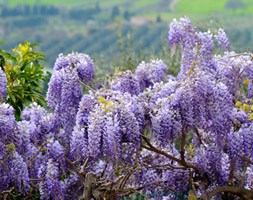
Position: full sun or light, dappled shade Soil: fertile, moist, well-drained soil Rate of growth: fast-growing Flowering period: May to June Flower colour: violet-blue with a reddish flush Other features: velvety, green seed-pods in hot summers; all parts of the plant are harmful if ingested Hardiness: fully hardy Magnificent clusters of well-scented, red-flushed, violet-blue flowers appear on this vigorous twining climber from late spring to early summer. The foliage emerges soon after the flowers, and often has an initial bronze flush, which fades as the leaves mature. If possible place it near a seating area or walkway, so you can fully appreciate the fragrant blooms, and provide a sturdy support for it to climb over. Garden care: To get lots of flowers, the twining stems need pruning twice a year – once in summer (about two months after the flowering has finished) and again in mid-winter. To train your Wisteria against a wall, the wall will first need a network of stout horizontal wires, attached at approximately 30cm intervals. After planting, prune the leading shoot of your Wisteria back to approximately 90cm above ground level and remove any side branches as this will encourage a strong new leader to form. In the summer of the first growing season, tie the leader in vertically and choose two new lateral shoots on either side of the leader. Tie these onto the wires at a 45 degree angle. Any smaller shoots coming from these lateral branches should be cut back to two or three buds. In the first winter, cut back the leader to a bud approximately 75cm above the highest lateral branch. Gently untie the lateral branches and prune them back by about a third, then re-tie them onto a wire so they are nearly horizontal. In subsequent summers (and until the plant has filled the allotted space), tie in the leader as it grows and choose two strong laterals to form the next tier. These should then be tied in at a 45 degree angle and as in the previous year, any smaller shoots coming from these should be cut back to two or three buds. In subsequent winters cut back the leading shoot as before and cut back and re-tie the new laterals to a near-horizontal position. The older laterals can be cut back by about a third of their total length. Once the plant has become established and reached the desired height, keep tying in the lateral stems as they spread out. In summer, cut back the wispy stems on both the laterals and sub-l
Wisteria sinensis ‘Alba’ (Chinese wisteria) £24.99
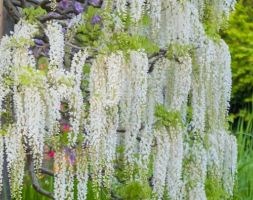
Position: full sun or light, dappled shade Soil: fertile, moist, well-drained soil Rate of growth: fast-growing Flowering period: May to June Flower colour: pure white Other features: velvety, green seed-pods in hot summers; all parts of the plant are harmful if ingested Hardiness: fully hardy Pendant clusters of fragrant, pure white, pea-like flowers in May and June followed in hot summers by velvety, green seed-pods. This classic white Chinese wisteria looks wonderful trained as a small weeping tree. Renowned for its superior fragrance, it’s an ideal, fast- growing climber for covering a sheltered, sunny wall or strong pergola. All the Wisterias we sell are grafted, so will start to flower at a younger age than those grown from cuttings. Garden care: To get lots of flowers, the twining stems need pruning twice a year – once in summer (about two months after the flowering has finished) and again in mid-winter. To train your Wisteria against a wall, the wall will first need a network of stout horizontal wires, attached at approximately 30cm intervals. After planting, prune the leading shoot of your Wisteria back to approximately 90cm above ground level and remove any side branches as this will encourage a strong new leader to form. In the summer of the first growing season, tie the leader in vertically and choose two new lateral shoots on either side of the leader. Tie these onto the wires at a 45 degree angle. Any smaller shoots coming from these lateral branches should be cut back to two or three buds. In the first winter, cut back the leader to a bud approximately 75cm above the highest lateral branch. Gently untie the lateral branches and prune them back by about a third, then re-tie them onto a wire so they are nearly horizontal. In subsequent summers (and until the plant has filled the allotted space), tie in the leader as it grows and choose two strong laterals to form the next tier. These should then be tied in at a 45 degree angle and as in the previous year, any smaller shoots coming from these should be cut back to two or three buds. In subsequent winters cut back the leading shoot as before and cut back and re-tie the new laterals to a near-horizontal position. The older laterals can be cut back by about a third of their total length. Once the plant has become established and reached the desired height, keep tying in the lateral stems as they spread out. In summer, cut back the wispy stems on both t
Wisteria sinensis (Chinese wisteria) £24.99
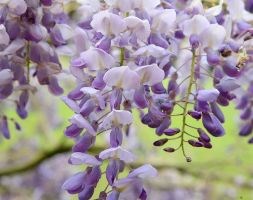
Position: full sun or light, dappled shade Soil: fertile, moist, well-drained soil Rate of growth: fast-growing Flowering period: May to June Flower colour: bluish-lilac Other features: velvety, green seed-pods in hot summers; all parts of the plant are harmful if ingested Hardiness: fully hardy Pendant clusters of fragrant, pea-like, bluish-lilac flowers in May and June, often followed by velvety-green seed-pods. This vigorous Chinese wisteria looks fabulous trained over a sunny wall or strong pergola. Renowned for its superior fragrance and flower-colour, the twining stems need careful pruning. All the Wisterias we sell are grafted, so will start to flower at a younger age than those grown from cuttings. Garden care: To get lots of flowers, the twining stems need pruning twice a year – once in summer (about two months after the flowering has finished) and again in mid-winter. To train your Wisteria against a wall, the wall will first need a network of stout horizontal wires, attached at approximately 30cm intervals. After planting, prune the leading shoot of your Wisteria back to approximately 90cm above ground level and remove any side branches as this will encourage a strong new leader to form. In the summer of the first growing season, tie the leader in vertically and choose two new lateral shoots on either side of the leader. Tie these onto the wires at a 45 degree angle. Any smaller shoots coming from these lateral branches should be cut back to two or three buds. In the first winter, cut back the leader to a bud approximately 75cm above the highest lateral branch. Gently untie the lateral branches and prune them back by about a third, then re-tie them onto a wire so they are nearly horizontal. In subsequent summers (and until the plant has filled the allotted space), tie in the leader as it grows and choose two strong laterals to form the next tier. These should then be tied in at a 45 degree angle and as in the previous year, any smaller shoots coming from these should be cut back to two or three buds. In subsequent winters cut back the leading shoot as before and cut back and re-tie the new laterals to a near-horizontal position. The older laterals can be cut back by about a third of their total length. Once the plant has become established and reached the desired height, keep tying in the lateral stems as they spread out. In summer, cut back the wispy stems on both the laterals and sub-laterals (the
I’ve tried growing some from seed this year. I’ll let you know how I get on!
If you’re too impatient then buy some plants from crocusthey have some really lovely ones. They have a couple of more open ones that look like giant poached eggs!
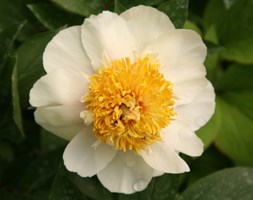
Paeonia ‘Claire de Lune’ (paeony / peony) £34.99
Position: full sun Soil: fertile, moisture-retentive yet well-drained Rate of growth: average Flowering period: May to June Hardiness: fully hardy Prized for their blowsy, glamorous blooms and glossy, deeply cut foliage, peonies are held in deep affection by many gardeners, despite their short flowering season and vulnerability to peony wilt in damp weather. It’s easy to see why. From the promise of early spring, when their red, mottled shoots push through bare earth and the handsome foliage unfurls, to early summer, when the huge flowers burst open from spherical red buds, peonies exert a fascination that few can resist. ‘Claire de Lune’ is a variety, with stunning, large, single, fragrant, pale lemon-yellow flowers with deeper yellow, fluffy centres from late spring to early summer. It flowers best in full sun. Fill the bare ground around the peony with spring bulbs to prolong the season of interest. Garden care: Deadhead after flowering. In early spring apply a top-dressing of a balanced slow release fertiliser around the base of the plant and mulch well with well rotted garden compost or manure. If the plant shows signs of collapse or the leaves become spotty, this may be a symptom of peony botrytis. Remove affected leaves immediately. In autumn, cut off all foliage and dispose of it to prevent reinfection the following spring.
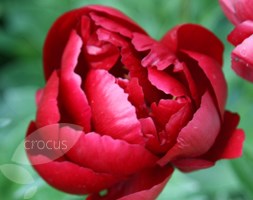
Paeonia ‘Buckeye Belle’ (paeony / peony) £14.99
Position: full sun or partial shade Soil: fertile, moisture-retentive yet well-drained Rate of growth: average Flowering period: May to June Hardiness: fully hardy Prized for their blowsy, glamorous blooms and glossy, deeply cut foliage, peonies are held in deep affection by many gardeners, despite their short flowering season and vulnerability to peony wilt in damp weather. It’s easy to see why. From the promise of early spring, when their red, mottled shoots push through bare earth and the handsome foliage unfurls, to early summer, when the huge flowers burst open from spherical red buds, peonies exert a fascination that few can resist. ‘Buckeye Belle; has deep red semi-double flowers from early to mid summer and dark green leaves. This lovely, early-flowering peony will thrive in partial shade but will prefer a sunnier spot. Fill the bare ground around the peony with spring bulbs to prolong the season of interest. Garden care: Deadhead after flowering. In early spring apply a top-dressing of a balanced slow release fertiliser around the base of the plant and mulch well with well rotted garden compost or manure. If the plant shows signs of collapse or the leaves become spotty, this may be a symptom of peony botrytis. Remove affected leaves immediately. In autumn, cut off all foliage and dispose of it to prevent reinfection the following spring.
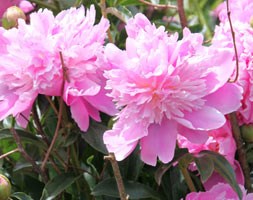
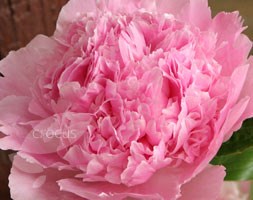
Paeonia lactiflora ‘Monsieur Jules Elie’ (paeony / peony) £14.99
Position: full sun or partial shade Soil: fertile, moisture-retentive yet well-drained Rate of growth: average Flowering period: June to July Flower colour: pink Other features: ideal as cut flowers Hardiness: fully hardy Rose pink, fragrant, double summer flowers with a silver sheen contrast well with the green leaves. It is an heirloom variety dating from the late nineteenth century, and for decades it has been one of the most popular pink peonies. A delightful plant, which is perfect for the middle of a partially sunny border, the scented blooms make fabulous cut flowers. Garden care: In early spring apply a balanced slow-release fertiliser around the base of the plant and mulch with well-rotted compost or manure. Fungal diseases may occur in cool, wet springs so prune out any affected parts and spray the remaining sections with fungicide. Deadhead after flowering.
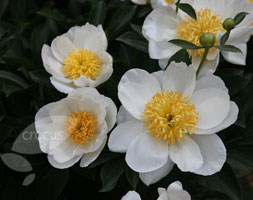
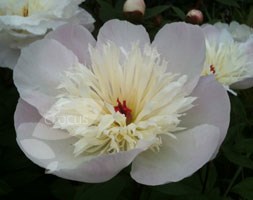
Paeonia lactiflora ‘Jan van Leeuwen’ (paeony / peony) £12.99
Position: full sun or partial shade Soil: fertile, moisture-retentive yet well-drained Rate of growth: average Flowering period: May to June Flower colour: white and yellow Other features: red mottled stems Hardiness: fully hardy Fragrant, elegant, single white flowers with a contrasting yellow centre appear from late spring to early summer over the dark green leaves. This lovely, long lived, late spring flowering peony is perfect for a border in full sun or partial shade. The foliage provides interest from early spring, when the red mottled stems first emerge from the ground. Garden care: Deadhead after flowering. In early spring apply a top-dressing of a balanced slow release fertiliser around the base of the plant and mulch well with well rotted garden compost or manure. The older stems of tree peonies have a tendency to become brittle and snap so cut these back to the ground in autumn every two or three years.
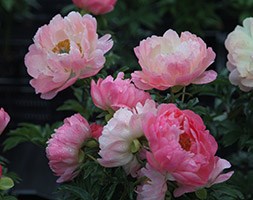
Paeonia ‘Coral Sunset’ (paeony / peony) £11.99
Position: full sun or partial shade Soil: fertile, moisture-retentive yet well-drained Rate of growth: average Flowering period: May to June Hardiness: fully hardy A magnificent herbaceous peony, that puts on showy display from late spring to early summer with its goblet-shaped flowers. These form at the ends of the sturdy, upright stems and are an incredible shade of rich coral, which fades as the flower ages to a pale lemon. They last well after being cut and look great in a vase too. Garden care: Deadhead after flowering. In early spring apply a top-dressing of a balanced slow release fertiliser around the base of the plant and mulch well with well rotted garden compost or manure. The older stems of tree peonies have a tendency to become brittle and snap so cut these back to the ground in autumn every two or three years. accented by full, deep yellow stamen centers
Paeonia lactiflora ‘Angel Cheeks’ (peony) £11.99
Position: full sun or partial shade Soil: fertile, moisture-retentive yet well-drained Rate of growth: average Flowering period: May to June Flower colour: pink Hardiness: fully hardy A showy perennial for early summer, the fully double pink flowers look wonderful in the border, and last well in a vase if they are cut while still in bud. Its soft colouring will mix easily into most colour schemes, but it looks particularly good with deep plum and shades of purple. Garden care: Deadhead after flowering. In early spring apply a top-dressing of a balanced slow release fertiliser around the base of the plant and mulch well with well rotted garden compost or manure. The older stems of tree peonies have a tendency to become brittle and snap so cut these back to the ground in autumn every two or three years.
Paeonia lactiflora ‘Immaculee’ (peony) £9.99
Position: full sun or partial shade Soil: fertile, moisture-retentive yet well-drained Rate of growth: average Flowering period: June to July Flower colour: white Other features: red mottled stems Hardiness: fully hardy Big, bowl-shaped, white flowers that have a good scent, are produced in early summer above the rich green foliage. The flowers last well on the plant, and also make good additions to cut arrangements. Perfectly suited to mixed or herbaceous borders in either full sun or lightly dappled shade, they are also effective on the outer fringes of a woodland setting. Garden care: Deadhead after flowering. In early spring apply a top-dressing of a balanced slow release fertiliser around the base of the plant and mulch well with well rotted garden compost or manure. The older stems of tree peonies have a tendency to become brittle and snap so cut these back to the ground in autumn every two or three years.
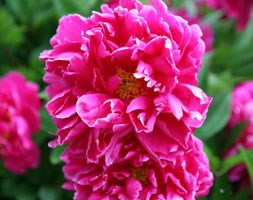
Paeonia lactiflora ‘Karl Rosenfield’ (paeony / peony) £9.99
Position: full sun or partial shade Soil: fertile, moisture-retentive yet well-drained Rate of growth: average Flowering period: June to July Hardiness: fully hardy Prized for their blowsy, glamorous blooms and glossy, deeply cut foliage, peonies are held in deep affection by many gardeners, despite their shortish flowering season and vulnerability to peony wilt in damp weather. It’s easy to see why. From the promise of early spring, when their red, mottled shoots push through bare earth and the handsome foliage unfurls from spherical red buds, to early summer, when the huge flowers burst open, peonies exert a fascination that few can resist. ‘Karl Rosenfield’ has fragrant double flowers of startling magenta, from early to mid summer among deeply cut mid green leaves. The reddish-bronze foliage of this striking peony provides interest from early spring and after the plant has flowered. Garden care: Deadhead after flowering. In early spring apply a top dressing of a balanced, slow release fertiliser around the base of the plant and mulch with well-rotted compost or manure. If the plant shows signs of collapse or the leaves become spotty, this may be a symptom of peony botrytis. Remove affected leaves immediately. In the autumn, cut off all the foliage and dispose of it to prevent reinfection the following spring.
Paeonia lactiflora ‘Shirley Temple’ (paeony / peony) £9.99
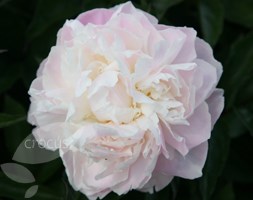
Position: full sun or partial shade Soil: fertile, moisture-retentive yet well-drained Rate of growth: average Flowering period: June to July Hardiness: fully hardy Prized for their blowsy, glamorous blooms and glossy, deeply cut foliage, peonies are held in deep affection by many gardeners, despite their shortish flowering season and vulnerability to peony wilt in damp weather. It’s easy to see why. From the promise of early spring, when their red, mottled shoots push through bare earth and the handsome foliage unfurls from spherical red buds, to early summer, when the huge flowers burst open, peonies exert a fascination that few can resist. ‘Shirley Temple’ is later flowering than many peonies with large, pale pink, double flowers, gently fading to buff-white, and mid green leaves. The centre of each beautiful, scented flower is full of small, loosely arranged ruffled petals. It will thrive in full sun or partial shade. Fill the bare ground around the peony before the leaves appear with spring bulbs to prolong the season of interest. Garden care: Deadhead after flowering. In early spring apply a top dressing of a balanced, slow release fertiliser around the base of the plant and mulch with well-rotted compost or manure. If the plant shows signs of collapse or the leaves become spotty, this may be a symptom of peony botrytis. Remove affected leaves immediately. In the autumn, cut off all the foliage and dispose of it to prevent reinfection the following spring.
Paeonia lactiflora ‘Duchesse de Nemours’ (paeony / peony) £9.99
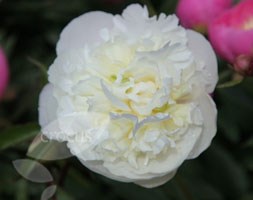
Position: full sun or partial shade Soil: fertile, moisture-retentive yet well-drained Rate of growth: average Flowering period: June to July Hardiness: fully hardy Prized for their blowsy, glamorous blooms and glossy, deeply cut foliage, peonies are held in deep affection by many gardeners, despite their short flowering season and vulnerability to peony wilt in damp weather. It’s easy to see why. From the promise of early spring, when their red, mottled shoots push through bare earth and the handsome foliage unfurls from spherical red buds, to early summer, when the huge flowers burst open, peonies exert a fascination that few can resist. ‘Duchesse de Nemours’ has huge, bowl-shaped pure white, fragrant, double flowers, flushed green in bud, from early to midsummer. This classic, double- flowered peony from the mid nineteenth century is a favourite of the cut-flower trade. It will thrive in full sun or partial shade. Fill the bare ground around the peony before the leaves appear with spring bulbs to prolong the season of interest. Garden care: Deadhead after flowering. In early spring apply a top dressing of a balanced slow release fertiliser around the base of the plant and mulch with well-rotted compost or manure. If the plant shows signs of collapse or the leaves become spotty, this may be a symptom of peony botrytis. Remove affected leaves immediately. In the autumn, cut off all the foliage and dispose of it to prevent reinfection the following spring.
Tulipa ‘Angelique’ (double late tulip bulbs) £3.99
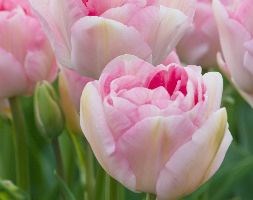
Position: full sun Soil: fertile, well-drained soil Rate of growth: average Flowering period: early May Flower colour: pink Other features: excellent cut-flowers Hardiness: fully hardy Bulb size: 11/12 Delicate, soft pink, double, bowl-shaped flower, flushed with both paler and darker shades of pink in April and May. From a distance, you could easily mistake these tulips for peonies and they are usually one of the last tulip into flower – so a good one to choose if you want to extend a bedding display. Garden care: In September to December plant bulbs 15-20cm deep and 10-15cm apart in fertile, well-drained soil. Alternatively, allow 7-9 bulbs per 30cm sq. After flowering dead-head and apply a balanced liquid fertiliser each week for the first month. Once the foliage has died down naturally lift the bulbs and store in a cool greenhouse.
3ft x 50 (10-12mm diameter)
3ft x 100 (10-12mm diameter)
3ft x 150 (10-12mm diameter)
3ft x 200 (10-12mm diameter)
3ft x 250 (10-12mm diameter)
4ft x 50 (12-14mm diameter)
4ft x 100 (12-14mm diameter)
4ft x 150 (12-14mm diameter)
4ft x 200 (12-14mm diameter)
4ft x 250 (12-14mm diameter)
5ft x 50 (12-14mm diameter)
5ft x 100 (12-14mm diameter)
5ft x 150 (12-14mm diameter)
5ft x 200 (12-14mm diameter)
6ft x 50 (12-14mm diameter)
6ft x 100 (12-14mm diameter)
6ft x 150 (12-14mm diameter)
7ft x 50 (12-14mm diameter)
7ft x 100 (12-14mm diameter)
7ft x 125 (12-14mm diameter)
8ft x 50 (14-16mm diameter)
8ft x 100 (14-16mm diameter)
8ft x 125 (14-16mm diameter)
10ft x 10 (14-16mm diameter)
10ft x 20 (14-16mm diameter)
10ft x 25 (14-16mm diameter)
10ft x 50 (14-16mm diameter)
Petunia Shockwave Denim Planted Hanging Basket £19.95
Petunia Shockwave is by far the best Petunia we’ve every seen in hanging baskets! Producing a mass of small petunia flowers all summer long. The plants produce a perfect mound with stunning cascading habit eventually surrounding the rattan basket they’re planted in. Petunia Shockwave Denim, is a beautiful blue variety which is extremely easy to grow and requires very little maintenance. Planted in a 30cm (12″) rattan basket – ideal for summer colour.
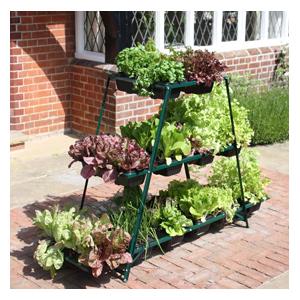
Multi-level ‘patiogro’ – Accessories Only £12.95
Designed For The Multi-level Patiogro We Have A Roll-up Shelf Ideal For Turning The Bottom Level Of The Patiogro Into A Handy Shelf For Pots And Equipment, An Irrigation Kit Which Makes Watering Easy And A Propagation Kit Whcih Includes Seed Trays, Multi-cell Trays And Plant Labels. all Prices Reduced!roll-up Shelf – Turn The Bottom Level Of Your Patio Growing System Into A Handy 176cm L Shelf For Pots And Potting Equipment. The Kiln-dried Fsc Shelf With Rot-proof Joining Tape Can Also Be Cut To Fit The Middle And Top Shelf Too For Ultimate Customisationirrigation Kit – Just Snaps Onto Your Hosepipe To Water All 12 Trays Simultaneously. Each Of The 12 Nozzles Is Fully Adjustable With On/off Functionality.propagation Kit Includes 6 X Half Seed Trays, 30 Assorted Multi-cell Trays And 36 X 100mm Plant Labels.
Morning Glory Collection – 20 morning glory plug plants – 5 of each variety was £14.98 now £9.98
These vigorous twining Ipomoea have mid-green, heart shaped leaves and a wealth of trumpet shaped summer flowers. Undemanding and easy to grow, Morning Glory makes an attractive annual climber that can be grown outdoors or in a cool conservatory. Let them scramble up walls and fences or plant them against obelisks for an eye catching feature in borders and containers. Supplied as plug plants. Height: 300cm (118"). Spread: 30cm (12"). Morning Glory Collection comprises: Morning Glory ‘Electric Blue’ - Glorious sky blue trumpets with pretty mauve stripes. Morning Glory ‘Star of Yelta’ - Majestic royal purple blooms with contrasting crimson stripes. Morning Glory ‘Split Personality’ - Unlike traditional Ipomoeas, the magenta blooms are each divided to create individual petals. Morning Glory ‘Heavenly Blue’ - An RHS AGM variety with azure blue trumpet blooms.