Garden And Gardener

Everything for the Gardener and their Garden

Archive for the 'allotment' Category

More allotments

Wednesday, April 23rd, 2014

This is a useful site http://www.allotmoreallotments.org.uk/

Unwanted allotment advice

Monday, April 21st, 2014

Unwanted allotment advice is a common side effect of having an allotment.

weed plotIt can often happen that you end up being offered tons of allotment advice every time you go to your plot. There’ll be some old timer with his flat cap and annoyingly weed free plot who’ll offer you masses of seemingly good advice.

Never feel obliged to accept advice. Listen, smile and nod. Say thank you.
You don’t have to follow their advice at all.

Don’t let them offer to do stuff on your plot unless you are 100% sure you want their help and are aware of all their techniques.

If someone has a weed free plot then there may be several reasons: they might regularly dowse their plot in weedkiller, or used creacote on boards, they might spend 60 hours a week weeding it.

Indications of a healthy weed free plot would be evidence of hand weeding, a full compost bin or three and lots of time spent on site.
You don’t have to have a completely weed free plot though. The odd weed doesn’t hurt, and if you stop them seeding then they provide a green mulch, and compost material. You can use weeds dropped where you pick them as a mulch too.

Accepting produce off other plot holders. Always have an idea of what someone’s slug pellet regime is like. If they turn the soil blue then they probably overuse slug pellets.
Do they use bug sprays? When did they last spray? Many chemicals need to be left on for an amount of time before eating.
Always be aware that you might want your plot to be organic but it doesn’t mean everyone else does.

Do you take advice from people with weed free plots, or productive plots? The choice is yours.

Soil question – my soil is still quite lumpy

Sunday, April 20th, 2014

lumpy soil
My soil is still quite lumpy, should I break it down further so it’s all really fine and small?
Is it ok to have lumpy soil?

A seed needs to be covered. If there’s enough soil to cover it then it’s fine.

You could spend hours and house creating the finest soil across the whole bed but as you only sow in a bit of it I wouldn’t waste your effort.
Draw a line for seeds and make sure you can cover them with a thin layer of fine soil.

If you’re sowing your seeds in pots then there’s even less need for fine soil! Just make sure you plant the plant in properly and water it well to get it started.

Ideally you don’t want to see the soil at all. Cover it with a mulch of some sort and then the worms will do the work for you.

In the recent program about soil they looked at an asparagus farmer who had serious erosion problems because of the bare soil around the plants needed so weeds didn’t compete. They showed that a mulch of straw protects the ground from damage by rain and reduces water flow massively protecting the soil. The worms will also love to work under a mulch which means they will constantly be improving the soil.

Creating a fine filth can be done by using tillers or hoes to break down the lumps of soil. If it’s got clay in it then it might all just mush back together when it rains again. Much better to get organic matter on the soil to cover it. You can see how good worms are at creating a fine tilth by applying a cardboard mulch to a patch of soil. After a few weeks they will have been all under the cardboard trying to nibble it and take it down into their burrows. Their effect is to turn the soil into fine grains of much more nutritious material.

Mulching can help improve lumpy soil. Mulch around establish plants in all beds. In beds where you are planting seeds or putting seedlings out you need to be a bit more careful. Don’t mulch heavuily around young plants. Scrape mulch away from the area you are sowing seeds. You can reapply once they’ve got going, or use a fine layer of grass clippings.

Planting potatoes

Thursday, April 17th, 2014

Aftre planting potatoes

I have planted my potatoes in the last week.
They have been sat in their paper bags open to the light in a tray since then.
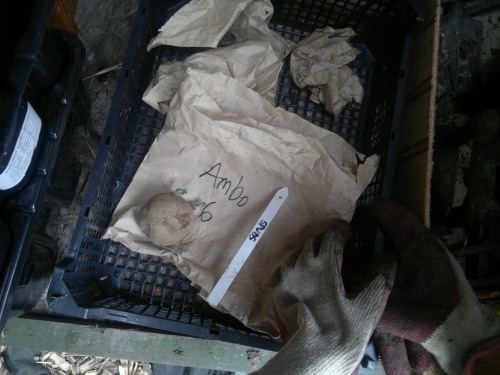
I bought 6 lots from the Hulme Garden Centre potato day earlier in the year. I bought 5 of 5 varieties and 6 of Ambo.

I’ve planted orla, cara, golden wonder, ambo, colleen and red emaille in rows on last years pumpkin bed. This was a raised area of lasagna bed that had plenty of organic matter in.

The last ambo has been planted over near some first earlies the far side of my plot. I wanted to try this one in a much clayier area to see how it coped.

Did you mulch today?

Wednesday, April 16th, 2014

I love mulch! It’s a great way of getting great gardening results and is less effort than you’d imagine.
Hoeing is a way of creating a dust mulch.
I was hoeing between the garlic at the community garden last night creating a mulch of dust. The weather has been strange this year already even though it’s only April. With a spell of very wet weather and then some warm weather the soil appears to be cracking in places. This is in beds without a lot of organic matter in. Mulching the surface of soil can help protect it from the various weather conditions that cause the soil to be dried out or crack. It can protect it from the wind drying out the soil, and from excess rain.

Whatever you use as mulch ideally it will be free! Everyone loves a freebie and so people want to look at using whatever you can get your hands on. Grass cuttings should start being available as soon as you mow the lawn. I know some people are keen to keep grass clippings on the lawn to mulch that, but for anyone who grows vegetables it’s a great way of making the the soil safe and protected. It can be good for mulching thinly around onions, over potatoes, as well as a layer in the compost heap to get things really going.

Mulching can make your garden area look neat and tidy too. More public areas may need bark chippings, as many people will frown at the grass clippings fading on the borders.

If you’d like more information about mulching, the different types of mulch, then have a look at this ebook I’ve written.

The Joy Of Mulch

Replacing greenhouse glass

Wednesday, April 16th, 2014

A greenhouse and a huge pile of glass was dumped on our site. It was the remains of a previously donated one. After someone kindly went through the glass and threw all the broken stuff away, there were just four intact sheets left.
So basically I’ve acquired half a wheely bin of broken glass (Normal waste, not recycling round here!) and an aluminium frame. There are no wheels with it even though the plotholder who had it previously had been made some. My husband is a clever bod though so will make some!

So how do you go about replacing greenhouse glass? Ideally you’ll know what sort of greenhosue it is and find instructions online which will give you an idea of what the finished item is supposed to look like. If they’re all 2×2 pieces then it’s as simple as buying some new bits and fitting them. When you’re faced with replacing all the glass in a greenhouse it’s a bit more interesting. Especially if you get the frame dismantled. Replacing greenhouse glass should involve gloves, good boots that are tough and will protect your toes. Plus goggles and a good glass cutter.

We’re looking on freecycle for a free greenhouse full of glass but haven’t got any yet.
In the mean time I am looking at polycarbonate. It’s dear but a full kit can be bought for about £150 or you can buy sheets to cut yourself which will I think work out a bit cheaper. However it’s all a bit pricey still so as there’s no rush to get it up as I have a greenhouse at home, then we will perhaps hold on a bit longer for glass off freecycle.
If it’s not appeared by my birthday then I will put some birthday money towards the polycarbonate. I’ve read it should have a good ten years life in it. Which isn’t as long as glass – which will in theory last much longer although risks getting broken.
It will be nice having a second greenhouse on the allotment. I always crowd the one in the garden because I want so many different types of tomato growing but with a second one I will be able to spread them out better! Or maybe just have two overcrowded greenhouses!

Polycarbonate sheeting at Amazon

The Big Allotment Challenge review

Wednesday, April 16th, 2014

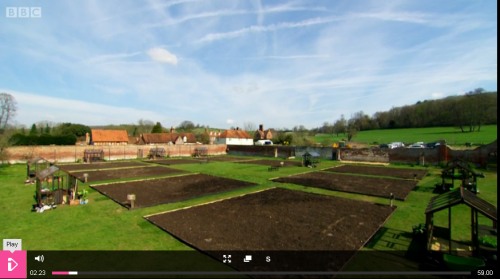
starting point of the big allotment challenge

9 couples:

Edd and Harshani – husband and wife, Northamptonshire, she’s a yoga teacher. Moonplanting.
Gary and Pete – beekeepers from Brighton
Shawn and Liz, work colleagues from Manchester
Sally and Michelle, sister in laws from Kent,
Alex and Ed
Shirley and Victoria – mother and daughter from Banbury
Jo and Avril – allotment neighbours from Redditch
Rupert and Dimi, husband and wife drum and bass enthusiasts from Surrey
Kate and Eleanor

week 1 challenge on the big allotment challenge

They have started with blank plots and a list of things to grow for the competition. They will be judges on challenges each week. Preserve making, vegetable growing and flower arranging. They are allowed to bring in their own soil conditions.

Kate and Eleanor have llamas who produce a wheelbarrow full of poo a week! >
Alex and Ed bought in worms! >

You can watch it here on iplayer
jam judging on the big allotment challenge

Grow, make, Eat

Grow – pick 3 perfectly matching radishes. Shirley and Victoria win this one!

Make is flowers – grow and arrange them. Cut 7 spikes of sweet peas. Gather flowers and cut a hand tied bouquet.
Alex and Ed win the sweet peas, and Rupert and Dimi win the bouquet.

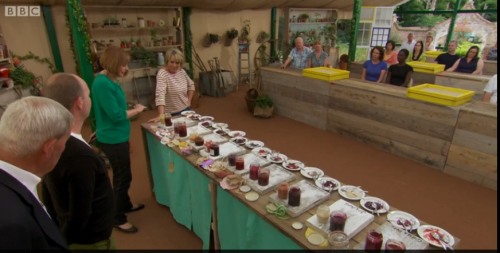
Eat – to make a fruit jam and a fruit curd. Gary and Pete win this.

Who goes home?
Shawn and Liz

My thoughts on The Big Allotment Challenge:
It’s not a program about growing things to eat yet – maybe it will be soon. The show bench uses uniformity as a criteria which is what supermarkets do. One of the very reasons many of us like to grow their own – picking taste over appearance.
The flowers bit is almost irrelevant to me, I do grow a few flowers but not for picking, for the pollinators. Phacelia and poached egg plant are on my plot, not a huge swathe of flowers.

I do make jam though so was glad to see preserving getting shown. Making jam isn’t hard, making good jam might be!

Overall it’s an interesting program that will spark people’s interest in growing fruit and vegetables. It might put some people off if they think there’s that level of criticism over the vegetables you grow. It might also make people think that an allotment will be in a really good weeded condition when you take it on!
I will be watching it next week!
There are very few glimpses of the actual allotments, which is a bit sad as I found myself straining to catch every second looking at the plots and the inventive styles people have deployed to stop butterflies and birds from damaging the crops. I’m sure I saw a clothes maiden in there somewhere!

Maybe there will be a whole load of extras of footage of each allotment plot with a verbal tour by the allotmenters. It’s certainly something the internet could be used for even if the TV audience isn’t interested.

Next week:
Runner beans, roses and relishes.

Apparently the two bearded blokes write this blog! http://vegetablism.co.uk/

To proxy vote or not?

Thursday, April 10th, 2014

I suspect not, as people faced with the option of not sitting through a boring meeting, will not then attend meetings.

http://www.poyntonallotmentgardeners.org/page5.html

7. Voting

At all ballots or elections each member, not in arrears with their subscription or rent, shall be entitled to one vote. In the event of a tied result the chairman of the meeting shall have one additional, or casting vote, except when the vote is for a change in the Constitution.

Proxy Votes

A member who is unable to attend a meeting in person may appoint a Proxy to vote for them. The proxy may be a member of the Committee or any other member eligible to vote. In this event the member must inform the Committee in writing of his voting intentions and of his nominated proxy.
Postal Ballots

In the event of insufficient attendance at any meeting to make up a quorum, the Committee may organise a postal ballot to determine the wishes of the membership.

No dig potato bed

Thursday, April 10th, 2014

https://www.youtube.com/watch?v=VFzckYYT7Hw

Mayan gold is one of the ones we have planted at the community garden

Rhubarb Flowers

Thursday, April 10th, 2014

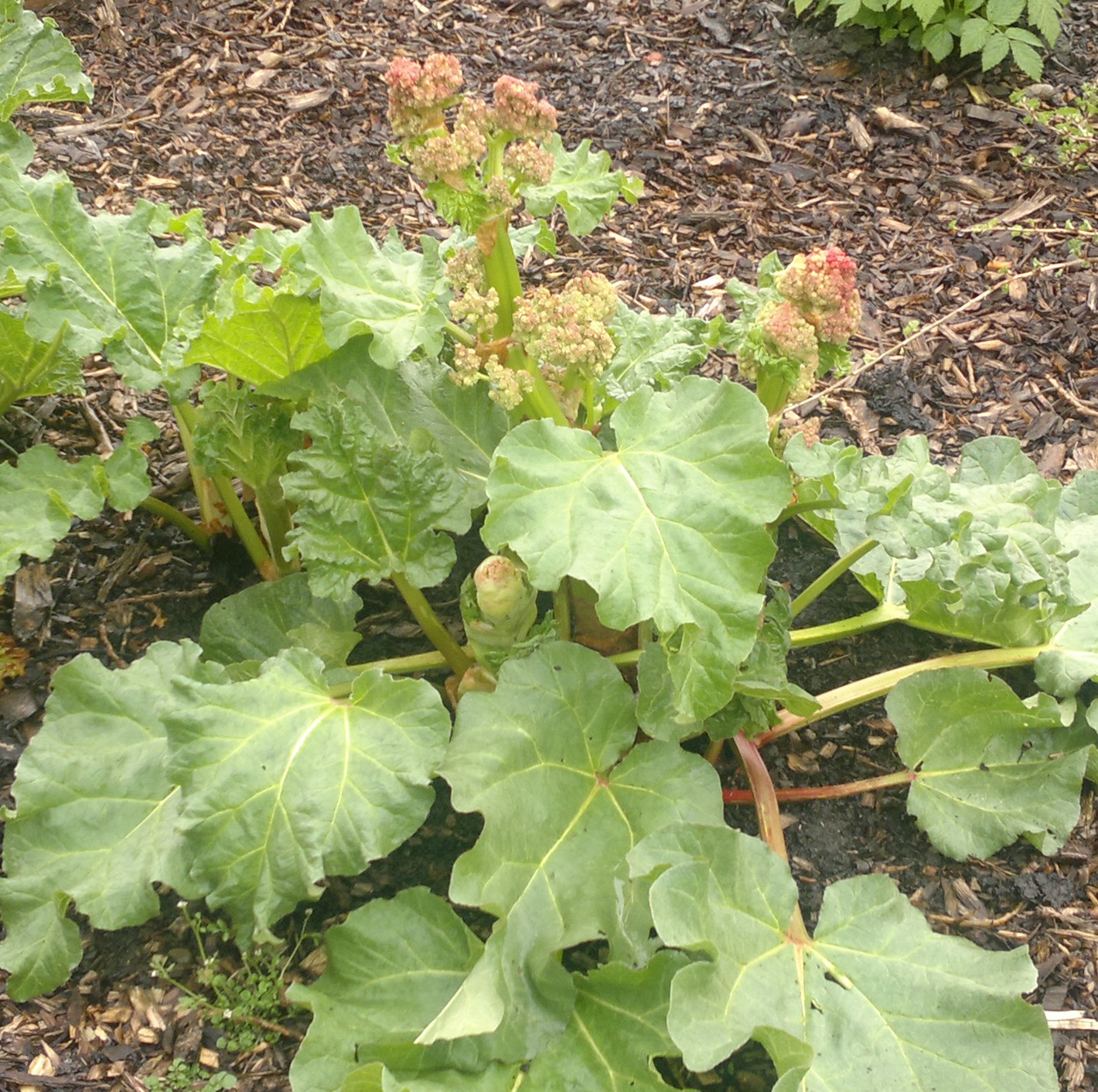
rhubarb flowers

Every bit of rhubarb I’ve seen this year is flowering – apart from the bits that are way behind!
It would appear the lack of cold weather is probably to blame.

What to do with rhubarb flowers?
Cut them off. Remove the flower spike unless you want to try your hand at getting seed. However the plant will put lots of energy into that and not produce very much rhubarb at all.

This excellent site about the history of Rhubarb says that cold is one of the requirements for the plant. It would make sense that after such a mild winter the plant is feeling stressed.

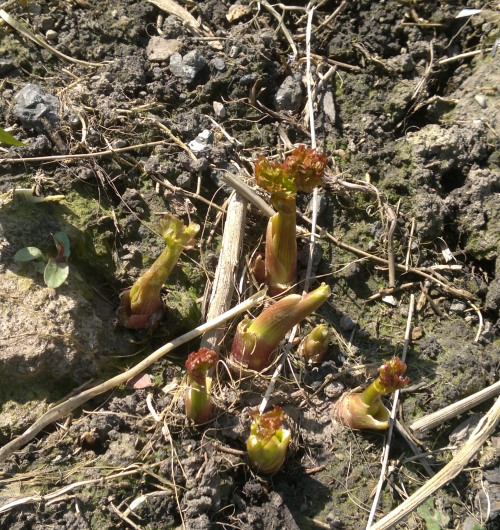
If you have a strange thick spike appearing from your rhubarb crown it’s probably a flower spike waiting to happen.