Garden And Gardener

Everything for the Gardener and their Garden

Archive for the 'allotment' Category

Got a new plot?

Tuesday, January 22nd, 2013

First allotment advice

You should first assess what you have got. If it’s a foot deep in snow it can be very hard to work out where your allotment starts and finishes so you might need to wait until the snow has melted.
Measure the plot (or ask for measurements) and draw a plan.
Walk round the plot and try to identify what has been done previously. Obviously on a brand new untouched plot then you don’t have to worry about digging up an asparagus bed, or disturbing other perennials.

Work out what beds system has been put in place. Try to identify what is there, or has been grown recently. Look for areas with brassica crops in – these are likely to be standing still – and are easily identifiable. Look for evidence of crops left behind to rot. Mark everything down, take photos and ask questions of other plot holders who might remember.

Anything sticking up above ground should be investigated.
Anything underground that you discover needs identifying before you dig the whole area up.

If you clear areas that you have identified previous annual crops then you can start on your allotment. Remember crop rotation rules. If you can’t identify what something is then take a photo and ask someone with more knowledge.

Start things in pots so when you’ve prepared a bed you have something to plant.

If you have large areas that need hard work on then cover them up and work on them bit by bit. Aiming to dig an entire plot in a weekend isn’t feasible – a rotavator could do it if the soil was in reasonable condition but it is still hard work!

Use cardboard or weed suppressant sheet material to cover soil. Fix it down so that it doesn’t blow away when it gets windy.

Spend time deciding what you want to grow on your plot. This will be influenced by what is already there – if you have a fruit tree then you should probably keep it. If you don’t want it then offer it to someone on the allotment. They might even dig it up for you. Fruit bushes are worth keeping: raspberries, blackcurrants and gooseberries are good traditional plants on an allotment.

Ask on your site about free materials like mulch, or whether you can get manure delivered. There will be someone who will know where to source materials as cheaply as possible.

Break up your week with as many visits as you can rather than one big chunk of time. This is useful in poor weather when you can do a little and then go home and warm up, as well as preventing back strain or muscle ache which seems to be a common affliction for new plot holders.
Allotment awards in Oldham

Sunday, December 9th, 2012

Allotment awards in Oldham 2012

The most Improved Site Shield: Fitton Hill Allotments — Wildbrook Crescent.


View Larger Map

The Shannon Trophy for the best six plots: Hope St Allotments.


View Larger Map

The Oldham Corporation Cup for best site in borough: School Road Allotments.


View Larger Map

The Oldham Chronicle cup best plot in the Borough: 1: Michael and Mary Fyson of Broadway allotments; 2: Pat Moran of Stotts Lane Allotment; 3: James Dyson of Fernhurst Allotments.

Cold and wet

Wednesday, December 5th, 2012

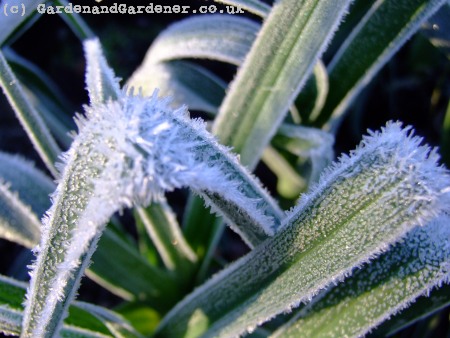
Frozen leeksThe allotment has been cold and wet for the last week or so. If it’s not throwing it down with rain then it’s turning freezing cold. We’ve had ice in the wheelbarrow and it’s a bit brisk to say the least.
There’s only a few things you can be doing whilst it’s this cold – one is to top up paths with mulch if you have some available, and the other is to pick any winter veg you need for your tea. The ground is frozen so you can’t dig, the ground is waterlogged too so don’t walk on it.

Harvesting leeks – don’t pull them out of the ground – instead cut them off close to ground level. It makes little difference to the amount of leek you take in but the root bit might regrow and give you some extra free leek!

Frosty out

Thursday, November 29th, 2012

Hope all your delicate plants were covered up!

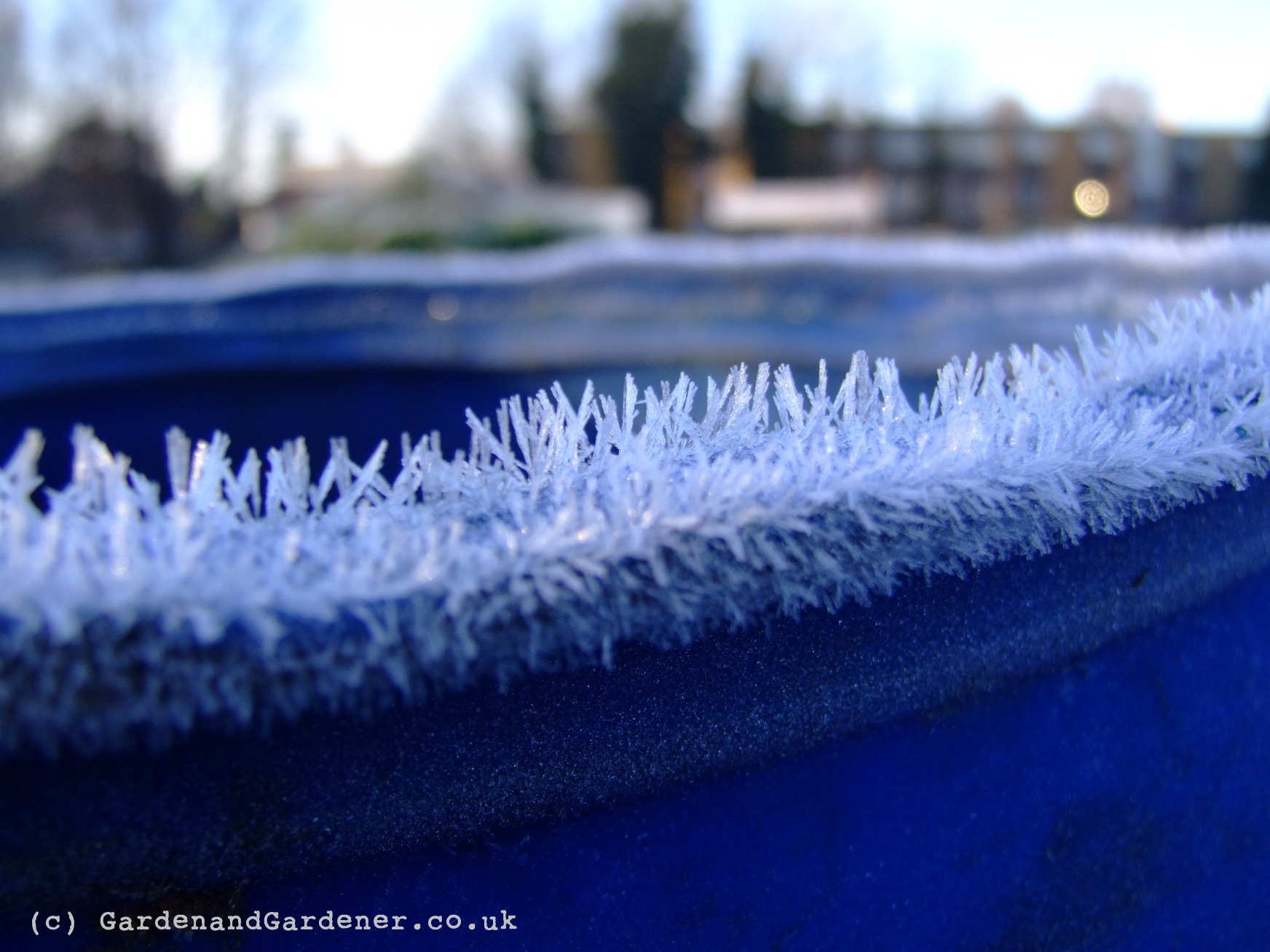
Frost on water barrel

Allotment Gardening for dummies

Sunday, November 25th, 2012

Allotment Gardening For Dummies

Allotment Gardening For Dummies

Allotment Gardening For Dummies

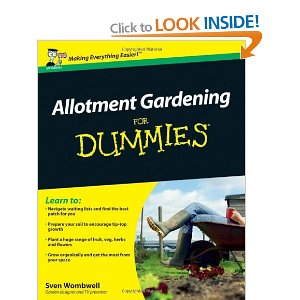
Allotment Gardening For Dummies is a lively, hands–on guide to getting the most out of your allotment. Whether you′re interested in eating fresh, saving money, getting exercise or enjoying wholesome family fun, this is the guide for you. The step–by–step advice takes you through all the stages in the process, from securing an allotment and preparing your plot, to choosing what to grow and enjoying the benefits of abundant fresh food and a sociable and healthy hobby. With over 50 handy line drawings, plus information on how to grow organic and advice on storing and cooking the food you grow, this guide really does have it all! Allotment Gardening For Dummies includes: Part 1: Getting to Grips with Allotment Gardening Chapter 1: What Are Allotments All About? Chapter 2: Getting hold of an Allotment Chapter 3: Getting Started Part 2: Preparing for Allotment Success Chapter 4: Deciding What to Grow, When Chapter 5: Preparing Your Plot Chapter 6: Keeping Your Soil Healthy Chapter 7: Keeping Your Plants Healthy Chapter 8: Growing Organic Part 3: Growing a Few of Your Favourite Vegetables Chapter 9: Going Underground Chapter 10: The Staples Chapter 11: Growing Leafy Greens Chapter 12: Planting Peas, Beans and Other Pods Chapter 13: Growing More Exotic Veg Part 4: Extending Your Allotment Repetoire Chapter 14: Growing Wholesome Herbs Chapter 15: Growing Fruitful Fruit Chapter 16: Nurturing Flowers on an Allotment Part 5: Getting the Most Out of Your Allotment Chapter 17: Involving Children Around the Allotment Chapter 18: Hobnobbing with Allotment Society Chapter 19: Growing Giant Veg Part 6: The Part of Tens Chapter Chapter 20: Ten Common Accidents and How to Prevent Them Chapter 21: Ten Ways to Revive a Flagging Allotment

Autumn new allotment

Sunday, November 25th, 2012


4 weeks hard work gets this plotholder ready for some autumn planting

Snow on the allotment

Sunday, November 25th, 2012

How crops can be helped by snow on the allotment

Drying beans for seeds

Friday, November 16th, 2012

If you’re drying beans to collect as seeds you need to get in quick sometimes!
Mice seem to have stolen all the broad beans I left on. I’ve got plenty of runner beans left though so I suspect they don’t like them as much. I’ve been going out and collecting the dried beans every few days. I don’t want to tempt fate by leaving them on and coming to discover the mice have ate them all.

A great hint I’ve just read is to remove the leaves from the plants when you’re starting to dry them. This gives the snails less places to hide which means they don’t be eating your beans either! It also means more air and sun (should we get any) can get to the pods.

Saving seeds saves you money.

If you have a variety of bean that does really well make sure you save plenty of seeds for next year!

How is the allotment?

Monday, November 5th, 2012

Someone asked!
Very cold yesterday! I went out but mostly to pass on some plants to someone.
I’ve got a bucket full of blackcurrant cuttings and got rid of about
12 yesterday to a plotholder!
The bees will love them so I will try and get the rest planted out soon.

I’ve got winter cabbage and purple sprouting under a net to keep the
pigeons off and have salads in the greenhouse and out on the plot but
the ones in the greenhouse will do much better.
I’ve planted shallots and garlic already and have broad beans to plant
too this month.

It’s interesting to see how some people think winter means you can’t
grow anything – you can it just takes more planning. Like the leeks
were planted ages ago and put out in to their final places in August I
think – but they’ll be there until they’re harvested from now until
spring. I planted 60 which I thought was a lot but it’s probably not
enough really lol.

I pruned the raspberries in the front garden and took some cuttings as
an experiment to see if they’d grow. If they do then I’ll have a
massive thicket of raspberries to share out or guerrilla plant.

I would like to get some guerrilla stuff done – just plant some of
these blackcurrants out and about… 🙂

The leeks is 3 a week for 20 weeks – which takes us to about March?

Someone was saying at the plot yesterday that they want to make sure they grow things that are good value for money or taste extra good.
Things like maincrop potatoes, onions, carrots are always going to be cheap/

The onions and leeks are stronger than supermarket ones.

I didn’t grow any sprouts this year – which I am now going to regret I think.

Raspberry experiment

Saturday, November 3rd, 2012

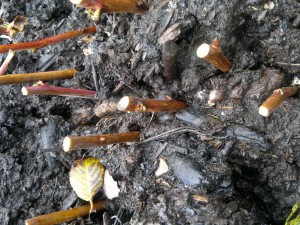
Raspberry sticksI’ve cut down the autumn canes of raspberries – they’ve not quite finished fruiting but there’s nothing worth picking now. There’s just not enough sun at this time of year to make them sweeter.

So I’ve cut sticks from the stems and stuck them into a section of allotment.

Yes this is part of my ‘can’t bear to throw anything away’ style of gardening. This is also the reason I’ve got a huge bucket of blackcurrant rootlings!

The raspberry sticks vary from 6-9 inches and have just been pushed into some lumpy compost in a corner of the allotment. I’ll have a look in spring and see if they all died, or some survived. I know raspberries are usually taken from runners that escape but I thought I’d try this method – if the sticks rot then that’s fine!