Garden And Gardener

Everything for the Gardener and their Garden

Archive for the 'garden' Category

Enjoy your garden – relaxation time!

Wednesday, July 7th, 2010

London Gold recipeRelax and unwind after your hard work with some excellent beer from Young’s called London Gold.

Young’s London Gold is a light refreshing beer that can be used in recipes
to add a new and exciting flavour to your food. Young’s have created this barbeque
recipe that you can just as easily cook indoors if the weather isn’t good. Simple
make and marinate the chicken and then cook indoors on a grill or in the oven.
Serve with a glass of refreshingly cool London Gold!

Ingredients for BBQ Spatchcocked Poussin recipe with beer and ginger marinade.

4 poussin (buy ready spathcocked if prefered)

Marinade
1 bottle Young’s Bitter
2 tbsp olive oil
1 tbsp Dijon mustard
3 tbsp clear honey
1 tsp paprika
4 cloves garlic, crushed
2 tbsp finely chopped fresh ginger
2 star anise, crushed
½ tsp freshly ground black pepper

Sauce
3 tbsp tomato ketchup
1 tsp soft brown sugar
1 tsp cornflour
Method

To prepare the poussin, place a poussin breast side down, on a board for raw
meat use. Using poultry shears or strong kitchen scissors, cut along each side
of the backbone and remove it. Either snip the wishbone with the shears, or
push down on the wishbone to snap it. Snip of any excess bits of skin, the wing
tips and any other ragged bits.

To keep them in shape insert wooden or short metal skewers through the bird,
diagonally in a criss-cross shape. Place in a large glass or china dish.

For the marinade, pour the Young’s beer into a large jug, once it has
settled, add the rest of the ingredients and whisk together. Pour half of the
marinade over the poussin reserving the rest for the sauce. Cover and marinate
in the refrigerator for at least 4 hours or overnight.

Bring the poussin out of the fridge 1 hour before cooking. Pour the marinade
into a pan, boil rapidly until reduced to about 100ml, this will be used to
baste the poussin while cooking.

To finish the sauce, strain the reserved marinade into a clean pan, add the
tomato ketchup and sugar, bring to the boil. Blend the cornflour with a little
water, stir into the sauce and simmer to thicken.

Prepare the barbecue, lightly oil the rack and place the poussin bone side
down first. Grill for 5 minutes, turning every 3-4 minutes and brushing with
the baste. Time to cook through will depend on size of the birds and intensity
of the heat from the barbecue, should be approximately 15-20 minutes. Test by
inserting the point of a small knife. Transfer to a serving platter.

Reheat the sauce before serving.

This dish has a lovely chinese flavour from the Star Anise with a gentle beer
background that adds an extra dimension to it. Try it!
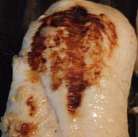
Tasty ginger and beer chicken recipe

I’m sure London gold can be used in many other recipes too – where you’d put
beer in a stew for instance, you could use a bottle of London Gold. For steaming
muscles you could use a dash of London gold rather than wine. As well as using
it in food it’s a lovely tasting beer that you’ll enjoy drinking in the summer
sunshine!

Find out more about London Gold here – or buy it at your local supermarket.
Young’s London Gold is available in Sainsbury’s, Waitrose, Booth’s, Ocado, Morrison’s, Budgens and Londis with a RRP of £1.89 per bottle.

It’s a lovely beer made from only four ingredients – barley, hops, water and yeast, and because it matures in the bottle it’s got a great fresh taste.
Next time you want to relax in the garden why not try a bottle or two of London Gold?

Potato flowers

Friday, July 2nd, 2010

Flowers on potatoesSome of the potato plants are flowering! For new potatoes this should mean they’re ready. You don’t have to empty the whole bag out – just have a root round in the compost and see what you find.
Main crop potatoes which you want to be bigger can be left until the foliage dies back.
Don’t forget to have a sniff to see what potato flowers smell like!

Gorilla Glues and tape

Saturday, June 26th, 2010

Gorilla Glue have a whole range of glues and sticking products designed to help you whatever you need sticking.
I’ll stop monkeying about now and tell you a bit about the glues I’ve tested!


Glue is something everyone needs from time to time. It’s great for the environment and your budget to repair items in your home rather than just chuck them away and buy new – so Gorilla Glue’s range can really help you.


They have a wide range of products including Gorilla Super Glue. Just as you’d expect it’s a fast drying but it’s also thicker than conventional superglue which means it stays where you put it! This is a fantastic product that means you can now glue on upright things. If you’ve been putting off a repair because you’re worried about glue going everywhere then use Gorilla Super Glue! It’s viscosity means it’ll stay where you put it and it’s always going to be there for you. It’s got a unique design to the cap so that it ensure the nozzle stays clean. The anti-clog tip has a metal pin on it which ensures when you need your glue it’s going to be of use to you! This is such a good idea – as any one knows who’s used superglue in a normal contain it’s likely to gum up and you can’t get any out! That’s not going to happen with this!

It’ll stick a wide range of materials including wood, metal, ceramics, and rubber. It will glue some plastics too! Because it dries quickly it doesn’t need clamping – you can just hold things in place! It’s got rubber in the glue which means it’s not as brittle as other super glues and can take more knocks to it meaning your repairs will last longer. It’s got a blue lid so you can easily identify it apart from the other glues in the gorilla range!


The Gorilla tape is designed to stick to uneven and rough surfaces! This means it has more uses than standard duct tape which requires a smooth surface! It’s been designed so that it sticks rough, uneven surfaces such as like wood, stone, plaster, and brick! It achieves this by having an extra thick layer of adhesive so that it can fill the gaps on uneven surfaces. It’s very tough stuff and you’ll find plenty of uses for it in the garden from patching up damaged plant pots, to repairing lids on your compost bin. Anything that needs holding down or onto something else can be fixed together with this tape.

The tape can be used for repairs as well as fixing together items.

Gorilla Glue can be used for sorting out all those little jobs around the house like loose chair struts or legs and even for sticking bits of concrete back together! I’ve got a great test for this! When our back step was put together the top flag ended up having a bit chipped out of it. We have kept the chip intending at some point to find a way of fixing it back on! Well Gorilla Glue promises that it can do just that so it’s going to be put to the test! You can use the gorilla tape to hold things in place whilst the glue sets. This is a great use for the tape and is considerably easier than trying to get a clamp on things!

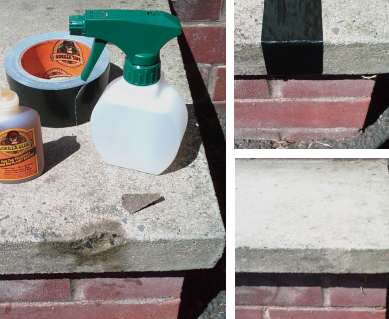
Gorilla Glue RepairThis first picture shows everything together that is needed to sort the step out. It’s important with all DIY projects to get everything to hand at the start of the job, especially where glue is involved. The gorilla glue requires surfaces to be damped down – so the chip and step area to be fixed have been damped using the water sprayer shown.
Gorilla glue is applied and the chipped piece of concrete put in place. It’s fixed down with some gorilla tape so the glue can set. As the glue sets it exapnds, so firmly fixing together the pieces is a good idea. On their website they show you how to do this when repairing various things like chair legs and stone cladding!

Tape removed and the chip is now well fixed back on the step and you can barely notice that it was ever gone! This glue is remarkable stuff enabling you to repair more things than you can imagine! It’s simple to use too and will repair just abouts anything! The Gorilla Glue website is well worth a look for ideas and projects you can use the glue for!

Adding Gorilla Glue to your tool kit and you won’t regret it! It’s got a wide range of applications and you’ll find that it does everything and more than you could want from a glue or tape!

Hanging Baskets

Monday, June 21st, 2010

Don’t forget you can also grow strawberries in hanging baskets! You can have hanging baskets in summer and in winter but you’ll need different plants! You can grow any trailing plant in a hanging basket and it’ll look fab! Nasturtians are cheap and colourful or you could go for some more exotic plants!

Voucher Code

Code – BLOOMING5
Promotion – 5% off
Expires – 31-12-2010

Hanging Baskets

Rustic Hanging Cone
Rustic Hanging Cone

From one of our best selling ranges of hanging baskets, this is made from natural
rattan on a strong wire frame. Prelined, it comes in an attractive cone shape.
Diameter 30cm (12 in).
Price £7.95

Rattan Hanging Cone
Rattan Hanging Cone

From one of our best selling ranges of hanging baskets, this is made from natural
rattan on a strong wire frame. Prelined, it comes in an attractive cone shape.
Diameter 30cm (12 in).
Price £7.95

Bacopa Snowflake White – pack of 5 plants
Bacopa Snowflake White

Bacopa plants are one of our favourites for hanging basket and container planting.
With masses of delicate white flowers and a naturally compact and trailing habit
these Bacopa are a real must have plant for this year.
Price £8.95

Fresh Sphagnum Moss
Fresh Sphagnum Moss

Harvested from renewable sources in New Zealand. To be used for traditional
green moss hanging baskets, extremely long lasting and highly water absorbent,
natrually free from weeds and insects.
Price £6.95

Pansy Plentifall Trailing Mixed – tray of 16 super jumbo plugs
Pansy Plentifall Trailing Mixed

Blooming Direct are very please to be able to introduce this wonderful new Pansy
for this year. Ideally suited to baskets and containers and sweetly scented.
Forming a nice mound of foliage and flowers this Pansy will also trail making
it an absolute must have plant for your garden. This is a hardy perennial producing
an abundance of flowers from Autumn to Winter.
Price £12.95

Lobelia Cascade Fountain 16 Mixed Plants

Lobelia Blooming Fountain make a fantastic addition to your bedding planting
scheme. Lobelia are versatile plants and work very well in hanging baskets,
beds, containers and borders. Offered here is larger garden ready plugs with
up to 10cm of foliage.
Price £12.95

Trailing Begonia Illumination Apricot x 10 plants

Trailing Begonia Apricot Shades is a simply stunning variety. With a colour
range of yellow to bronze this unique trailing Begonia is ideal for a wide range
of situations but particularly effective as a basket and container plant. It
will produce small tubers after the first year of growth. These can be dug up
and kept for the following year.
Price £9.95

Dichondra Silver Falls x 5 plants

Create a breathtaking display for your baskets and containers with Dichondra
Silver Falls. Cascading silvery flowers resembling a waterfall can be effective
when planted on its own or as part of a mixed basket.
Price £9.95

Onions going to seed?

Thursday, June 17th, 2010

Your onions shouldn’t go to seed but they they will if they’re stressed! Plants can be stressed by lack of water or sudden temperature changes. Going to seed is natures way of trying to ensure there’ll be plants to grow next year – so they put their energy into producing a flower and seed rather than growing.
Obviously this is useful sometimes – when you want to collect the seeds of the plant – but during a gardener’s normal harvest it’s not sensible to allow plants to go to seed.

If you remove the seed head then the plant should carry on growing as normal – without making seeds.

Onions send out bud shoots that can flower – the flower can be quite pretty but does sap the onion of it’s bulb!
Rhubarb can send out a flower stem when it’s stressed. You should remove this too!

Some types of onions can be more prone to going to seed. Sometimes red onion sets or the japanese onion sets are worst.
In theory you can buy heat treated sets that shouldn’t go to seed.

Going to seed is also known as bolting! Some gardeners think that bolting is caused by fluctuations in temperature rather than water problems.

Grass cuttings

Tuesday, June 8th, 2010

Grass Cuttings – what to do with them

For the most part we all mow the lawn without thinking about it. Many of us collect the grass cuttings up and put them in the council’s green garden waste bin without thinking about it.

What we should be doing is putting the cuttings on our own compost heaps! If your garden is big enough to have a lawn, then it should be big enough to have a compost heap. Put in the grass cuttings along with hedge trimmings, weeds and any vegetable peelings and old tea bags that leave the kitchen!

Making compost at home is a great idea and you can help enrich your garden without any cost other than the initial outlay for the bin. Although compost bins are available at a reduced cost through your local council.

When the grass is being trimmed and the cuttings are only an inch or less in length then you can safely leave these on the grass. They will fall to the ground and quickly be turned into a mulch layer on the soil. This helps conserve water and as the grass breaks down it will also feed the soil.

For longer cuttings though, or when the grass seems to be damp, put these straight on the compost heap. A collection unit on your lawn mower makes this easier – as raking up is hard work!

Garden furniture set

Saturday, June 5th, 2010

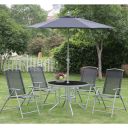
Table and chairsRobert Dyas Seville 6 Piece Metal Garden Furniture Set

£89.99

* 90cm diameter Steel table with silver powder-coating for added durability. Black glossy tempered glass top
* 4 Adjustable armchairs (3-positions) with Textoline fabric for comfort and breathability
* 2M Black tilting parasol lets you cast the shade exactly where you want it. Easy to put up with crank handle
* Low maintainance

Fair Trade Barbeque

Friday, June 4th, 2010

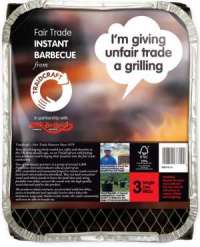
If you’re looking for a way of getting out and really enjoying your garden this summer, then nothing can beat a barbeque! Whether you spend days planning it, or just want an impromptu outdoor meal, Fair Trade instant barbeques are just the thing!

Fair Trade barbeque

Fair Trade Barbeque

The Fair Trade barbeques weigh in at just over 0.7kg each and are sold in packs
of three. They’re available for £7.99 – which compares very favourably
with normal disposable barbeques that are retailing at places like Tesco for
about £3 each.

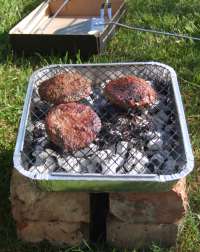
Disposable barbeques need placing on something to so find some old bricks or
something that can make a nice stable base. Lighting is simple – just strike
a match and light the corners of the sheet of material that covers the top of
the barbeque underneath the grill area. After 15 minutes the charcoal should
be going white on the outside, any flames died down and it should be ready to
cook on. The cardboard tray it’s packed in is very useful for popping your barbeque
tools on as a mini table!

Fair Trade barbeque

They offer you at least an hour and half’s cooking time out of each tray –
obviously if you’re trying to feed impatient people then you might want to have
a couple of trays on at the same time so everyone gets fed faster. The beauty
of the grill is that it’s easy to give a little shake to (use barbeque tongs)
and you keep all the hot charcoal in the same place. This means you get a good
burning time and no wasted charcoal. Our barbeque was still hot after 2 hours
although over a smaller area. There was little flaring up during our barbeque
of sausages and burgers, although there was some smoke, just what you’d expect
when fat drips off food onto hot coals!

It fed three of us very easily and was easy to use. The barbeque looks after
itself and there’s no bits to fall off, unless you count errant sausages of
course!

As a quick and easy barbeques it’s excellent – and offers great value for money.
Cleaning up afterwards is fantastically simple – you wait for it to cool down
and then throw it away. It’s small and easy to carry so you could pack these
for a beach trip or camping and they’d be light to carry as well as compact.
You get a surprising amount of cooking time from them – and there’s no mess
or clearing up!

The charcoal is made in Namibia providing employment and helping the process
of converting land from scrub into useable farmland. The charcoal is made from
wood and thorn weed plants and converted in special portable iron kilns. The
workers receive a good wage and access to healthcare. The kilns are provided
to them for free. This whole process of Fair Trade by Tradecraft enables people
to benefit from the employment it offers and for UK customers to enjoy using
the high quality product they make. This process of charcoal making follows
the guidelines set out by the Forest Stewardship Council.

Benefits include:

  • Easy to light
  • Easy to use
  • No cleaning needed – just throw away
  • Benefits Fair Trade projects in Namibia!
  • Excellent pricing
  • Great product

If you’re going to buy a disposable barbeque this summer then make sure it’s
one of these Tradecraft Fair Trade instant barbeques! It’s so easy – buy them
in advance and then when you want a barbeque they’re there waiting! They hardly
take up any room in a cupboard – and are clean to store so you can keep them
in the kitchen cupboards!


Basil – growing it from seed

Friday, June 4th, 2010

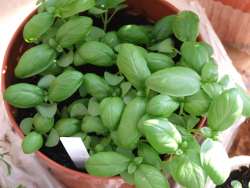
Basil is one of the herbs that loves being grown in a pot. It’s as simple as putting a few seeds in a pot with some compost and watering regularly!
Basil in a pot

How to plant basil seeds.
You should plant little and often with basil so that you can have regular supplies of basil for cooking with.

Get a pot and fill it with compost. Firm it down and sprinkle on a few seeds. Perhaps use 10-15 seeds in a 3″ diameter pot. Some people like to have only 3 seeds per pot – but if you’ve not got a lot of room then it won’t hurt too much having crowded pots.
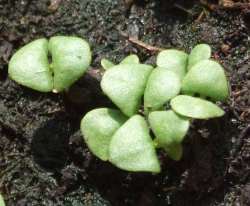
tiny basil seedlingsSprinkle more compost over these and water well. Keep watering them and eventually tiny seedlings will appear. Water carefully avoiding the plants if possible.
Continue watering them until they’re big enough to crop, you probably need 5-6 inches of height. Use them in your cooking or tear up for tomato salad. You can use them as cut and come again – or if you’re making a big bowl of pasta give them a big haircut with scissors and them leave to grow again.

They’re good to grow as a companion plant for tomatoes. They smell delightful and can be grown on a kitchen windowsill.

Remove flower heads as they appear – until the autumn if you want to try and get your own basil seed for next year!
There are several types of basil – from normal sweet basil, to lemon basil and a purple variety too.


Weeds in the lawn

Friday, June 4th, 2010

Firstly it’s important to understand that a weed is just a plant growing in a place you don’t want it. Flowers can be considered weeds if they’re growing in the wrong place! Some people like daisies and other weeds – some are even edible!
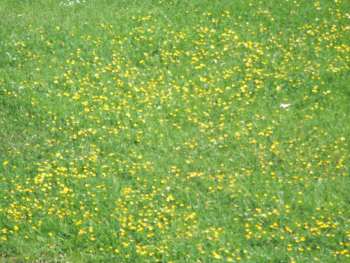
Masses of buttercups in grass
Lawn weeds are most commonly daisies or dandelions. There are other plants that inhabit the lawn – clover, buttercups, thistles, ragwort, plantain and many more. If you want a smooth green lawn then you should worry less about identifying them and more about removing them. Many can be weed killed out -but some are best dug up and removed. Dandelions are probably the worst lawn weed as they have a long tap root which is hard to remove intact, it can grow from tiny segments of root, it can flower quickly and below the grass line, and it produces hundreds of seeds per flower. Worst it’s even made itself appealing to young children to get the seeds blown about! It’s also first to stick it’s head up above the grass and make the lawn look untidy.

Some people like having clover, buttercups and daisies in their lawn. It certainly gives it a bit of colour and gives the bees something to visit! If you’re happy living with a more wild lawn then it’s better for the environment and cheaper for you if you don’t use weed killers and just learn to live with the flowers! You could call it your wild flower lawn!

Decide how much time and effort you want to get rid of the weeds. Just regular mowing can really kill of a lot of them – and take out the dandelions by hand using a knife to remove as much tap root as you can. This will give you a better looking lawn. The more often bigger weeds are cut the more energy they waste and they will hopefully get too tired to grow. As a last resort use special lawn weed killers.

Many weed killers require you to water the lawn after application – so make sure you’ve read the instructions carefully.